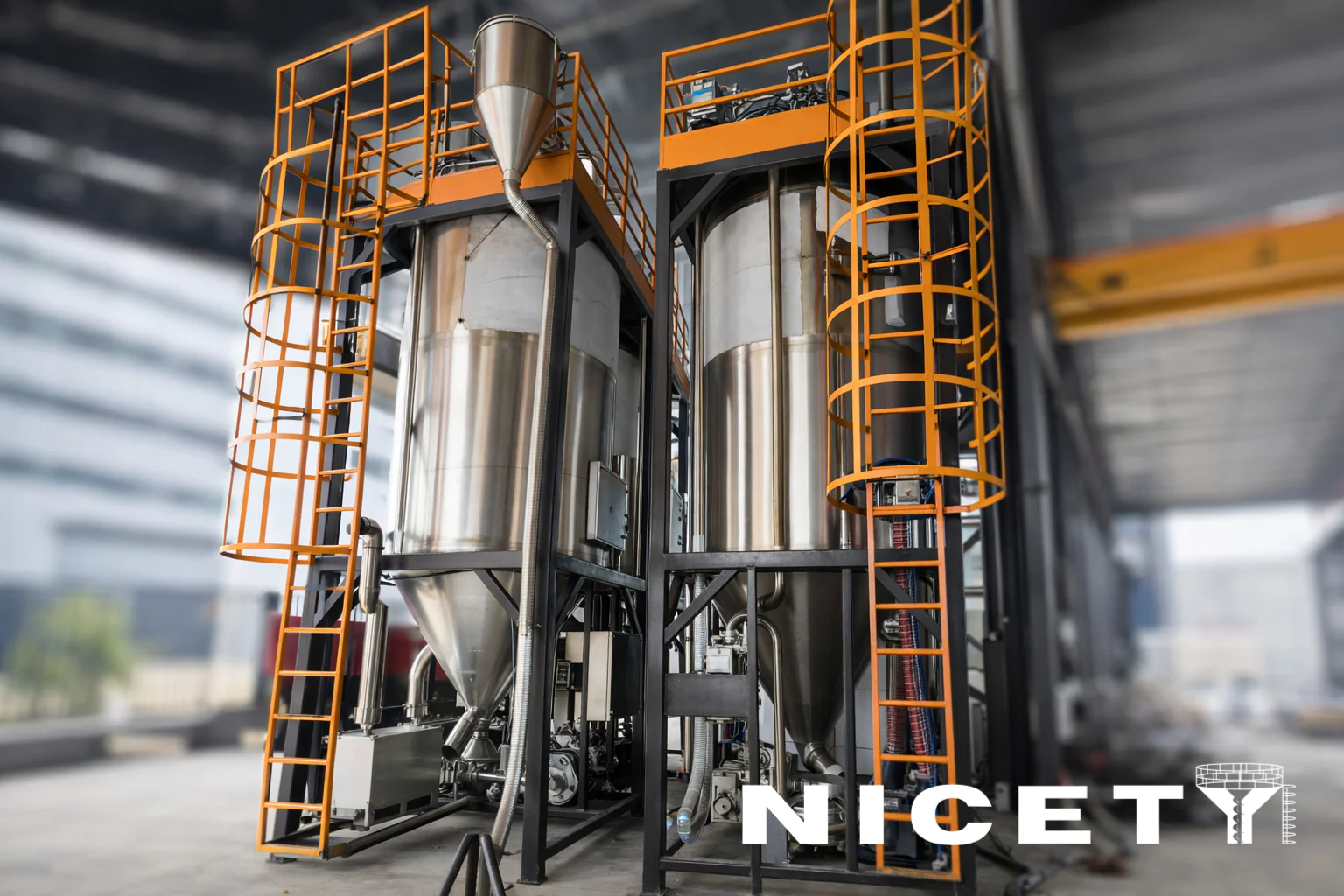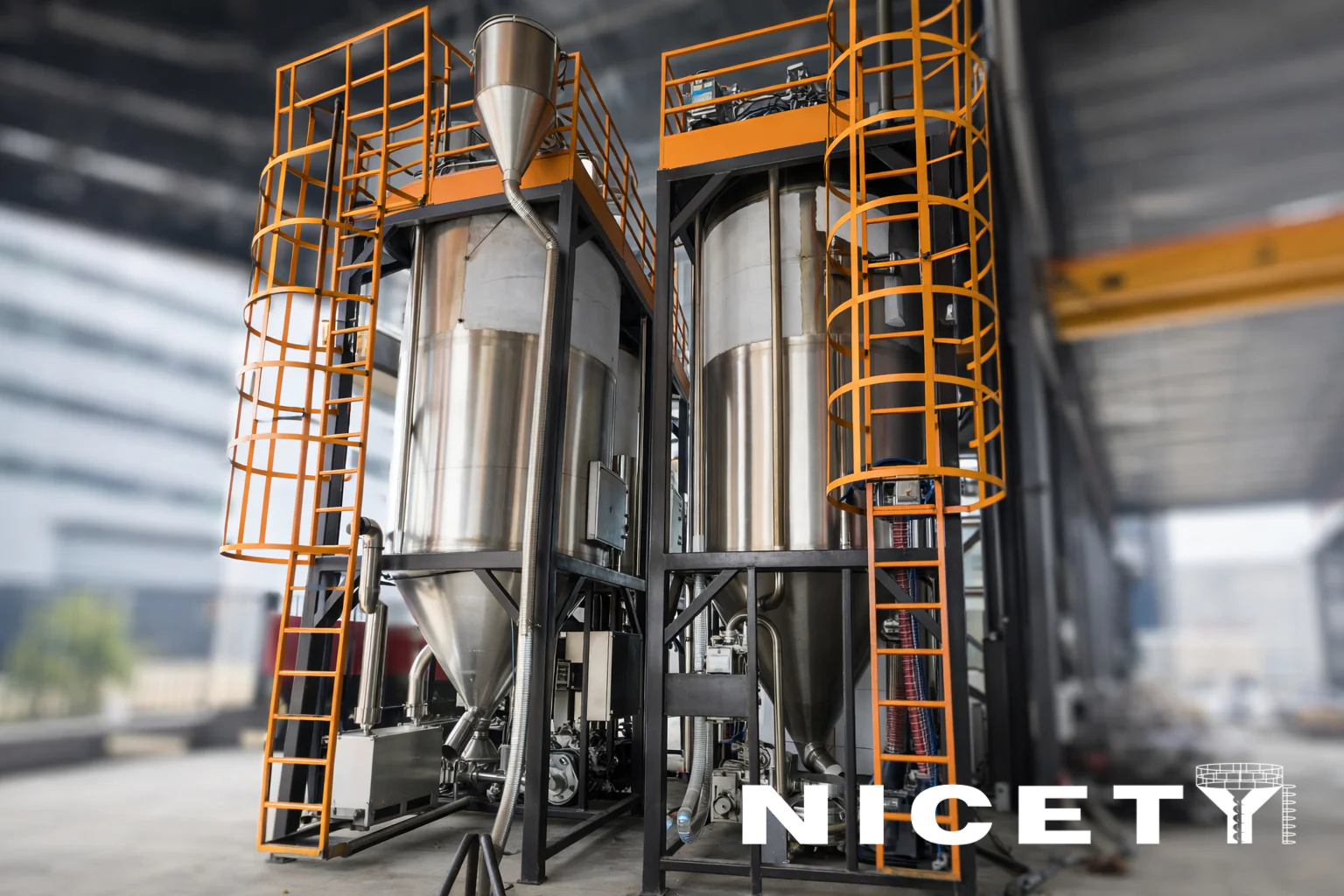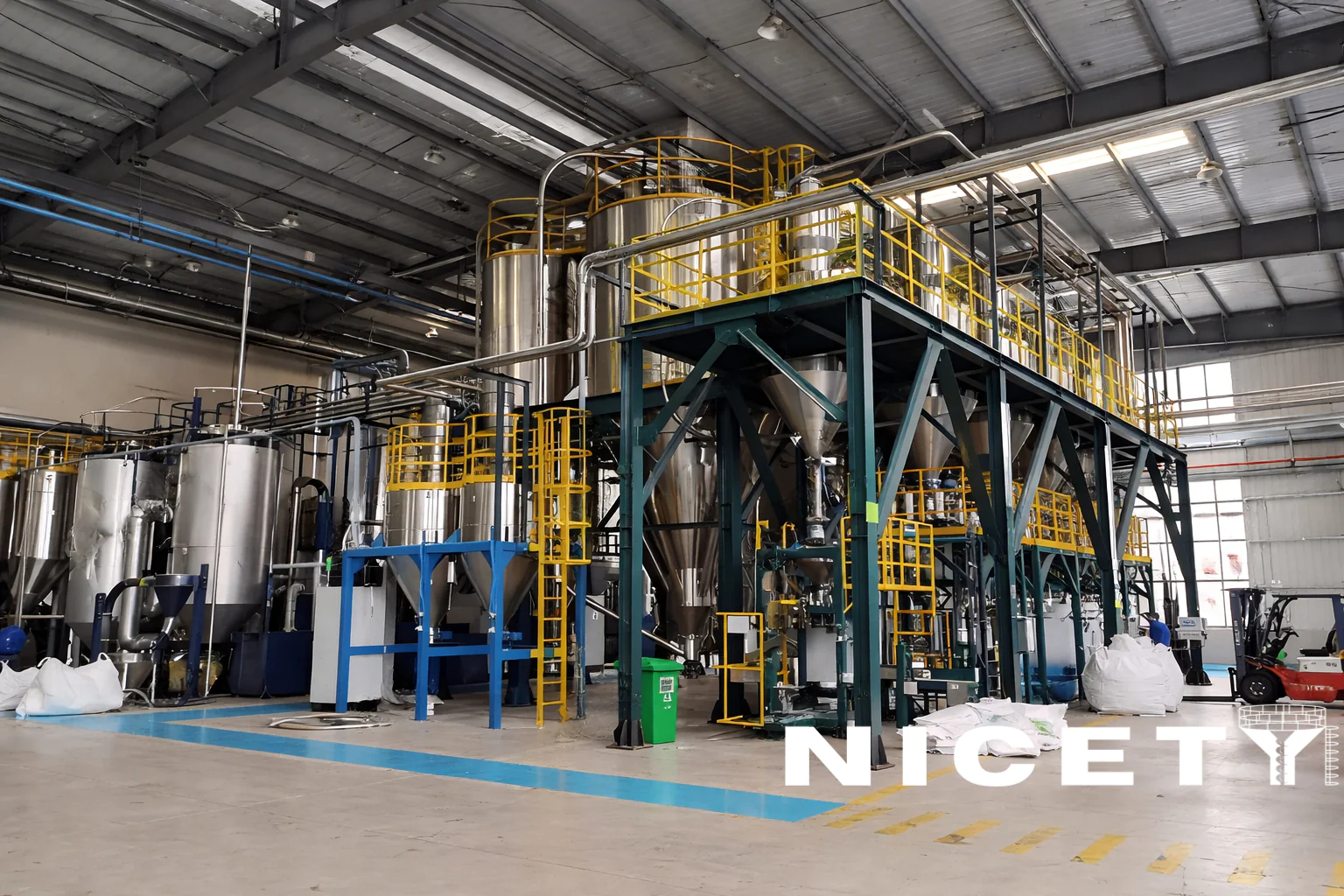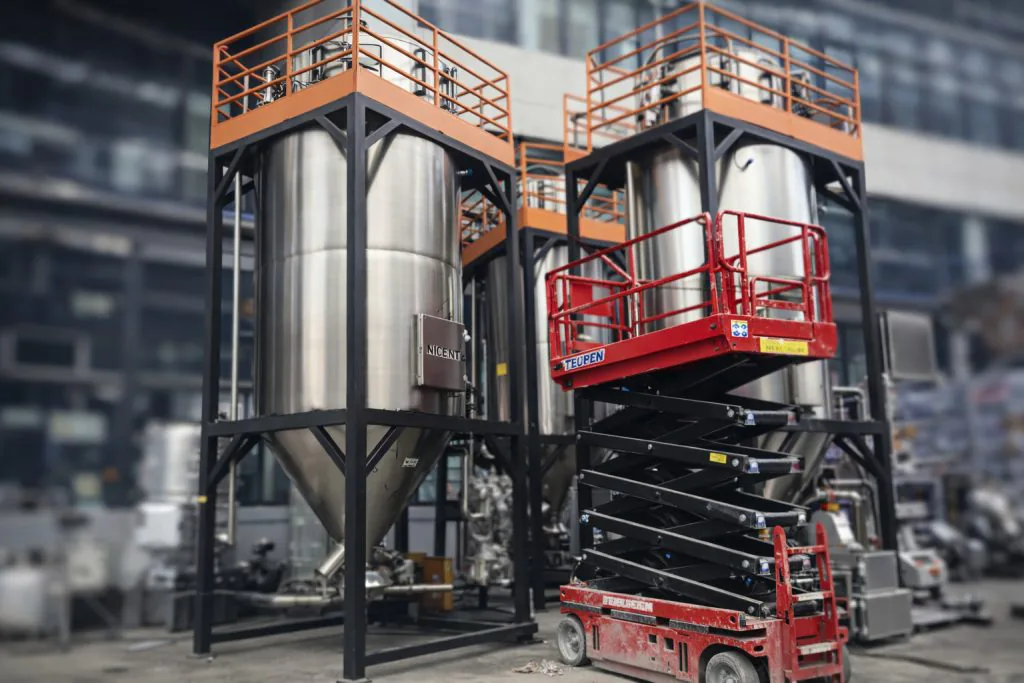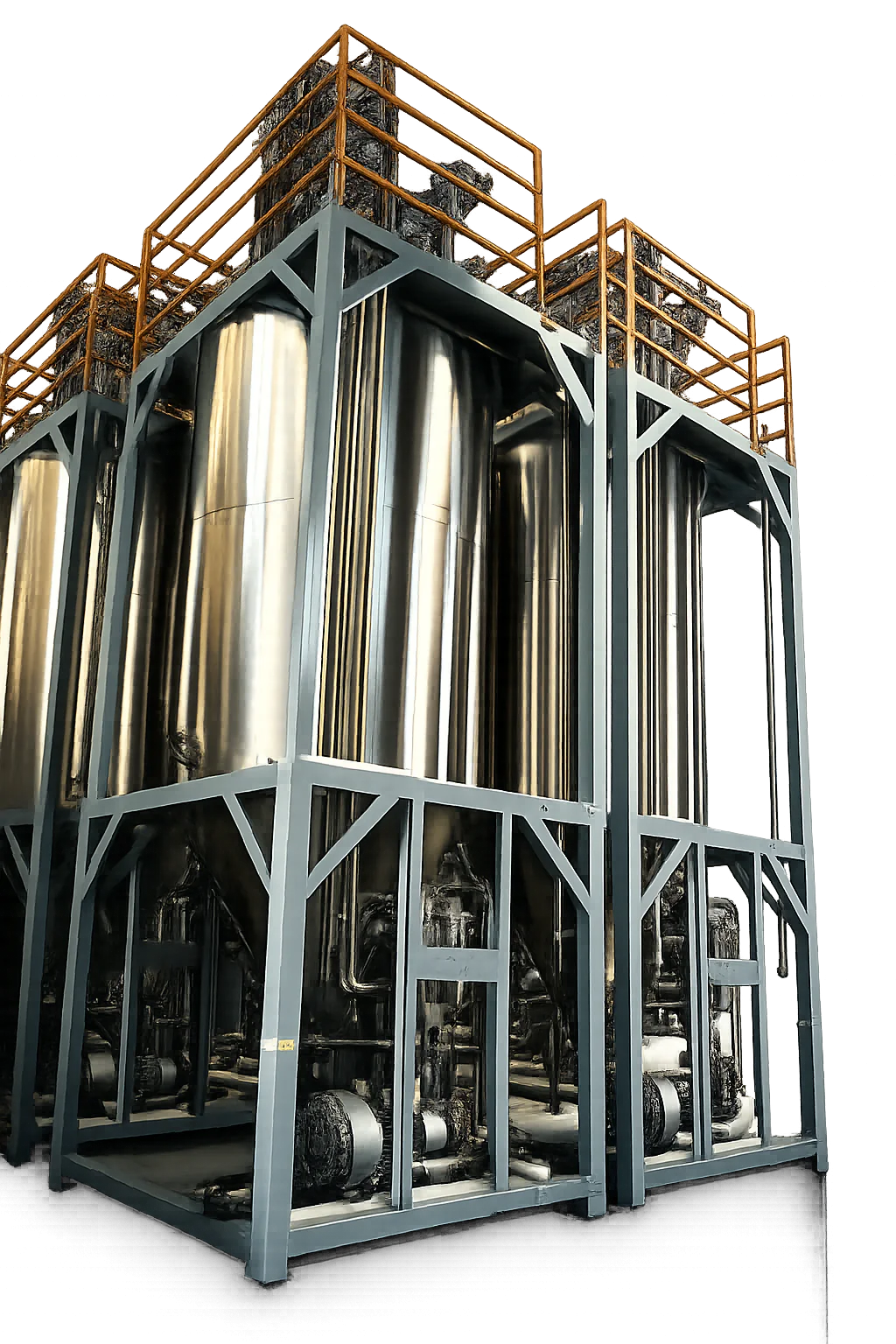
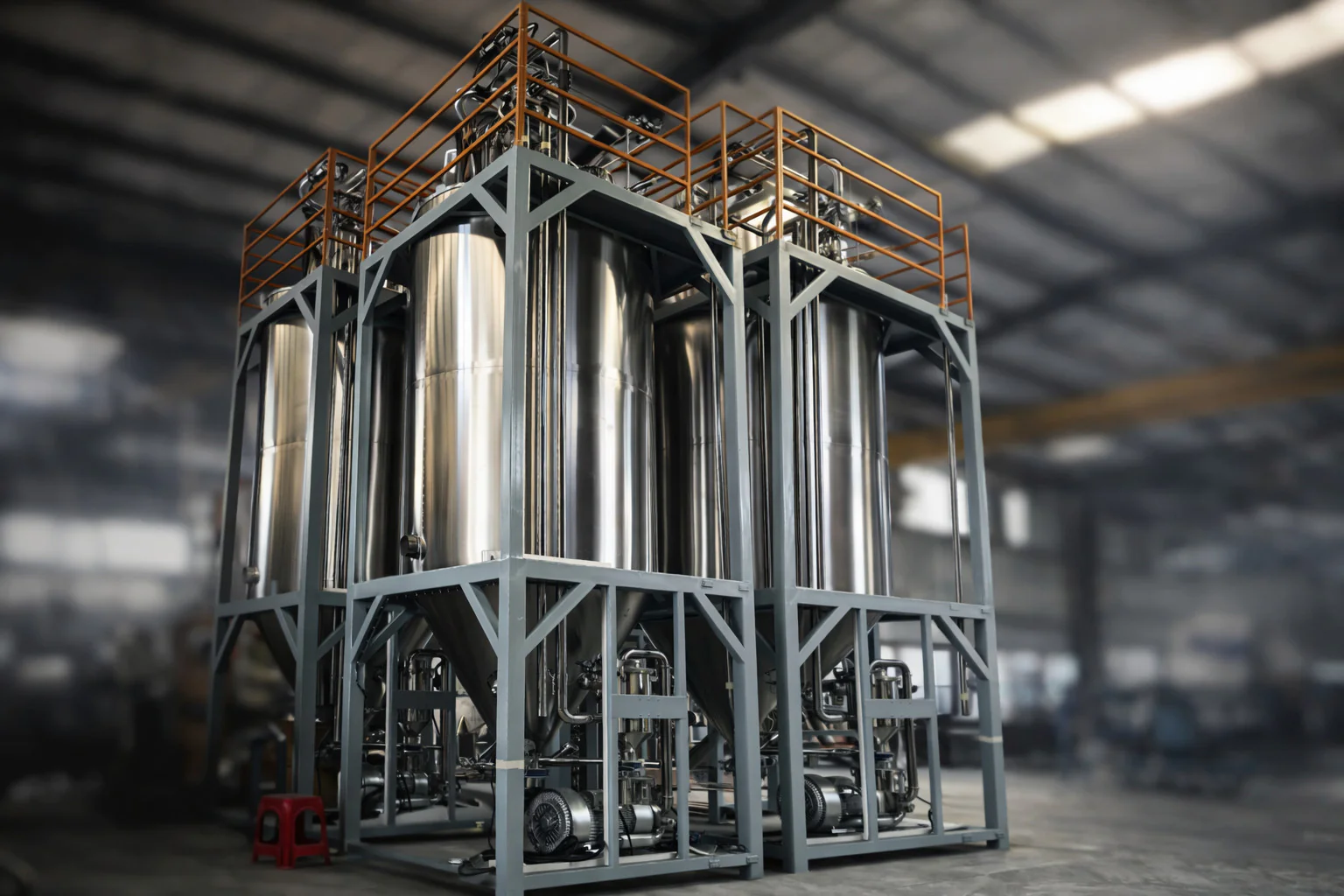
VOC Deodorizing Drying System for Plastic Recycling & Processing
Advanced Odor Removal & Waste Gas Treatment | Remove VOC Emissions from Regrind Materials | EPA & EU Compliant Solutions
500+
99.9%
12+
24/7
EAP
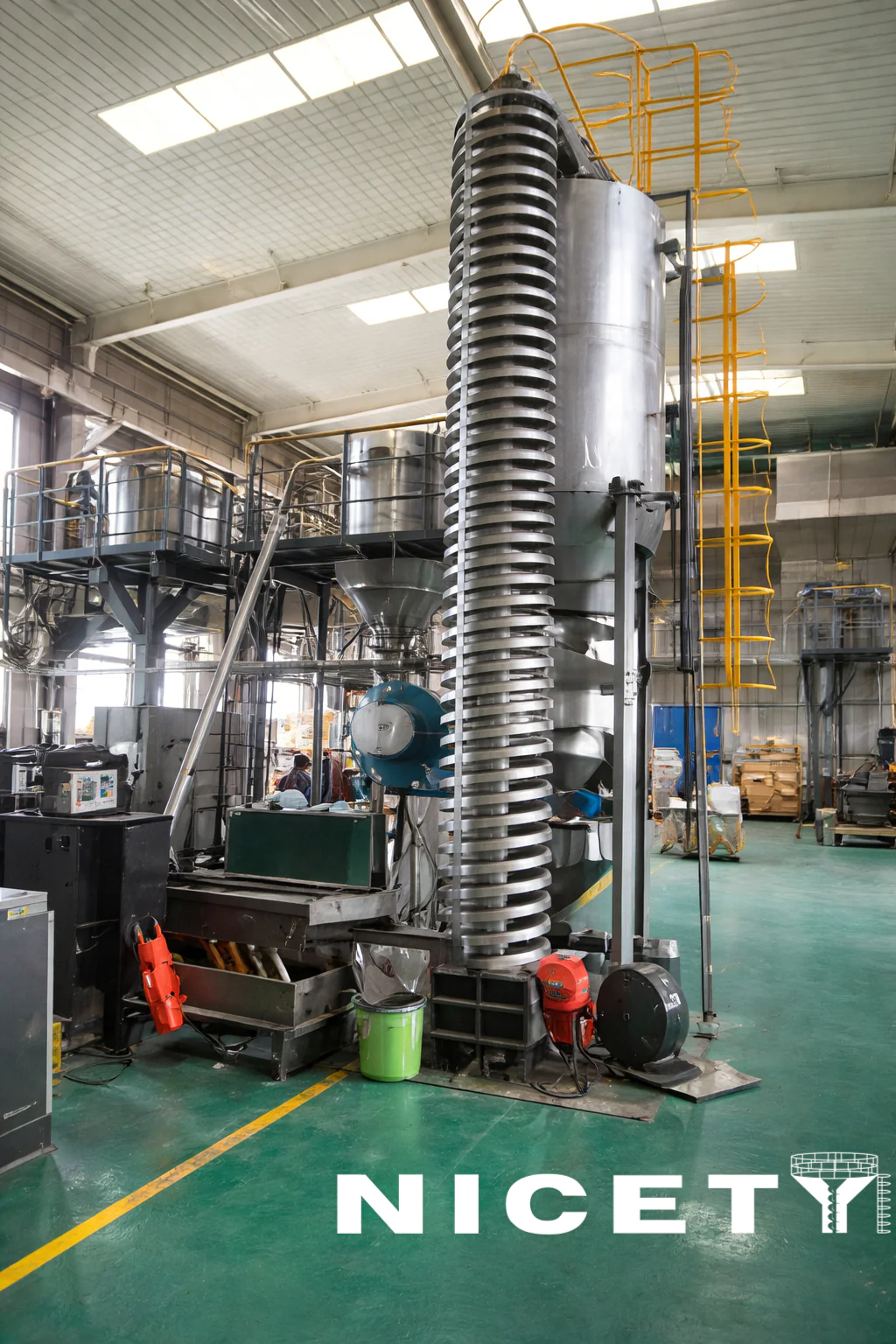
Ensures uniform material circulation during drying and deodorization while preventing pellet damage and agglomeration.
VOC Deodorizing Drying System
A VOC deodorizing drying system is an industrial air-treatment system that dries products while simultaneously removing volatile organic compounds (VOCs) and odors generated during the drying process, ensuring environmental compliance and safe air emissions.
💡 Industry Challenge Solved: VOC deodorization and drying systems are widely used to remove styrene from PS, acetaldehyde from PET, amines from PA, hydrocarbons from PE/PP, r-HDPE flakes and complex VOC odors such as citric acid from recycled plastics during drying and processing.
- Production High-Quality Granules Details

Satisfaction Guaranteed

1 Year Quality Warranty

On Time Delivery Guaranteed
OVERVIEW
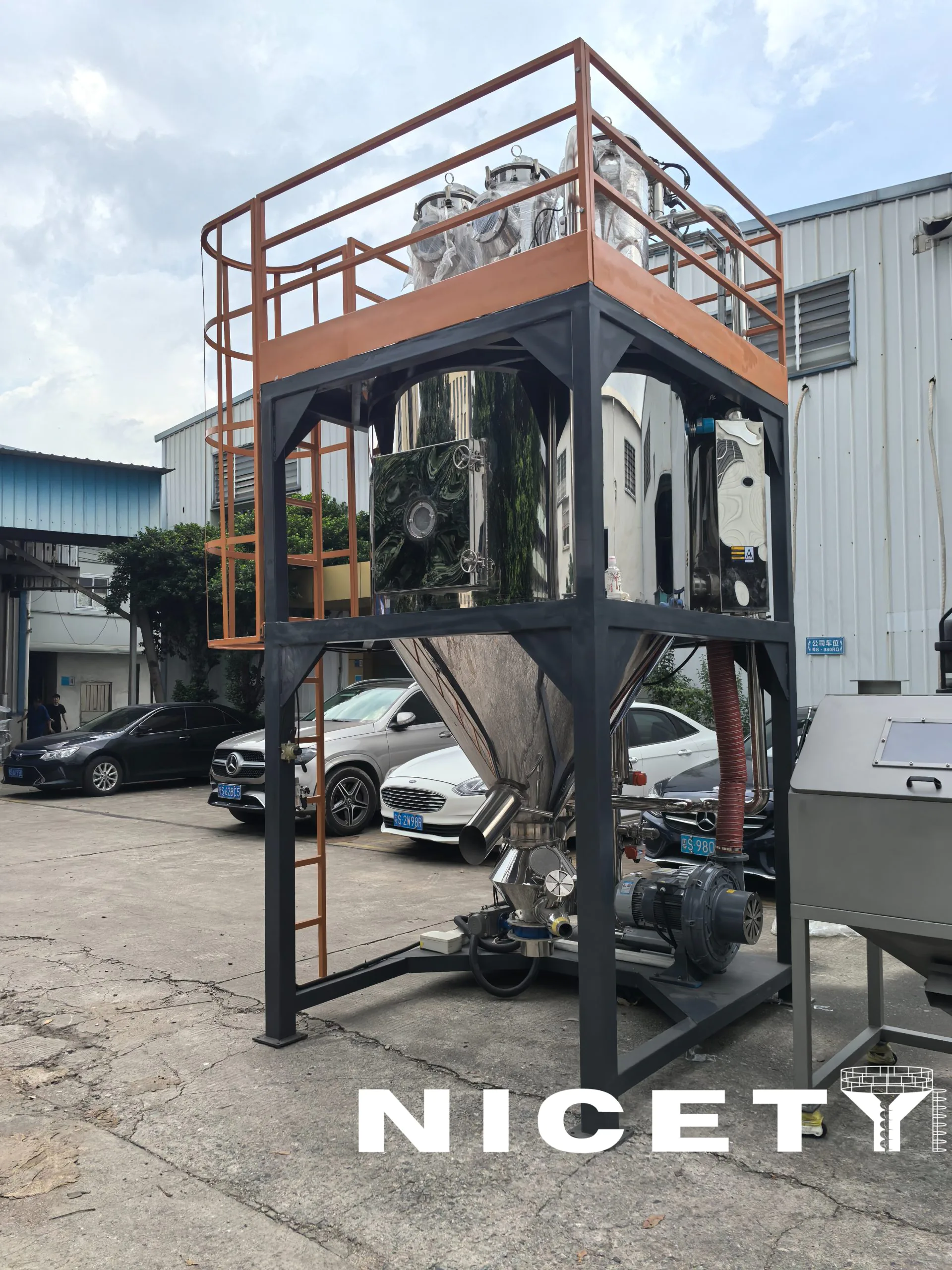
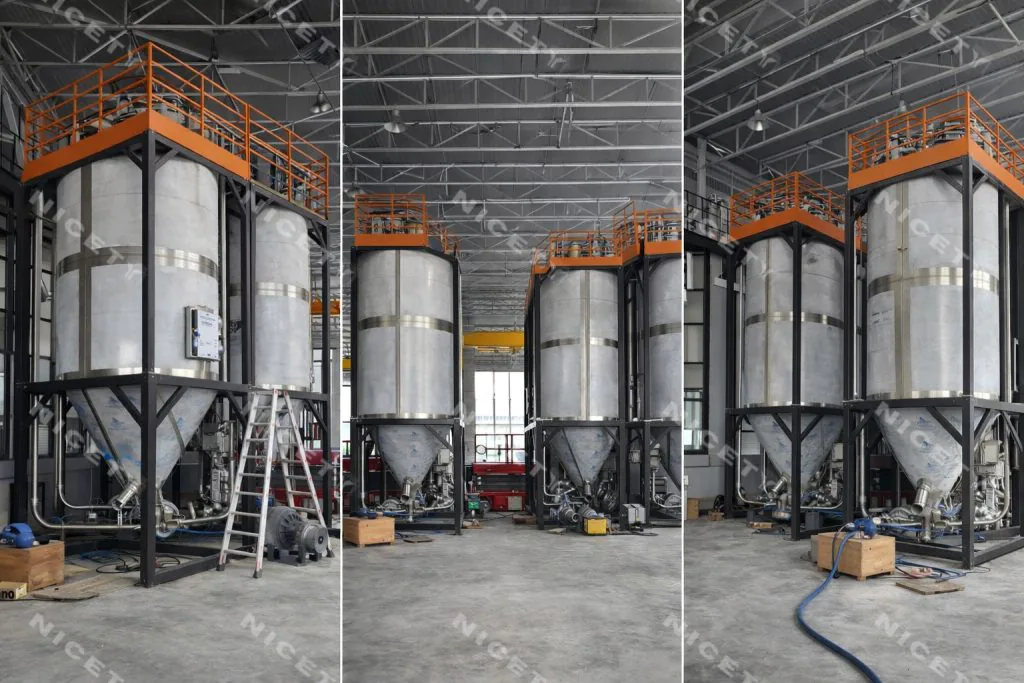
The VOC Deodorizing Drying System from Nicety Machinery Co., Ltd is designed to deliver controlled drying, uniform material circulation, and reliable odor removal for plastic processing and recycling operations.

Homogenization Silo
Ensures uniform material circulation during drying and deodorization while preventing pellet damage and agglomeration.
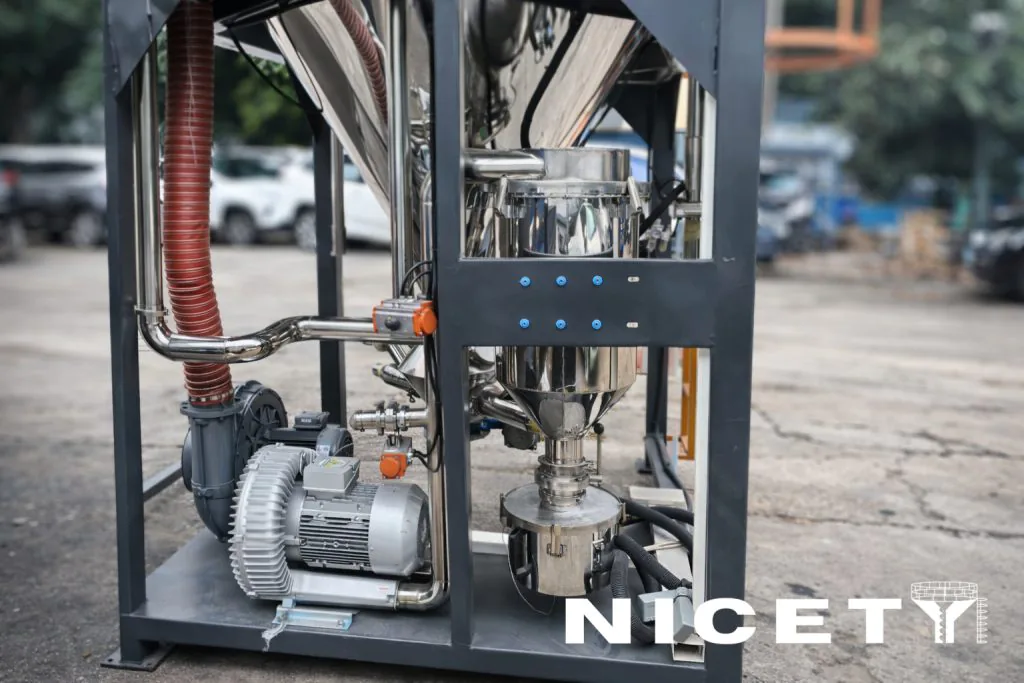
Heater Unit
Provides controlled thermal energy to release moisture and VOCs safely, maintaining stable performance within ±2°C.
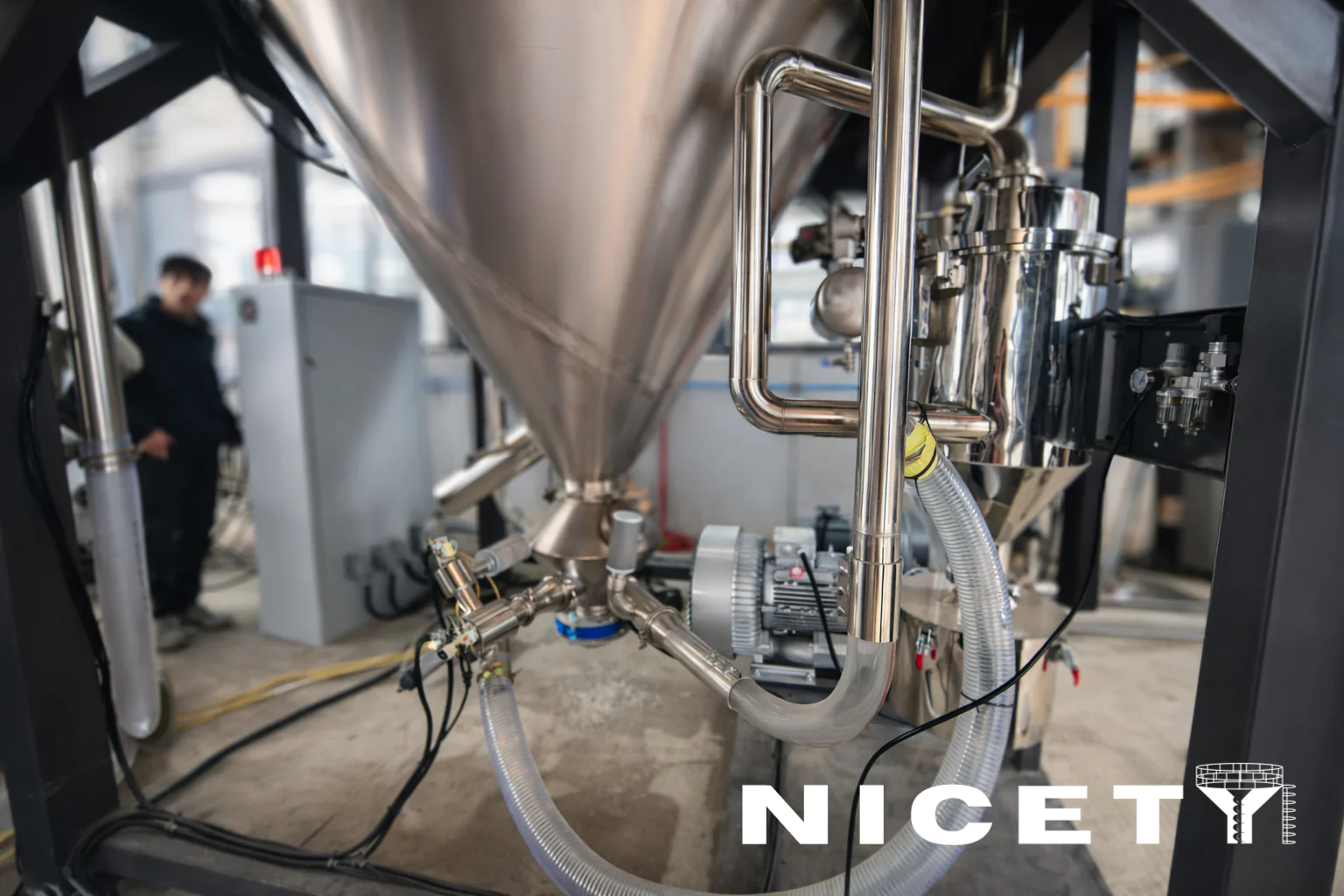
Ordor Control
Enable sealed material transfer and continuous circulation, ensuring consistent treatment and preventing odor leakage.
How Does the VOC Deodorizing Drying System Work?
- No.3 Silo
- No.4 Silo
- No.5 Silo
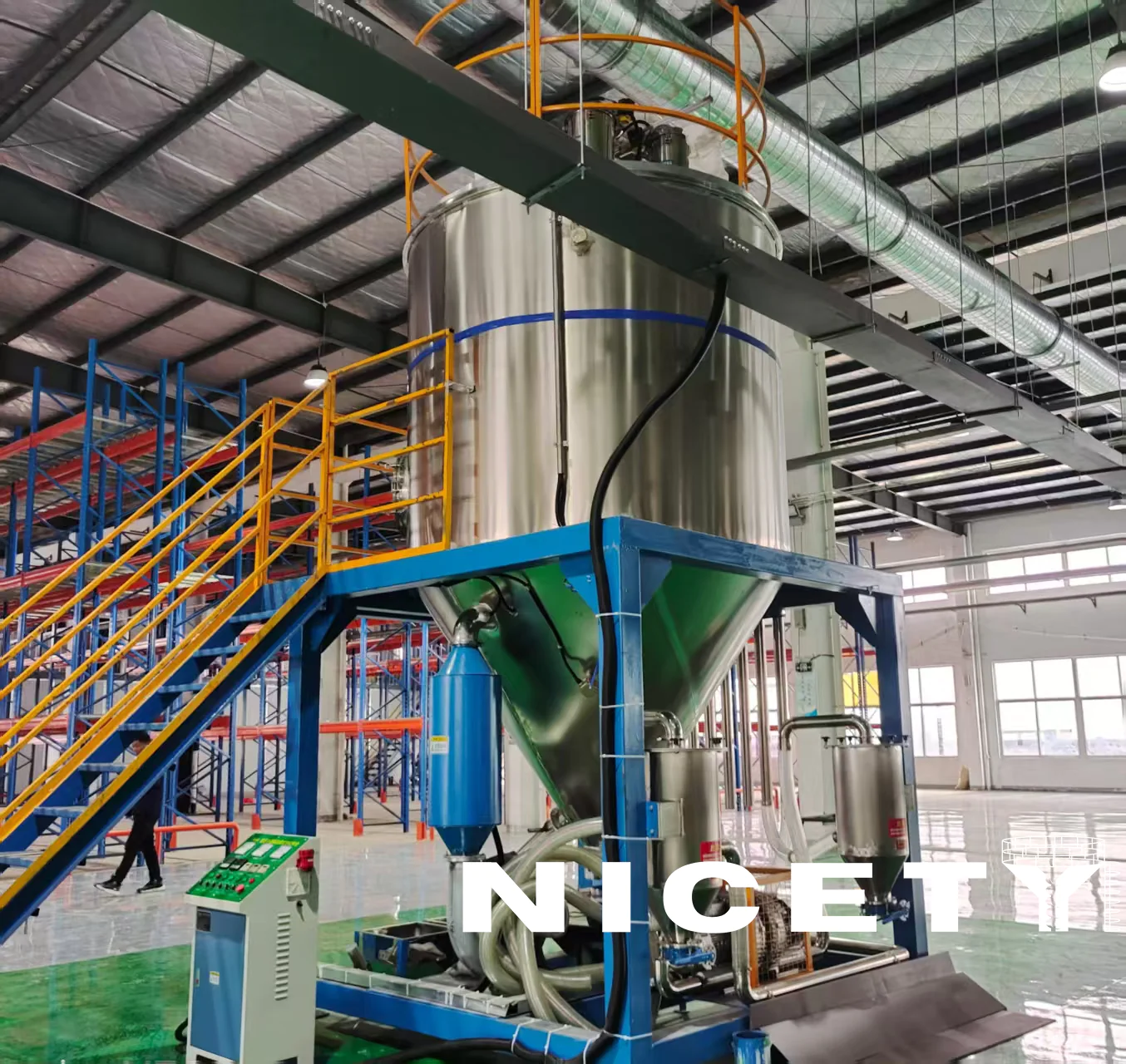
Non-destructive Homogenization Silo
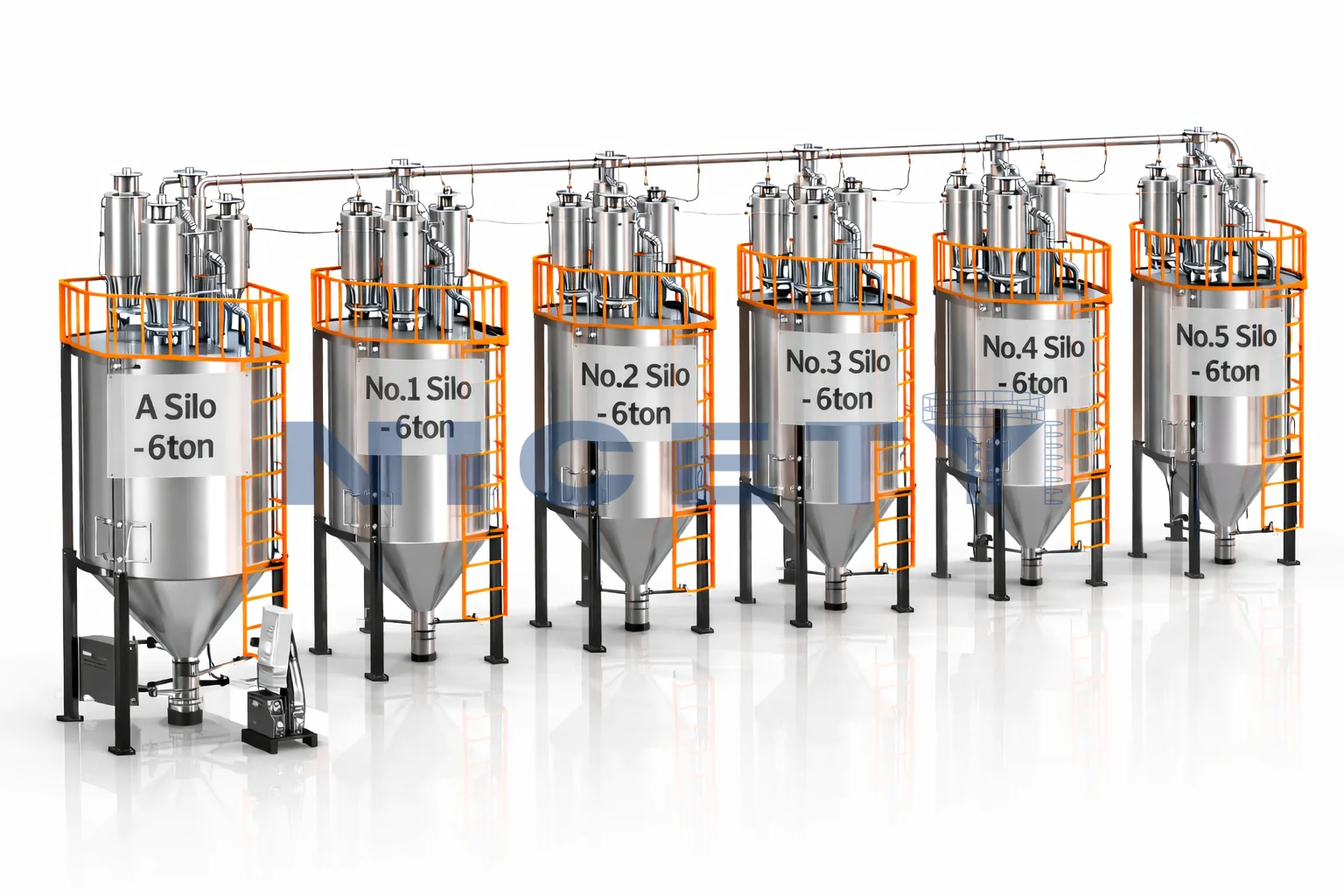
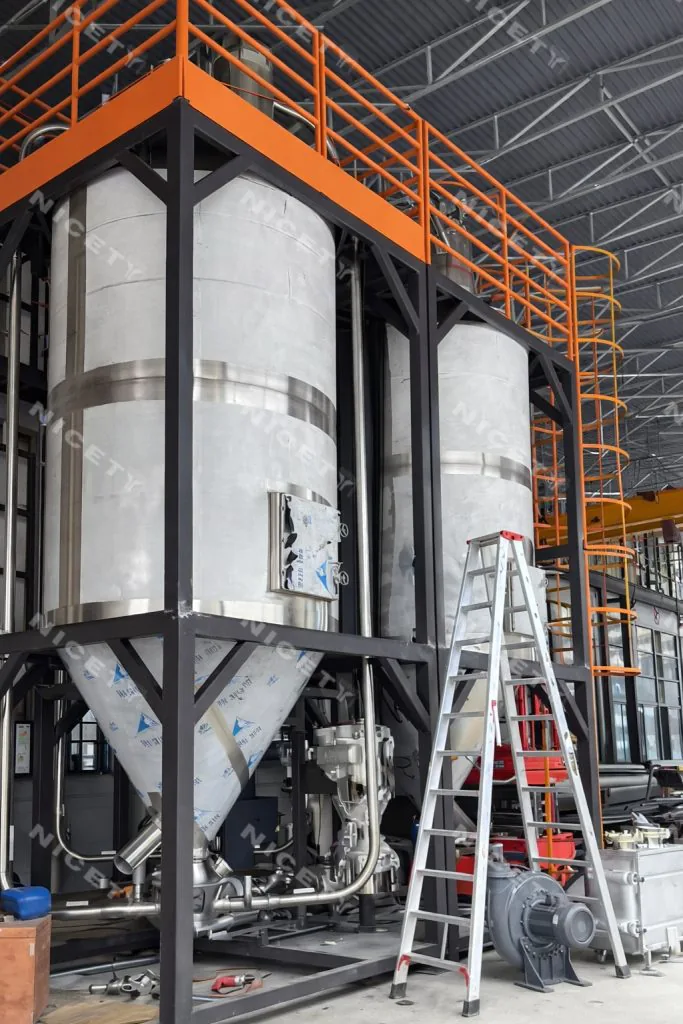
The non-destructive homogenization silo ensures uniform material circulation during drying and deodorization without pellet damage or excessive shear. Continuous internal circulation exposes materials evenly to controlled heat, enabling gradual VOC release while preventing overheating, agglomeration, and material degradation.
Which Industries and Applications Benefit from VOC Deodorizing Drying Systems?
Nicety Systems are applied in a wide range of industries where VOC control during drying is required:
Tell Us What's your material type And We'll tailor-make solutions for you
VOC Deodorizing Drying System – Plastic Types & Odor Removal
The VOC deodorizing drying system removes odors such as styrene, acetaldehyde, amines, hydrocarbons, and mixed VOCs from PE, PP, PS, ABS, PET, PA, and recycled plastics during drying and processing.
Post-consumer bottle recycling, contaminated food containers. Drying: 160-170°C, 4-6 hours. Critical for removing acetaldehyde and other odors. Enables food-grade recycling compliance.
Milk jugs, detergent bottles, agricultural films. Drying: 80-100°C, 2-4 hours. Eliminates product residue odors and surface contaminants. Suitable for blow molding and injection molding applications.
Food containers, automotive parts, fibers. Drying: 80-100°C, 2-3 hours. Removes processing additives and degradation products. Restores material properties for premium applications.
Construction materials, profiles, packaging. Drying: 60-80°C, 2-4 hours. Critical odor control for plasticizers and stabilizers. Special handling for HCl emissions during processing.
Packaging, insulation, disposable products. Drying: 70-90°C, 2-3 hours. Eliminates styrene monomer odor and ensures workplace safety. EPS (expanded) requires specialized handling.
Electronic housings, automotive parts. Drying: 80-90°C, 3-4 hours. Removes residual monomers and flame retardant off-gassing. Enables high-quality recycled ABS production.
Engineering plastics, textiles. Drying: 80-100°C with -40°C dew point dehumidification, 4-8 hours. Highly hygroscopic – requires integrated dehumidifying dryer. VOC control for processing additives.
Optical media, automotive glazing, electronics. Drying: 120°C with dehumidification, 3-4 hours. Sensitive to thermal degradation – requires precise temperature control. Odor elimination critical for indoor applications.
nicety Machinery Co., Ltd
Most Popular Questions.
If you have any further questions or need a customized solution, feel free to contact us today!
Yes. It is designed to remove moisture and reduce volatile compounds (VOCs) from plastic materials, which helps lower bad smells, smoke-like odor, and processing fumes. It is especially effective for recycled plastics, regrind, and odor-sensitive applications.
In most applications, each batch requires about 5–7 hours of deodorizing and drying time. With a multi-hopper continuous working design, the system processes materials in sequence, allowing continuous supply to production. This means effective deodorizing treatment without slowing down overall production efficiency.
It is commonly used for materials such as PET, PA, PC, ABS, PS, PP, and PE, especially when the material has moisture, residual odor, or recycled content. It is a good choice for factories producing higher-quality parts with stricter odor and appearance requirements.
No — this system is designed for continuous, uninterrupted processing, so it will not slow down normal production. With multiple hoppers working in a connected sequence, materials can be deodorized and dried continuously without interrupting material supply to the production line. At the same time, the system also provides gentle and non-destructive material homogenization, helping improve material consistency without damaging the resin. As a result, it supports production efficiency while improving final product quality by reducing odor, moisture-related defects, and processing instability.
The key points are actual drying and deodorizing performance, material compatibility, processing capacity, temperature control, energy efficiency, and ease of cleaning/maintenance. A good system should match your material type, hourly throughput, and production line requirements.
How Can We Handle Your VOC Deodorizing Drying System Order?
As an experienced manufacturer, Nicety Machinery Co., Ltd manages every VOC deodorizing drying system order through a clear, controlled, and reliable process, ensuring performance, quality, and long-term operational stability.
Step 1. Requirement Evaluation & Technical Confirmation
We begin by carefully reviewing your material type, odor characteristics, production capacity, and process conditions. Our engineering team works directly with you to confirm technical requirements, ensuring the system configuration is accurate, practical, and application-specific.
Step 2. Customized System Design
Each VOC deodorizing drying system is engineered to order. Based on confirmed requirements, we design the homogenization silos, heating system, conveying layout, and control logic to achieve optimal deodorization efficiency without material risk.
Phone: (86) 186 1510-1559 | Email: [email protected]
Step 3. Manufacturing & Quality Control
All key components are manufactured and assembled under strict internal quality control standards. Critical parameters such as temperature stability, conveying performance, and system sealing are verified before delivery to ensure consistent and repeatable operation.
Step 4. Pre-Delivery Testing & Verification
Before shipment, the system undergoes functional testing and inspection, confirming stable operation, control accuracy, and safety performance. This step minimizes on-site adjustments and ensures a smooth commissioning process.
Step 5. Installation Guidance & Commissioning Support
We provide clear installation guidance and commissioning support, helping your team bring the system into stable operation efficiently. Our goal is to ensure the system performs as expected from day one.
Step 6. Long-Term Technical Support
Beyond delivery, Nicety Machinery offers ongoing technical support and service assistance, ensuring your VOC deodorizing drying system continues to operate reliably throughout its service life.
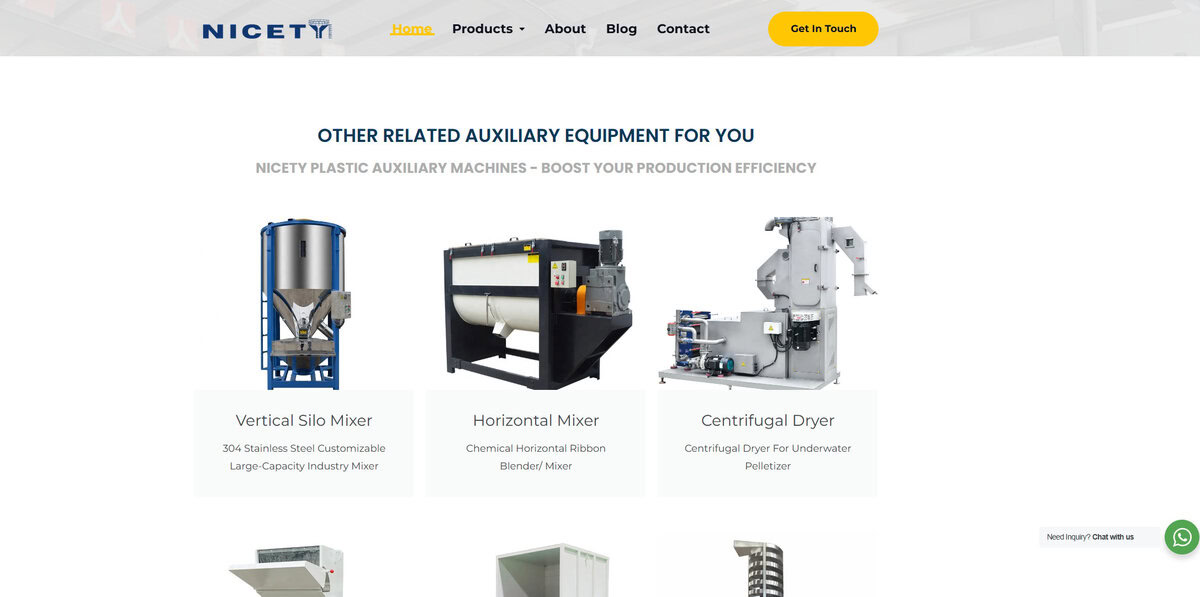
Other Related Auxiliary Equipment for you
NICETY PLASTIC Auxiliary MACHINES - BOOST YOUR Production efficiency
Want to improve or increase the output of your plastics processing plant?
Contact us to receive our brochure. We specialize in plastic mixing, conveying, and centralized material handling systems.
NICETY VOC deodorizing drying system Delivery Cases
China - Dongguan
- Raw Material: PP & EVA materials
Application & Odor Source:
Applied in household and consumer plastic products. The system removes additive, plasticizer, and processing-related odors to improve product acceptance.
Indonesia - Java Island
- Raw Material: R-HDPE crushed recycled materials
Application & Odor Source:
Reused for industrial plastic containers and molded products. Our system removes oil, storage, and recycled feedstock odors commonly found in post-consumer HDPE.
Brazil - São Paulo
- Raw Material: TPE elastic compounds
Application & Odor Source:
Used for consumer and household products. The deodorizing process focuses on reducing plasticizer-related and processing odors while maintaining material flexibility.
Turkey - Istanbul
- Raw Material: PET pellets
Application & Odor Source:
Used for packaging applications where odor sensitivity is critical. The system focuses on removing acetaldehyde odor generated during PET drying and thermal treatment.
Australia - Queensland
- Raw Material: Recycled ABS & PS pellets
Application & Odor Source:
Used for automotive interior and electrical housing components. The system mainly removes styrene-related odors and mixed VOC smells originating from recycled feedstock, previous processing residues, and thermal history.
Those delivery case reflects Nicety Machinery’s ability to translate application requirements into reliable, engineered VOC deodorizing drying systems, supported by controlled manufacturing and responsible technical service.
NICETY: VOC Deodorizing Drying System China Manufacturer
As a professional manufacturer, Nicety Machinery Co., Ltd specializes in the design and production of VOC deodorizing drying systems for plastic processing and recycling applications.
Reliable Plastic machine manufacturer in China
With a strong focus on engineering reliability, process safety, and odor control performance, NICETY develops systems that integrate non-destructive homogenization silos, precise heating technology, and sealed vacuum conveying to ensure stable drying and effective VOC removal.
Each system is engineered to application requirements, supporting a wide range of plastic materials and odor challenges while delivering consistent performance, energy efficiency, and long-term operational stability.
Why Choose Nicety Machinery Co., Ltd?
Reliable VOC Deodorizing Drying System Solutions
We specialize in providing customized VOC deodorizing drying systems for plastic processing and recycling, ensuring effective odor control, energy efficiency, and long-term reliable performance. Our engineering expertise and rigorous quality control guarantee that every system meets real production needs, not just theoretical specifications.
Tailored Solutions
We create solutions based on your material and capacity needs.
Proven Performance
Our systems have helped industries like plastic recycling and automotive.
Global Support
We offer dedicated support throughout installation and operation.
Energy Efficiency
Our systems reduce energy consumption and improve sustainability.
How to Remove Odor from Recycled Plastic Pellets?
When recycled pellets carry a strong smell, I know it threatens product quality, customer trust, and even the price you can ask.
To remove odor from recycled plastic pellets, I control contamination at the source, optimize degassing during extrusion, and use a VOC Deodorizing Non-Destructive Homogenization Silo System to strip odor-causing molecules after pelletizing. This combined approach lowers VOC levels, stabilizes smell, and improves long-term storage quality.

I want to walk you through every stage of odor control1 the same way I do when I help plant owners upgrade their recycling lines2. I will end by exploring the VOC deodorizing silo system, which has become one of the most powerful tools for high-value recycled pellets3.
What really causes odor in recycled plastic pellets?
Odor problems usually begin long before extrusion. Many operators think smell comes from the pelletizer, but in my experience, the main cause hides in the collection, washing, drying, and handling stages.
Bad smell comes from contamination4, degradation, and absorbed volatile molecules. Each type behaves differently, and I never rely on one single deodorizing step.

I want to break these causes into clear groups you can check in your plant.
Main sources of odor I see in recycled pellets
| Source type | Typical sign | Common materials | First countermeasure |
|---|---|---|---|
| Organic contamination | Food, oil, detergent smells | PET bottles, PE film, household PP | High-temp washing, surfactant, label removal |
| Residual monomers | Sweet or chemical smell | ABS, PS, TPU, some copolymers | Longer drying, stronger degassing5 |
| Thermal degradation | Burnt, smoky, acidic smell | PP, PE, PVC | Lower melt temp, shorter residence |
| Moisture problems | Musty smell | PET, PA, wet PE film | Proper drying and sealed storage |
| External chemicals | Fuel, pesticide, perfume | Agricultural film, chemical drums | Sorting, pre-venting, controlled rejection |
Years ago, I worked with a batch of mixed PP crates that smelled like old oil. We later learned the crates had been used to store lubricant. No extruder adjustment6 could fully remove the smell. That moment taught me that odor control must begin with feedstock knowledge, not just machine settings.
Which extrusion parameters7 have the greatest impact on odor?
When smell continues after washing, I look at the extrusion window. Good degassing5 depends on melt temperature, vacuum strength, and residence time. If even one is wrong, odor stays in the pellets.
Here is how I usually set up deodorizing conditions for PP and PE.
Typical deodorizing parameters I use in recycled PP/PE extrusion
| Parameter | Typical value | Effect on odor | Risk of incorrect setting |
|---|---|---|---|
| Melt temperature (main zone) | 190–220°C | Releases absorbed volatiles | Too high increases degradation |
| Melt temperature (vent zone) | 200–230°C | Improves vacuum stripping | Too low leaves VOCs trapped |
| Vacuum level | –0.8 to –0.95 bar | Removes VOCs and moisture | Weak vacuum almost useless |
| Screw speed | 150–400 rpm | Controls shear and residence time | Too fast traps vapor, too slow overheats |
| Throughput load | 70–85% of rated capacity | Maintains open melt surface | Overload reduces degassing efficiency |
I once reduced odor in a PE film line by only improving vacuum from –0.75 to –0.92 bar. The customer told me the smell changed from “garbage-like” to almost neutral. That experience reinforced how powerful proper degassing can be.
What auxiliary equipment helps remove odor most effectively?
Many owners want a simple solution. Some add deodorant masterbatch8. Some try a new filter pack. These help, but they do not solve deeper VOC problems.
Advanced deodorizing needs better vapor removal9, better melt cleaning, and post-pellet treatment. The last part often makes the biggest difference for odor-sensitive customers.

Below is how I compare auxiliary options.
Effective deodorizing auxiliaries and their application
| Equipment | Function | Strength | Best for |
|---|---|---|---|
| Strong vacuum system | Pulls VOCs out during melt processing | Big VOC reduction | PP/PE film, ABS, PS |
| Multiple vent zones | Extra degassing stages | Helps with very dirty feedstock | Mixed PCR materials |
| Melt filtration | Removes char and burnt particles | Reduces burnt smell | All materials |
| Hot-air/nitrogen deodorizing silo | Post-pellet VOC removal | Excellent stability and low odor | High-value recycled pellets |
| Deodorant masterbatch | Absorbs remaining VOCs | Fine-tuning only | Markets with tight smell tolerance |
Now I want to focus on the system that has become essential for high-grade recycled pellets.
Why is the VOC Deodorizing Non-Destructive Homogenization Silo System so important?
When extrusion degassing is still not enough, I add a VOC Deodorizing Non-Destructive Homogenization Silo System10. This system removes odor molecules without reheating or degrading the pellets, and it stabilizes the entire batch.
This silo system works by sending controlled hot air or nitrogen through a tall, slow-moving column of pellets. VOCs gradually diffuse out of the polymer. At the same time, homogenization11 ensures every kilogram of pellets has the same odor level.

The system solves three problems at once: odor, VOC safety, and batch inconsistency.
How the VOC deodorizing silo works and why it matters
| Working Principle | Description | Benefit to pellet quality12 |
|---|---|---|
| Hot-air or nitrogen purging | Warm, dry air moves through pellets | Diffuses VOCs out without melting the polymer |
| Slow pellet descent | Pellets move downward by gravity | Ensures long contact time and stable treatment |
| Non-destructive process | No melting or mechanical stress | No loss of MFI, color, or strength |
| Homogenization mixing | Internal flow plates balance pellet distribution | Uniform odor across entire production lot |
| VOC collection and filtration | Exhaust passes through activated carbon filters | Captures VOCs and protects the environment |
In one plant I supported in Saudi Arabia, the recycled PP pellets were acceptable in strength but carried a chemical odor. The owner needed indoor-grade odor performance13. We installed a 12-hour VOC deodorizing silo and ran hot dry air at 85°C. The VOC reading dropped by more than 70%, and the odor score reduced from level 4 to level 1. The customer accepted the material immediately.
Why the VOC deodorizing silo is now a key system in high-quality recycling
| Advantage | Explanation |
|---|---|
| Strong odor reduction | Removes VOCs that extrusion alone cannot release |
| Protects mechanical properties | No melting, no chain breakage |
| Improves batch consistency | Homogenization removes odor variation between batches |
| Long-term odor stability | Pellets resist “return odor” during storage |
| Fits existing production lines | Easy to retrofit after pelletizer |
For me, this silo system is the missing link between basic recycling and high-end recycled resin production. It lets plants sell pellets into markets like household goods, automotive interior parts, and consumer packaging, where odor is not just a preference but a requirement.
How do I control and verify odor performance after deodorizing?
I run simple but effective tests to confirm deodorizing performance. These tests help you catch problems before customers do.
Here is what I normally set up.
Practical odor control methods
| Method | Purpose | Frequency |
|---|---|---|
| Smell panel test | Human perception baseline | Each batch |
| Sealed bag heat test | Simulates customer drying or molding process | Daily |
| VOC meter reading | Measures VOC drop after silo treatment | Daily |
| Customer simulation melt | Small melt test at actual processing temp | Weekly |
| Odor tracking sheet | Links smell to process settings | Continuous |
When odor control becomes a daily routine, complaint rates drop and customer confidence rises. I have seen this pattern in every plant that takes odor seriously.
Conclusion
When I control odor from raw material to extrusion and finish with a VOC deodorizing silo system, recycled pellets reach higher markets with stable quality, low VOCs, and almost no smell.
-
Explore various strategies for odor control to enhance product quality and customer satisfaction. ↩
-
Upgrading recycling lines can enhance efficiency and product quality; discover the best practices. ↩
-
Understanding the characteristics of high-value pellets can guide production strategies. ↩
-
Identifying contamination sources is crucial for effective odor management in recycled materials. ↩
-
Discover how proper degassing can significantly reduce odors in recycled plastic pellets. ↩ ↩
-
Learn how making the right adjustments can significantly reduce odors in recycled materials. ↩
-
Understanding these parameters can help optimize the production process for better quality. ↩
-
Explore how deodorant masterbatches can fine-tune odor control in recycled plastics. ↩
-
Effective vapor removal is key to reducing odors; learn about the best practices. ↩
-
Learn about this innovative system that improves the quality of recycled pellets without degrading them. ↩
-
Homogenization ensures consistent quality; understanding its role can enhance production. ↩
-
Understanding these factors can help improve the overall quality of recycled products. ↩
-
Verifying odor performance is essential for maintaining quality; explore effective methods. ↩
REQUEST A QUOTE
Contact Us
Have A Question? We're Here To Help!
Get in Touch
- +86 186-1510-1559
- [email protected]
Address
- Nicety Machinery Co., Ltd
- Hengjiang Industrial Zone, Dongguan City, Guangdong Province China
Whether you have questions about plastics mixing, blending, centralized feeding systems, or other plastics processing auxiliary equipment such as material handling and cooling, feel free to ask us. Our team is ready to provide you with the guidance and insight you need.
Send us a message
One of our sales consultants will contact you within 24 hours.