_画板-1-1.png)
What Is VOC Deodorizing Dryer?
Plastics that smell bad after processing hurt your product quality, your reputation, and your team’s health.
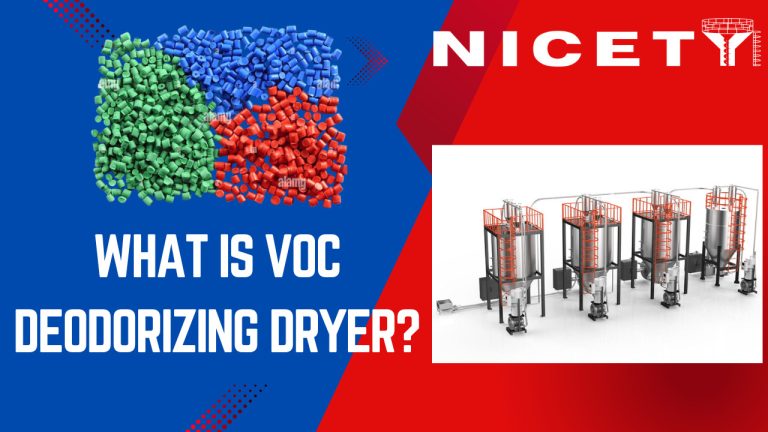
A VOC deodorizing dryer is a system used to remove volatile organic compounds (VOCs) and their odors from plastic materials during or after processing, especially in recycling or compounding.

Smelly materials aren’t just a problem—they’re a red flag. If you smell something off in your plastic pellets or sheets, it probably means the material isn’t clean or stable. That can lead to customer complaints, poor adhesion in later processes, or even safety problems in your factory. I’ve dealt with this myself before introducing VOC dryers into my plant.
How to remove odors from VOCs?
Odor problems come back again and again if you don’t treat the root cause.
To remove VOC odors, use a deodorizing drying system1 that combines heat, airflow, and a catalytic or activated carbon filtration process2 to capture and remove odor-causing compounds.

In most factories I’ve worked with, the typical solution for odor was just to dry the material longer or run more exhaust. This doesn’t work. You must control the temperature and airflow precisely, and use filtration to trap the VOCs as they come out. These VOCs are often from inks, oils, plasticizers, or low-molecular-weight residues in recycled or modified plastics. A proper VOC deodorizing dryer3 circulates hot air through the material, releases trapped VOCs, and filters the exhaust through active carbon beds or chemical oxidizers. This cycle keeps going until the material is clean and ready.
| Component | Function |
|---|---|
| Heating chamber | Raises temperature to release VOCs |
| Hot air circulation | Pulls VOCs out from plastic |
| Filtration system | Traps or oxidizes released VOCs |
| Airflow control system | Keeps drying efficient and safe |
What are the consequences of not removing VOC odors?
Ignoring VOC odors4 is more than just bad smell—it’s a sign of deeper trouble.
If you don’t remove VOC odors, your final plastic products may have quality issues, poor adhesion, and health risks for operators5 due to prolonged exposure.

I’ve seen customers reject full batches of film because of off-smells. VOCs can interfere with inks, bonding agents, or even cause swelling in sealed packages. Workers also report headaches or nausea after working near stinky extruders. And if you’re making masterbatch or compounds for export, odor complaints can stop your container at customs. That’s why I always recommend adding VOC dryers in the pre-extrusion stage, especially for recycled materials.
| Consequence | Description |
|---|---|
| Product rejection | Due to smell or instability |
| Processing difficulties | VOCs interfere with additives or bonding |
| Worker health risks | Long-term exposure may cause sickness |
| Environmental compliance | Foul air exhaust violates local rules |
How does the VOC odor removal drying system work?
If you understand the process, you can fix issues faster and improve product consistency.
The VOC drying system6 works by heating the plastic resin, creating airflow through the material to release VOCs, and filtering the exhaust air to remove or neutralize odors.

Three Silos (A,B,C):
Silos A & B: Dedicated to material heating, drying, and deodorization.
Silo C: Designed for material cooling and packaging.
Material Transfer: Inter-chamber material conveyance is managed by an 11 KW vacuum conveying system.
Internal Circulation: Silos A and B each employ an independent 11 kW vacuum conveying system forcontinuous dynamic circulation to prevent agalomeration and ensure uniform drving/deodorization.
Cooling Mlechanism: Silo C utilizes a 3 KW positive-pressure turbo-type high-pressure fan for natural aircirculation. A dehumidification air source (optional, not included in standard configuration) can be integratedif ambient humidity is a concern.
ControlSystem:
PLC & HMl: Siemens PLC with touchscreen interface for centralized control.
Temperature Regulation: SCR (Silicon-Controlled Rectifier) technology ensures precise temperature control7(+2°C)and energy efficiency.
| Step | Process Description |
|---|---|
| 1. Initial Phase | Material from the production line is directed to Silo B |
| 2. High-Level Trigger | When Silo B reaches its high-level sensor, operators manually switch the materialfeed to Silo A for temporary storage, preheating, and preliminary drvina/deodorization. |
| 3. Independent Drying | Once Silo B is fully loaded, it initiates an autonomous drvina/deodorization cvcle. |
| 4. Material Transfer | Upon triggering Chamber A’s high-level sensor, material from Silo B is automaticall transferred to Silo C for cooling. |
| 5. Low-Level Activation: | When Silo B’s low-level sensor is activated, material from Silo A is transferred back to Silo B. |
| 5. Secondary Drying | After Silo A’s low-level sensor is triggered, Silo B executes a secondary autonomous drying/deodorization cycle to finalize the process. |
Which areas require VOC odor removal drying systems?
Not all factories need it—but in some, it’s absolutely critical.
VOC deodorizing dryers8 are essential in recycled plastics, film extrusion, compounding lines, and any plant using printing, additives, or fillers that leave residue.

In my experience, the demand is highest in recycling plants9 that process post-consumer waste. These materials often contain leftover food, detergent, or packaging ink. If you pelletize without deodorizing, those smells stay in the pellets. Film producers are another group—especially if they use printed film flakes. Even compounding lines that use plasticizers or special additives face odor challenges. I also recommend VOC dryers to customers making high-purity medical or packaging plastics10, where smell is a key part of the spec. If you’re exporting, many overseas buyers now demand VOC-free certification.
| Industry/Use Case | Reason VOC Dryer Needed |
|---|---|
| Recycled pellets | Odors from consumer or industrial waste |
| Film and sheet extrusion | Ink and solvent smells |
| Compounding and masterbatch | Additive or filler odors |
| Medical or food packaging | High purity and odor-free requirements |
How efficient is the VOC odor removal drying system?
Many buyers worry about energy and time—will it slow production?
Modern VOC odor dryers are highly efficient, often deodorizing within 1–2 hours with energy-saving features11 like air recycling and automatic temperature control.
One of the best upgrades I made was replacing my old dryers with VOC-specific models12. My drying time stayed nearly the same, but odor complaints dropped by 90%. These systems are smart. They monitor material temperature, moisture content, and VOC level in the exhaust. Instead of running all day, they adjust in real-time. Some models even reuse part of the hot air after filtering, cutting energy bills. I helped one client in Riyadh reduce their drying energy use by 30% after switching to this setup. Don’t forget, odor-free materials reduce downstream problems—fewer shutdowns, fewer customer complaints.
| Feature | Benefit |
|---|---|
| Auto-temp control | Prevents overheating and saves energy |
| Air recirculation | Cuts heat loss by reusing clean air |
| Smart sensors | Adjust drying process dynamically |
| Fast deodorizing cycle | 5-8 hours per batch in most cases |
Conclusion
VOC deodorizing dryers significantly reduce odors, ensuring compliance, improving product quality, and benefiting operational efficiency. Investing in them safeguards both reputation and profitability in plastics manufacturing.
If you’re interested in purchasing or upgrading your equipment with a VOC deodorizing dryer, feel free to contact the author on the right side to learn more about Nicety‘s equipment, solutions, and receive personalized quotes.

Explore this link to understand how a deodorizing drying system effectively eliminates VOC odors, ensuring a cleaner environment. ↩
Learn about the activated carbon filtration process and its effectiveness in capturing and removing VOC odors from various materials. ↩
Discover the technology behind VOC deodorizing dryers and how they can help in efficiently removing harmful odors from materials. ↩
Understanding VOC odors is crucial for maintaining product quality and worker safety. Explore this link to learn more about their impact. ↩
Explore the serious health risks posed by VOC exposure to ensure a safe working environment for operators. ↩
Understanding the VOC drying system can enhance your knowledge of odor removal processes and improve product quality. ↩
Exploring temperature control methods can help you optimize drying processes and ensure energy efficiency. ↩
Explore this link to understand how VOC deodorizing dryers work and their critical role in various industries. ↩
Learn about the specific challenges recycling plants face and how VOC systems can help mitigate odor issues. ↩
Discover the importance of odor control in high-purity applications and the standards that must be met. ↩
Learn about the innovative energy-saving features that make modern VOC odor dryers efficient and cost-effective. ↩
Explore this link to understand how VOC-specific models can enhance efficiency and reduce odor complaints in drying systems. ↩

_画板-1-副本-3-pxeey2xejyohpkvf07tglhvew6ks2ts3pjvhagm60c.png "NICETY MACHINERY Co., LTD")