_画板-1-1.png)
1) Why blade material matters in plastic crushing
Plastic crusher blades operate in a mixed-mode failure environment:
- Abrasive wear from fillers (CaCO₃, glass fiber), pigments, and dirt/sand contamination
- Adhesive wear / galling when plastics smear under heat and pressure
- Impact and chipping from thick sprues, hard lumps, intermittent feeding, or tramp metal
- Thermal fatigue from repeated temperature swings
- Corrosion / pitting in wet wash lines, chemical cleaning, or outdoor-stored scrap
A wrong material may look acceptable early on, then quickly degrade into rapid dulling, edge micro-chipping, frequent regrinds, and eventually cracking. The “best” blade material is rarely the hardest—it’s the one that balances wear resistance + toughness + heat-treatment stability + sharpenability + cost per ton processed.
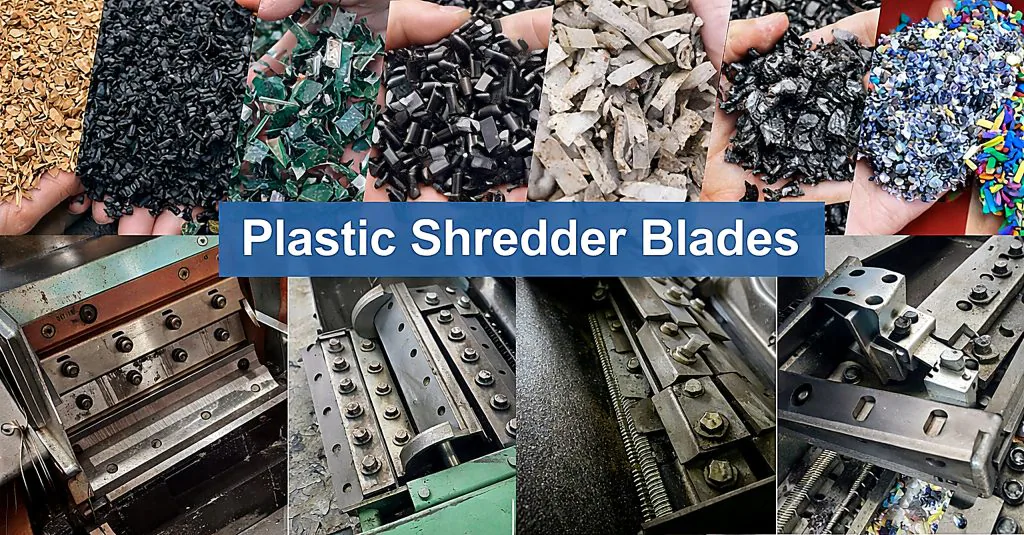
2) Key performance targets for crusher blades
When comparing blade materials, prioritize:
Edge stability (micro-chipping resistance)
The edge fails first; micro-chips become crack starters.Abrasive wear resistance
Driven largely by carbide type/volume and hardness—critical for filled plastics.Toughness (impact resistance)
Essential for thick parts, variable feed, and unknown contamination risk.Hardness range and temper stability
Blades warm up; steels that soften in service wear exponentially faster.Sharpenability and regrind life
If grinding is slow or causes burns, downtime can dominate lifecycle cost.Corrosion resistance (when needed)
Required for wet recycling, wash lines, or aggressive additives.
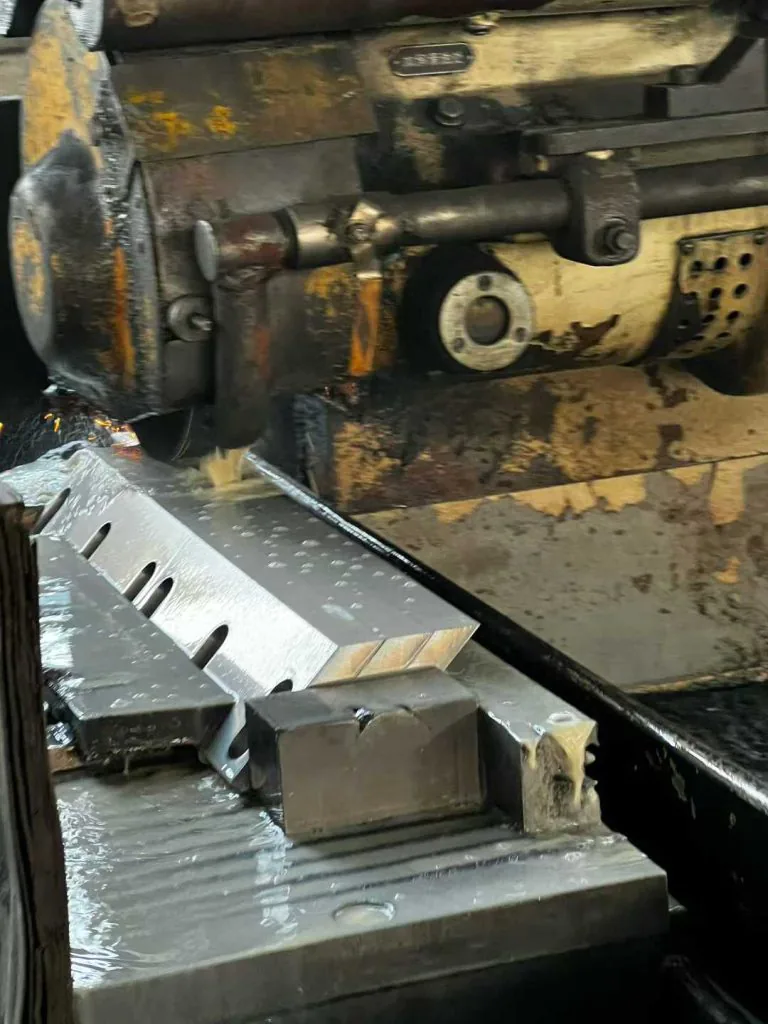
3) The “hardness trap”: why “harder” is not always “better”
Increasing hardness alone often backfires:
- Higher hardness commonly reduces toughness → more chipping, especially at corners.
- Some steels get hardness via brittle carbide networks → great wear, poor shock resistance.
- On large knives, heat-treatment gradients can amplify residual stress → distortion or cracking.
A more reliable strategy is: choose the correct steel family, then optimize heat treatment + edge geometry + surface engineering.
4) Common blade materials and where they fit best
A) D2 / SKD11 (high-carbon, high-chromium cold-work tool steel)
Typical use: general-purpose crushing with moderate cleanliness; a common industry baseline.
Strengths
- High wear resistance from high carbide content
- Good dimensional stability after proper heat treatment
- Widely available with predictable performance
Limitations
- Only moderate toughness → can chip in impact-heavy or dirty feed
- Heat-treatment quality strongly affects brittleness and carbide morphology
Best for
- Rigid plastics and sprues/runners with low-to-medium impact
- Clean-to-moderately clean regrind streams
Practical hardness target
- Often ~58–61 HRC, adjusted for knife thickness and contamination risk.
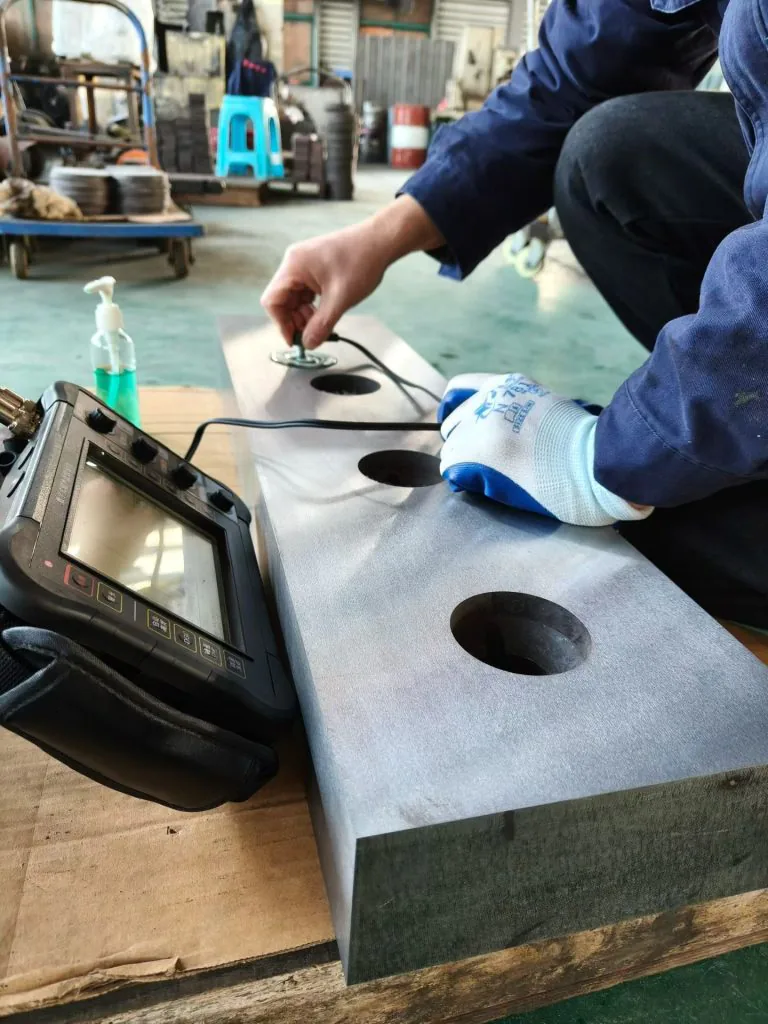
B) H13 / 1.2344 (hot-work tool steel)
Typical use: shock-heavy conditions where chipping dominates failure.
Strengths
- Excellent toughness and thermal fatigue resistance
- More forgiving under impact and intermittent loading
- Strong temper resistance (property stability at elevated temperature)
Limitations
- Lower abrasion resistance than D2 under high filler content
Best for
- Large granulators, thick runners/purgings, hard lumps
- Operations where edges chip before they wear out
Practical hardness target
- Often ~50–56 HRC depending on design and duty cycle.
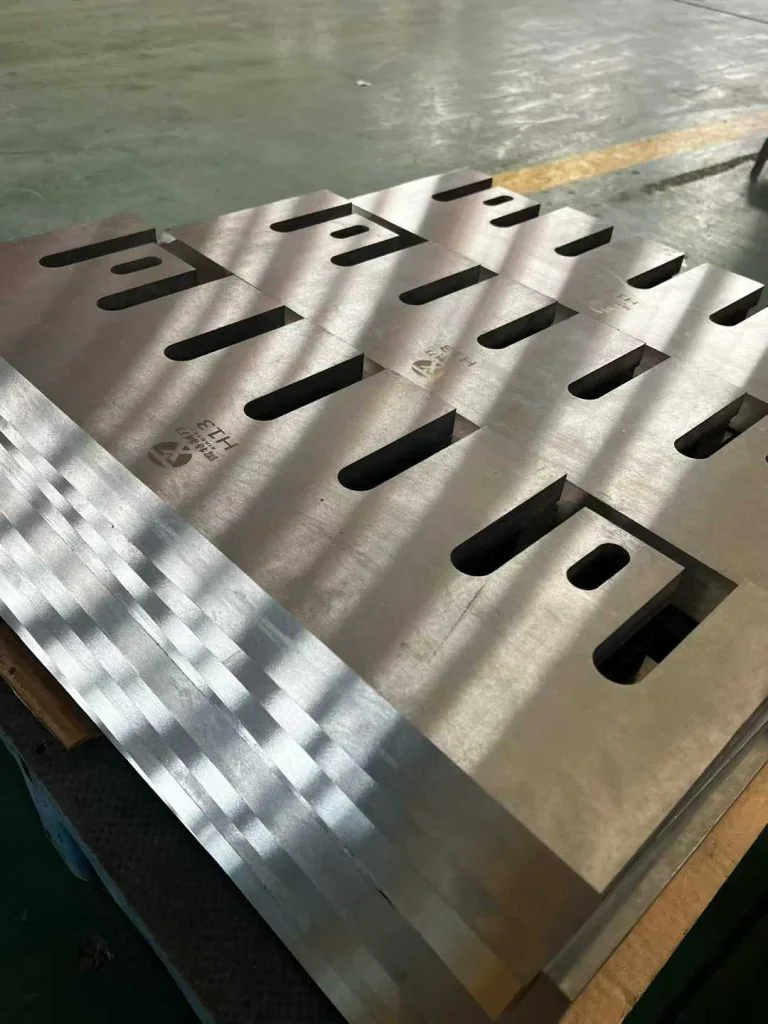
C) M2 and other High-Speed Steels (HSS)
Typical use: better wear than D2 with usable toughness and improved hot-hardness.
Strengths
- High hardness with improved hot-hardness (“red hardness”)
- Good edge stability in many plastics at higher throughput
Limitations
- Higher cost and more demanding heat treatment
- Still sensitive to geometry and contamination-driven impact
Best for
- Higher throughput lines and longer continuous runs
D) Powder Metallurgy (PM) tool steels (e.g., CPM-class grades)
Typical use: premium solution for abrasive fillers and high tonnage economics.
Strengths
- Fine, uniform carbides → excellent wear + improved toughness vs conventional high-carbide steels
- Better edge stability and more consistent regrind life
Limitations
- Higher material cost; requires capable suppliers and controlled heat treatment
Best for
- Glass-filled plastics, mineral-filled compounds
- Production where downtime and blade changes are expensive
E) Stainless tool steels (martensitic stainless and corrosion-resistant tool steels)
Typical use: wet, corrosive, or chemically aggressive environments.
Strengths
- Corrosion resistance reduces pitting that destroys edge integrity
Limitations
- Wear resistance may be lower than D2/PM options unless using specialized grades
Best for
- Wash lines, wet recycling, salt exposure, strong cleaning chemicals
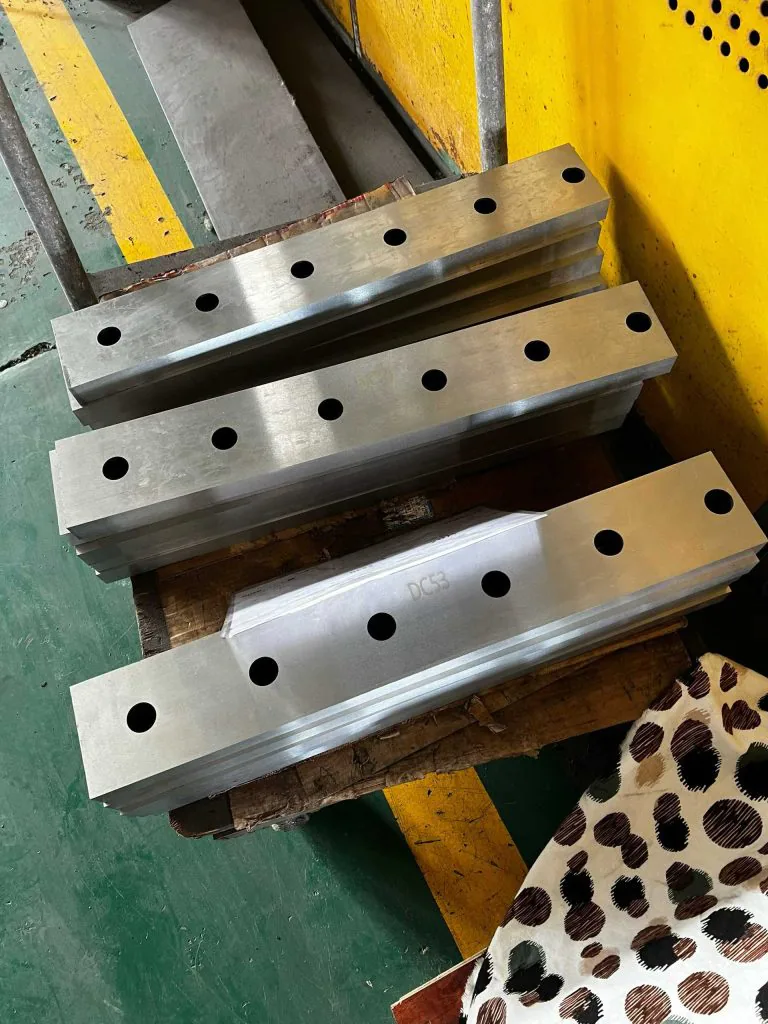
F) Tungsten carbide (solid or brazed inserts/segments)
Typical use: extreme abrasion where impact risk is controlled.
Strengths
- Exceptional abrasive wear resistance
Limitations
- Brittle; impact can crack inserts
- Higher cost and specialized grinding/repair needs
Best for
- Highly abrasive, relatively stable/clean feed streams
- Often best as inserts/segments rather than full solid knives
5) Matching material to plastic type and contamination level
Think in “wear vs impact” zones:
Clean, low-filler plastics (PE/PP/ABS without heavy filler):
D2/SKD11 is typically sufficient; shift to H13 if chipping occurs.Mineral-filled (CaCO₃) or glass-filled compounds:
PM steels or carbide strategies; D2 may wear too fast.Recycling with unknown contamination (sand, metal specks):
Prioritize toughness (H13 or tougher PM grades) and conservative edge geometry.Wet/wash operations:
Consider stainless tool steels or corrosion-protected systems.
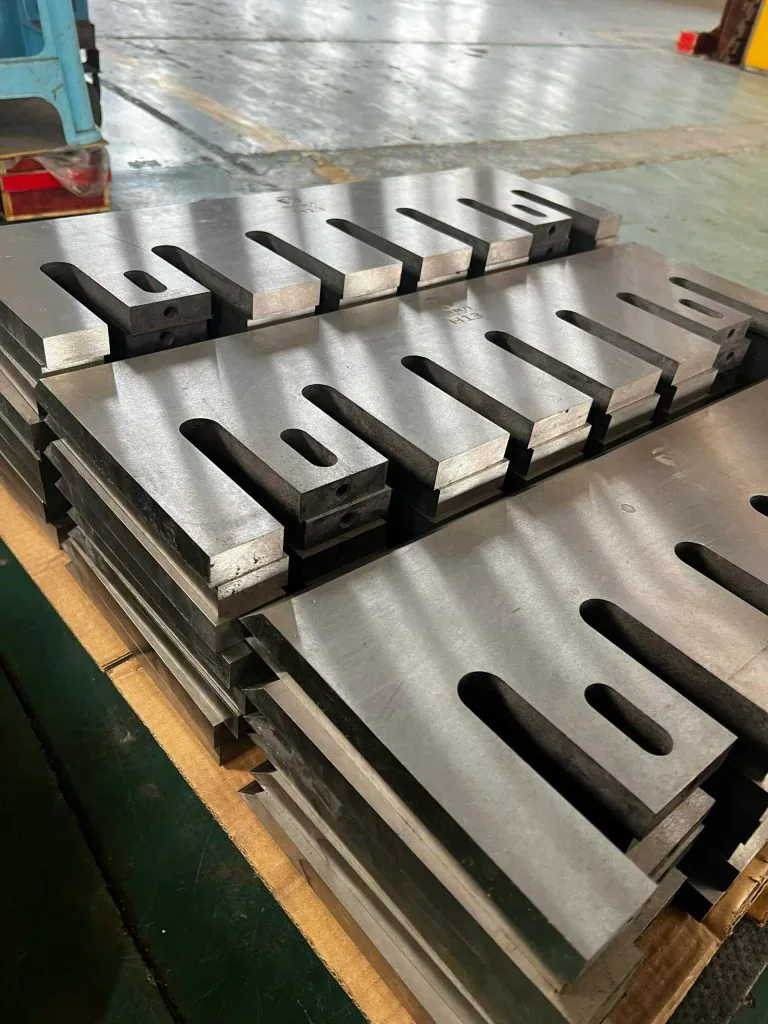
6) Heat treatment: the real “material” you are buying
Two knives made from the same steel can behave very differently. Key drivers:
- Austenitizing temperature and soak control
- Quench method and cooling uniformity (critical for large blades)
- Tempering cycle control (count, temperature accuracy, duration)
- Optional cryogenic treatment to reduce retained austenite (application-depend)

_画板-1-副本-3-pxeey2xejyohpkvf07tglhvew6ks2ts3pjvhagm60c.png "NICETY MACHINERY Co., LTD")