_画板-1-1.png)
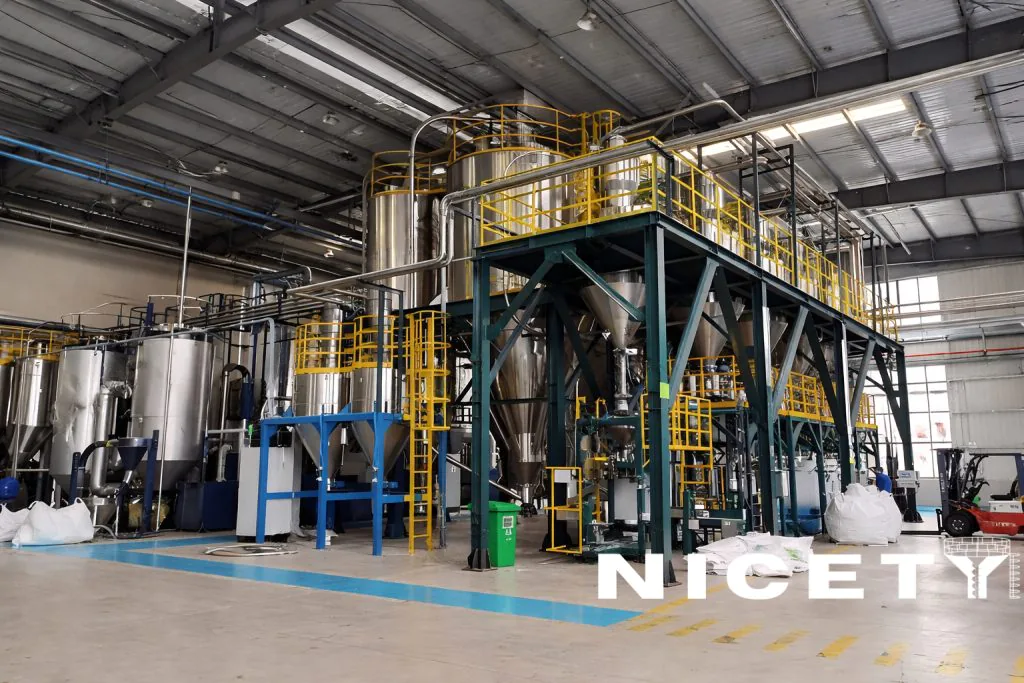
Photo: Nicety Machinery -VOC Deodorizing Drying System
Background
Electric vehicle battery housings have long relied on aluminum and steel — materials that add significant mass to an already heavy powertrain system. Battery packs can account for up to 40% of total vehicle weight, making lightweighting one of the most pressing engineering challenges in the EV industry. Engineering plastics and thermoplastic composites have been steadily advancing as metal alternatives, and a new award-winning design marks a major step forward.
The Winning Design
The Society of Plastics Engineers (SPE) recognized a next-generation hybrid composite battery housing at its Automotive Awards ceremony in Bonn, Germany, in the "Enabler Technology" category. The design was developed through a collaboration involving SABIC and engineering firm Forward Engineering.
At its core, the housing uses a multilayer sandwich architecture: two sheets of Tepex® Dynalite polypropylene glass-fiber composite enclose a flame-retardant, fiber-reinforced core integrated with a PP STAMAX™ tray. The result is a structural enclosure that replaces conventional all-metal designs with a fully thermoplastic composite system.
Key Performance Gains
The hybrid composite system delivers measurable improvements across weight, cost, and safety:
- Weight reduction: 10–20% lighter than traditional metal battery housings
- Cost reduction: Up to 30% lower production costs
- Thermal performance: Improved heat dissipation, critical for high-voltage battery protection
- Fire safety: Enhanced flame protection through continuous fiber reinforcement
These gains directly support EV manufacturers’ goals of extending vehicle range and meeting performance targets.
Manufacturing Innovation
A key enabler of this design is SABIC’s MEGAMOLDING™ platform, which allows the production of large, high-performance thermoplastic parts in a single-shot molding process. This eliminates multiple post-processing steps, integrating cooling interfaces, mounting points, and reinforcement zones in one operation.
The automated thermoplastic composite processing approach reduces supply chain complexity, improves dimensional tolerances, and cuts production time — factors that make the solution viable for mass-market EV production rather than niche applications.
Industry Implications
This development reflects a broader industry shift. Engineering plastics are increasingly displacing metals in structural automotive applications. The global engineering plastics market — valued at over $76 billion in 2022 — is projected to grow at a compound annual rate of approximately 6.9% through 2031, driven in part by EV lightweighting demands and sustainability mandates.
For processors and compounders, designs like this signal growing demand for precision mixing, compounding, and materials handling equipment capable of working with high-performance thermoplastic resins and fiber-reinforced compounds — exactly the applications where industrial-grade plastic mixer machines play a critical role.
Sources
- Next-Generation EV Battery Solution Wins SPE Award — Plastics Engineering (March 23, 2026)
- Engineering Plastics Market Size & Forecast — DataM Intelligence via OpenPR
- Innovative Materials for Lightweight EV Battery Enclosures — Envalior
- Market Trends in Composite EV Battery Enclosure Tech — Battery Tech Online
- FibreCoat AluCoat Composite EV Battery Case — Charged EVs (Feb 27, 2026)

_画板-1-副本-3-pxeey2xejyohpkvf07tglhvew6ks2ts3pjvhagm60c.png "NICETY MACHINERY Co., LTD")