_画板-1-1.png)
By Nicety Machine | April 7, 2026
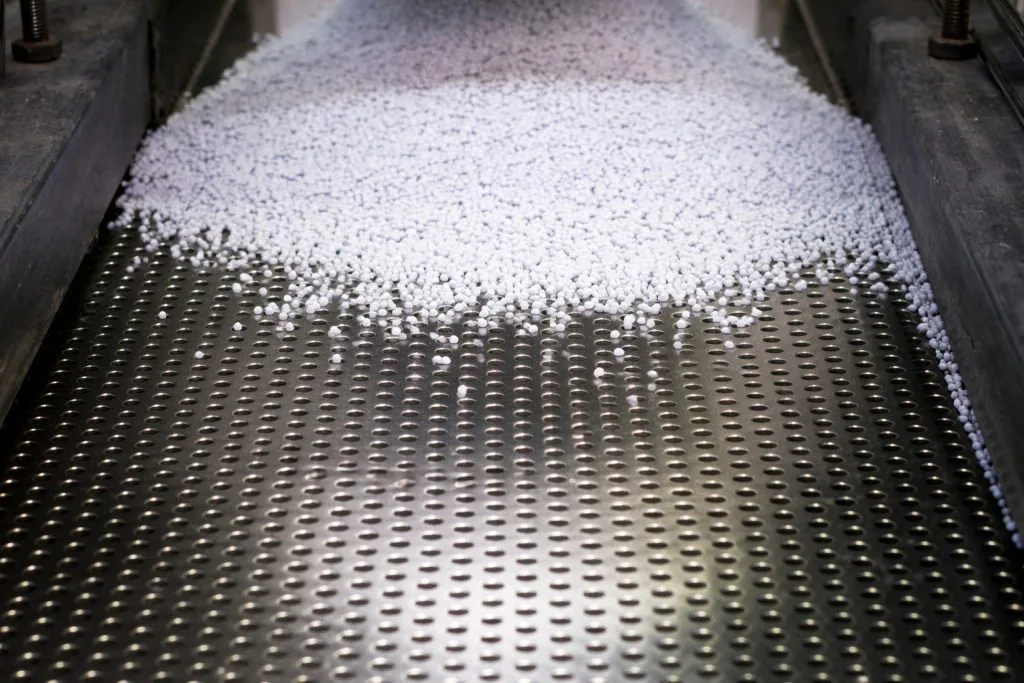
Plastic resin vibrating screen
Overview
A geopolitical shockwave from the U.S./Israel–Iran conflict has sent global resin markets into a sharp upswing, registering the highest weekly transaction volume in the 25-year history of the Plastics Exchange. Processors handling engineering plastics across the Americas and Europe are now facing a cascading cost surge rooted in disrupted feedstock supply, closed shipping lanes, and a scramble to secure domestic inventory.
What Triggered the Spike
The closure of the Strait of Hormuz — combined with attacks on major refining and natural gas liquid infrastructure — has removed significant polymer volumes from global supply chains. The disruption has cut off key feedstock flows from the Middle East and Asia, forcing buyers in North America and Europe to compete for a reduced pool of domestically produced resins. North American producers, benefiting from competitive feedstock costs and supply stability, have emerged as primary winners in this realignment.
How Hard Are Prices Moving?
Polypropylene (PP) spot prices climbed $0.10/lb domestically in early March, driven by polymer-grade propylene (PGP) surging over $0.11/lb in a single week to reach $0.45/lb — its highest level since early 2025. Additional increases of 5–6¢/lb were projected going into April. Polystyrene (PS), suspension PVC, and polyethylene (PE) have all followed suit, with PE jumping 10 cents in March with further hikes anticipated. Benzene — a key PS feedstock — settled at $3.14/gal in March, up from $2.86/gal in February.
Impact on Engineering Plastics
Engineering thermoplastics were already trending upward before the conflict. Nylon has made a pricing recovery after earlier weakness linked to soft automotive demand. The upstream disruption compounds existing pressures: a 15% global tariff on imported resin feedstocks and finished resins continues to limit downward price flexibility for processors in the Americas. In Europe, energy-linked feedstock costs and persistent import delays add further margin pressure on compounders and converters reliant on engineering-grade materials such as PC, ABS, PBT, and nylon.
What Processors Should Watch
Analysts are divided on near-term direction. Some forecast stabilization in April if PGP production restarts normalize, while others caution that Middle East disruptions could sustain elevated pricing well into Q2. For auxiliary machinery operators — dryers, granulators, conveyors, temperature controllers — volatility in resin grades and throughput rates puts a premium on equipment flexibility and fast material changeover. Processors would be well served to audit auxiliary equipment settings for shifting resin viscosities and thermal profiles as the material mix adapts to new sourcing realities.
Sources
- Plastics News – Prices surge for PP, PVC, PS in March (April 6, 2026)
- Plastics News – Iran war drives resin price spike (April 6, 2026)
- PlasticsToday – Commodity Resin Prices Climb as Iran War Disrupts Global Markets
- Plastics Technology – April 2026: Volume Resin Prices Mostly Up; Uncertainty Looms
- Plastics News – Material Insights: April 6, 2026

_画板-1-副本-3-pxeey2xejyohpkvf07tglhvew6ks2ts3pjvhagm60c.png "NICETY MACHINERY Co., LTD")