_画板-1-1.png)
By Nicety Machinery | April 15, 2026
Plastic compounding system – Nicety Machinery Co., Ltd
Overview
In early March 2026, MBA Polymers and German recycler Energenta AG formally completed their merger, creating one of Europe’s most integrated recycled-plastics-to-compounding platforms. The deal — structured as a share transaction — unites post-consumer plastic sorting, material recovery, and polymer compounding under a single group, and arrives as analysts describe the European recycling sector as entering a critical consolidation phase.
What the Merger Creates
The newly merged MBA Polymers–Energenta group is built around vertical integration across the full plastics recycling value chain: collection, sorting, material recovery, and compounding. The merged organization gains additional capabilities in processing and upgrading polyolefin waste streams through the inclusion of KVG, a company specializing in recycled polyolefin materials.
Leadership is shared between Felix-Michael Weber (former MBA Polymers CEO, now on the group Management Board, overseeing strategic growth and international sales) and Gisbert Schulte-Bücker, founder of Energenta, who will concentrate on operational development.
The group aims to boost capacity, production capabilities, and international sales, positioning itself as a significant player in the future of plastics recycling in Europe.
The Sysplast Compounding Expansion
A key asset in the deal is Sysplast, a Nuremberg-based company with more than two decades of experience in polymer compounding. Sysplast specializes in the development and production of advanced recycled materials and plays a central role in transforming recovered plastic materials into high-performance compounds for demanding industrial applications.
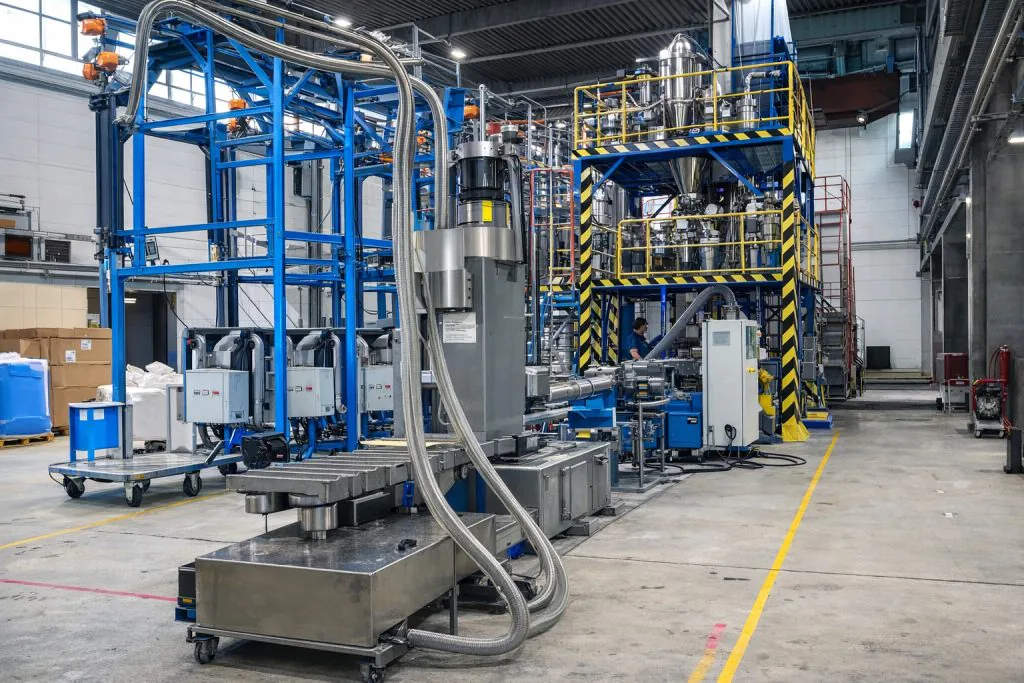
As part of the group’s growth strategy, Sysplast plans to double its production capacity in 2026. The expansion involves installing a new compounding line and enlarging its technical center, where research teams develop new material formulations and application solutions. This investment is expected to accelerate innovation in recycled plastic compounds, supporting new sustainable materials for the automotive, electronics, and consumer goods sectors.
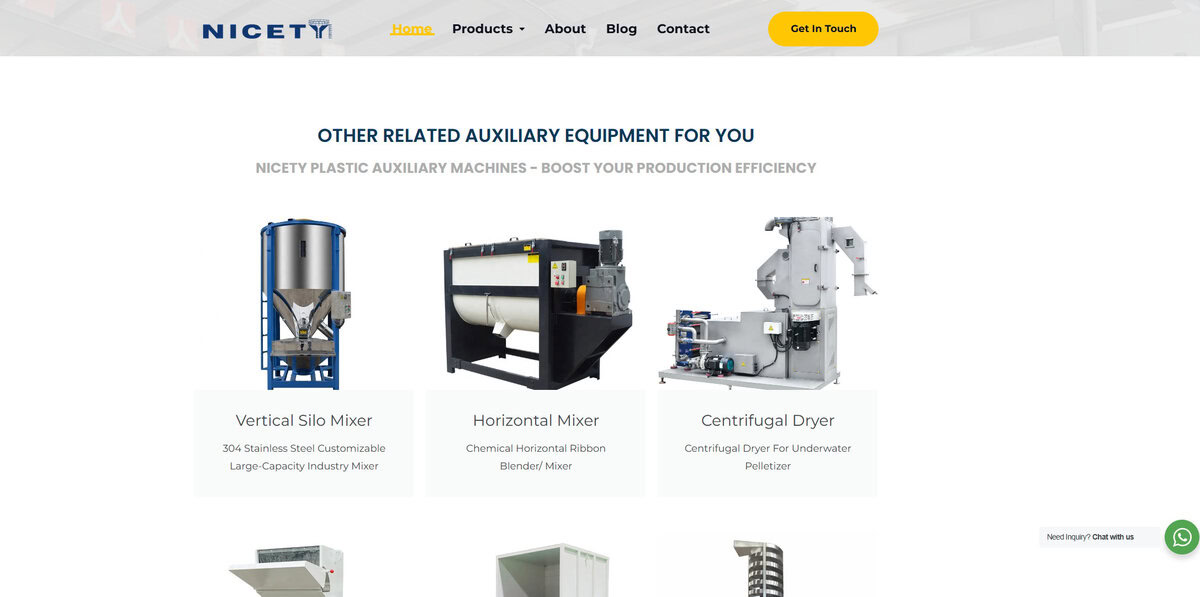
This kind of capacity expansion — adding a full compounding line — requires a coordinated upstream infrastructure: reliable material conveying, consistent pellet handling, accurate blending, and controlled drying. Equipment such as Screw Conveyors, Vibrating Spiral Elevators, and Centrifugal Dryer For Plastic Underwater Pelletizing are central to achieving consistent throughput on recycled feedstocks, which carry higher variability than virgin resins.
Why This Deal Signals a Broader Shift
The MBA Polymers–Energenta merger reflects a broader transformation underway across the plastics recycling sector. The global plastics recycling industry is under mounting operational pressure as costs rise, regulatory demands intensify, and markets require greater scale and compliance. Industry figures are calling this a pivotal moment for consolidation, where control over the full value chain will determine which companies survive.
Dutch recycler DiDoSa has taken a parallel step, acquiring a compounding operation in the Netherlands that will operate as Delta Compounding — a company that produces raw materials based on specific customer requirements for high-quality circular applications. Analysts expect further merger and acquisition activity throughout 2026 as independent operators struggle to compete alone.
The common thread: recyclers without downstream compounding capability are increasingly exposed. Compounding transforms recovered polymers from a commodity into a certified, spec-grade material that OEMs can actually use. Companies that can control both steps hold a structural pricing and compliance advantage.
The Regulatory Tailwind Behind the Move
Europe’s regulatory environment is accelerating this consolidation. The European Commission has identified the plastics recycling sector as a first-phase priority in its circular economy push, with a Circular Economy Act planned for 2026 introducing horizontal rules to improve the functioning of the Single Market for secondary raw materials.
Of the approximately 58 million tonnes of plastic produced in the EU, only around 13% is recycled back into new plastics — well below the bloc’s stated targets. The Commission has also warned that EU plastics recycling capacity was falling, with a net decrease of around one million tonnes of capacity expected by end of 2025, making private-sector capacity investments like Sysplast’s compounding line expansion directly aligned with public policy objectives.
Exports of plastic waste to non-OECD countries will be banned as of November 2026, further tightening domestic demand for European compounding capacity.
What It Means for Equipment Buyers
Compounding operations scaling up on recycled feedstocks face distinct equipment challenges compared to virgin-resin lines:
- Higher moisture variability in post-consumer inputs demands reliable drying and Centrifugal Dryer.
- Inconsistent bulk density across recycled pellet and flake streams requires accurate gravimetric dosing rather than volumetric blending.
- Contamination risk makes material handling hygiene — clean conveyors, enclosed pneumatic conveying systems — more critical than on virgin lines.
- Throughput flexibility is essential when feedstock availability is uneven; modular conveying and mixing setups allow lines to be reconfigured as material mix shifts.
As European compounders invest in recycled-material capacity, the auxiliary equipment supporting those lines — dryers, blenders, feeders, and conveyors — will see growing demand alongside the compounding machinery itself.
Sources
- Plastics News — MBA Polymers, Energenta Merge (March 9, 2026)
- Polyestertime — Plastics Recycling Breakthrough Powers Circular Future (March 8, 2026)
- MBA Polymers — Successful Completion of the Merger
- IndexBox / Recycling International — Plastics Recycling Industry Calls for Consolidation (March 26, 2026)
- Packaging Europe — EU Commission Circular Plastics Plans for 2026 (January 2026)
- Recycling Magazine — EU Commission Targets Integrated Plastics Recycling Markets (January 2026)
- Nicety Machinery — 10 Engineering Plastics & Plastic Processing Industry News Briefs

_画板-1-副本-3-pxeey2xejyohpkvf07tglhvew6ks2ts3pjvhagm60c.png "NICETY MACHINERY Co., LTD")