_画板-1-1.png)
By Nicety Machinery | April 21, 2026

Photo: Unsplash — Industrial plastics recycling and processing
Overview
Two significant transactions in the span of six weeks have pushed European plastics recycling consolidation into a new gear. On April 20, 2026 — just one day ago — Agilyx announced it had secured majority control of GreenDot, one of Europe’s largest extended producer responsibility organisations. Weeks earlier, in early March, German plastics recycler MBA Polymers completed its merger with Energenta, creating a fully vertically integrated group running from waste collection through to polymer compounding.
Both deals share the same strategic logic: in a market where regulatory demands are rising, margins are tightening, and traceability requirements are expanding, scale and full value-chain control are becoming prerequisites for survival.
Deal 1 — Agilyx Takes Majority Control of GreenDot
The transaction, announced on April 20, 2026, sees Agilyx increase its ownership of GreenDot from 46% to 50.1% through a joint acquisition with partner Lafor of the 19.1% stake previously held by Circular Resources. Lafor will hold the remaining 49.9%.
GreenDot is projected to generate around EUR 375 million in revenue and over EUR 22 million in EBITDA in 2026. Agilyx will now consolidate GreenDot’s financial statements following deal close — a material shift in the company’s reported scale. Agilyx CEO Ranjeet Bhatia has been appointed Chairman of GreenDot’s board as part of the new governance structure. A EUR 4.7 million share purchase financing facility was arranged to fund the additional 4.1% stake.
GreenDot’s infrastructure spans multiple European markets and ties directly into the post-consumer plastic waste streams that feed recycling and compounding operations. Gaining majority control gives Agilyx direct authority over how those material flows are managed and where they go downstream.
Deal 2 — MBA Polymers and Energenta Merge in Germany
MBA Polymers — a specialist in recovering engineering plastics from durable goods such as electronics and automotive parts — has merged with Energenta, a German company focused on plastics collection and sorting. Shareholders now hold a 33% stake in Energenta as part of the capital increase tied to the transaction.
The combined group covers the full plastics recycling value chain: waste collection, material sorting, advanced material recovery, and compounding. Sysplast, a Nuremberg-based compounder with over two decades of experience in recycled polymer formulation, is a key part of the newly formed group. The merged entity is listed on the Munich Stock Exchange.
Felix-Michael Weber, CEO of MBA Polymers, joins the merged group’s Management Board and will oversee international expansion, M&A strategy, and capital markets. Gisbert Schulte-Bücker, Energenta’s founder, will lead operational performance and production site development.
Why Vertical Integration Is Accelerating
Both deals reflect the same structural pressure. European packaging-waste regulations now mandate increasing recycled-content thresholds, and from 2030 the EU requires that 10% of packaging materials come from recycled sources. Meeting those requirements at scale demands consistent feedstock quality, traceable material flows, and processing capacity — none of which independent operators can easily guarantee on their own.
The recycling industry’s consolidation wave is also driven by cost. Operational pressures from rising energy prices, stricter compliance requirements, and the need for advanced compounding capacity are squeezing smaller players. Industry analysts tracking the sector have identified this period as a critical inflection point: companies that cannot control their own value chain from collection to finished compound will struggle to remain competitive.
Europe is simultaneously the fastest-growing region in plastic compounding and the most heavily regulated. That combination makes vertical integration not a luxury but a survival strategy.
What This Means for Compounding Equipment Buyers
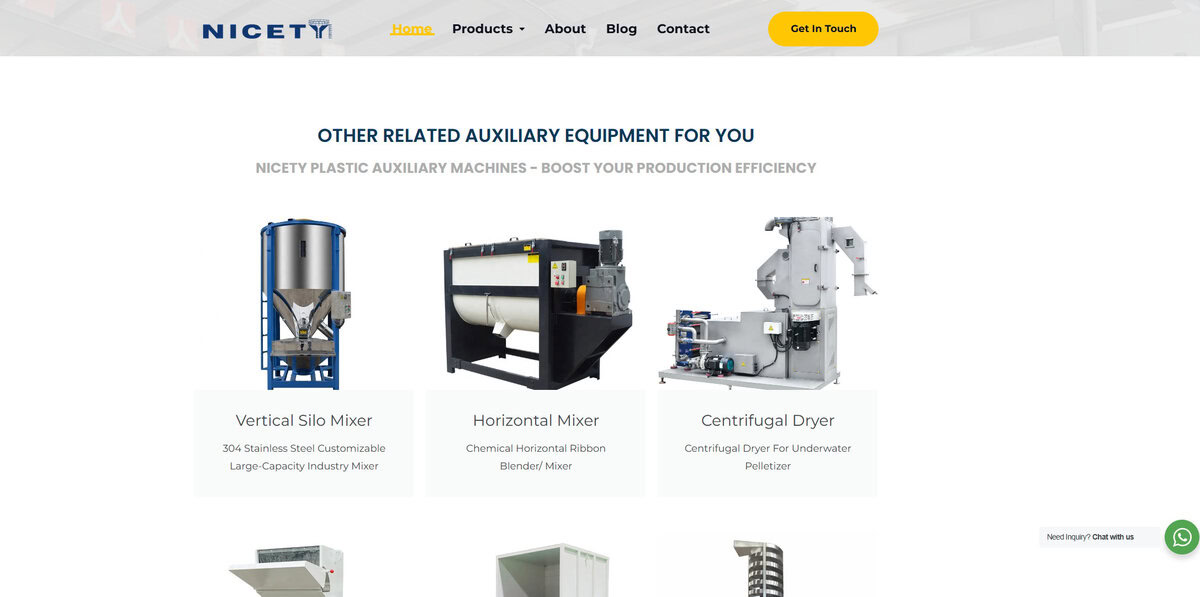
As recycling groups build integrated compounding capacity — embedding extruders, mixers, and pelletising lines directly within their facilities — demand for high-performance auxiliary equipment rises in step. Larger, consolidated operations run multiple material grades through the same lines, which places greater demands on mixing precision, throughput consistency, and dosing accuracy.
Efficient mixing and blending equipment that can handle both virgin and recycled feedstocks without cross-contamination is a direct requirement of the integrated recycling-compounding model that both deals are building toward.
For equipment options suited to compounding and recycled-material processing lines, see:
- Plastic Mixer Equipment — Nicety Machinery
- 10 Engineering Plastics & Plastic Processing Industry News Briefs — Nicety Machinery
Sources
- Recycling Magazine — Agilyx Majority in GreenDot Secured (April 20, 2026)
- Polyestertime — MBA Polymers and Energenta Merger (March 9, 2026)
- Nicety Machinery — Engineering Plastics & Processing Industry News Briefs
- Express Press Release — Europe Plastic Compounding Trends (April 17, 2026)
- Future Markets Inc. — Global Advanced Plastics Recycling Market 2026–2040

_画板-1-副本-3-pxeey2xejyohpkvf07tglhvew6ks2ts3pjvhagm60c.png "NICETY MACHINERY Co., LTD")