_画板-1-1.png)
By Nicety Machinery Co., Ltd | April 26, 2026
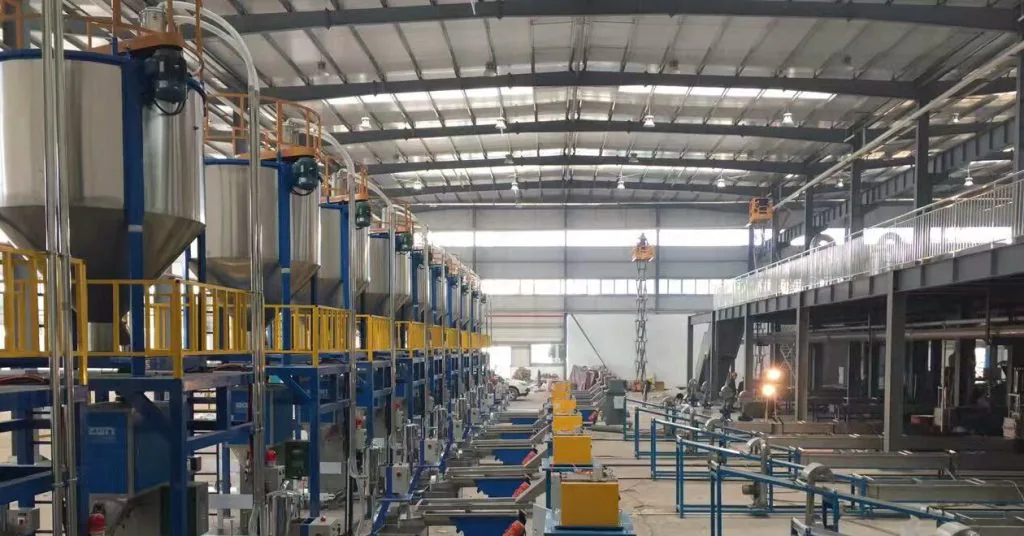
High-performance polymer compounding for advanced industrial applications. Photo: Nicety Machinery Co.,Ltd
Overview
At Chinaplas 2026 in Shanghai (April 21–24), Coperion (Nanjing) Machinery Co., Ltd. and Guangdong Chuangyongjia New Materials Co., Ltd. signed a formal equipment purchase agreement for ten STS Mc PLUS twin-screw extruders — one of the largest single compounding equipment orders in China this year. The deal directly targets the surging demand from new energy vehicle (NEV) manufacturers and energy storage system producers for flame-retardant and high-temperature-resistant engineering plastics compounds.
The Deal: Ten STS Mc PLUS Extruders for South China’s Capacity Expansion
Coperion and Guangdong Chuangyongjia signed a major equipment purchase agreement at Chinaplas 2026, with Chuangyongjia acquiring ten Coperion STS Mc PLUS twin-screw extruders for compounding high-performance engineering plastics.
The signing is tied to Chuangyongjia’s ongoing headquarters expansion project in South China. Upon completion, the new campus will significantly enhance the company’s R&D and manufacturing capabilities in specialty engineering plastics, and the ten Coperion extruders represent a key equipment investment in that capacity layout.
Why This Machine Matters for Engineering Plastics Compounding
The STS Mc PLUS is Coperion’s fourth-generation twin-screw platform. The STS 65 Mc PLUS delivers a specific torque of up to 13.6 Nm/cm³ and a maximum screw speed of 900 min⁻¹, with output increased by up to 20% compared with the previous generation, while shear stress and melt temperature during compounding are significantly reduced.
The high fill level in the process section improves mixing quality and enables gentler material handling — critical for glass fiber reinforcement, flame-retardant modification, and high-temperature engineering plastic compounding.
The units are manufactured at Coperion’s Nanjing plant and incorporate gearboxes produced in Europe, meeting CE standards while keeping delivery times competitive for the Chinese market.
New Energy Vehicles and Energy Storage Drive Demand
The strategic rationale behind the investment is clear. Chuangyongjia’s customer base is rapidly expanding from traditional home appliances and photovoltaics to new energy vehicles and energy storage, where downstream applications impose unprecedented high requirements on the reliability and consistency of engineering plastics.
Jochen Shen, General Manager of Coperion Nanjing, described the broader trend: leading enterprises are no longer satisfied with "being able to produce" but strive to "produce the best," with the NEV and energy storage industries driving compounding equipment iteration from general-purpose to high-performance models.
This shift is consistent with the wider direction at Chinaplas 2026. The event, spanning over 390,000 square meters across 16 halls with more than 5,000 exhibitors from 46 countries, focused on four core directions: Circular Economy, Digitalization, Innovative Materials, and China’s High-end Technologies.
What This Signals for the Global Compounding Industry
The Chuangyongjia order is a concrete data point in a broader upgrade cycle underway in China’s modified plastics sector. As of 2026, the North American market alone is characterized by a rapid shift from basic resin production to highly customized, functional materials meeting rigorous industrial demands — and China’s trajectory mirrors that, but at greater speed and volume.
Automation in compounding lines, AI-dependent formulation, and real-time quality control prediction tools are becoming cornerstones of modern compounding operations globally. The STS Mc PLUS purchase reflects how leading Chinese compounders are upgrading machinery to match those expectations.
For compounders operating rubber, elastomer, or engineering thermoplastic lines, the pressure is the same everywhere: tighter application tolerances from EV and electronics customers are forcing equipment decisions that would have been considered capital-intensive just three years ago.
Equipment Supporting Processing Lines
Efficient twin-screw compounding output depends on the upstream and downstream auxiliary equipment that manages material before and after the extruder. For processors evaluating similar capacity upgrades, the following auxiliary equipment categories are critical:
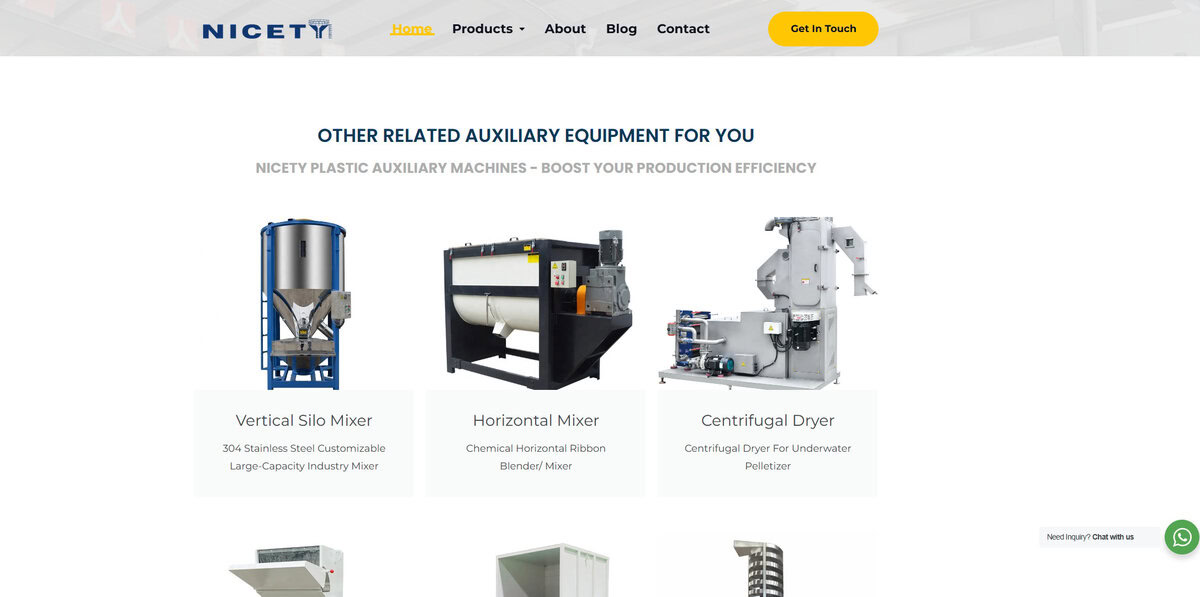
- Mixing and blending — Pre-blending raw materials and masterbatch before feeding the extruder prevents formulation inconsistency. Nicety Machinery offers a range of industrial plastic mixers, including high-speed mixer machines used in engineering plastics compounding prep lines.
- Conveying — Moving pellets or powder reliably between process stages without contamination or degradation is essential. Screw conveyors and vibrating spiral elevators handle this role.
- Drying and deodorizing — Moisture control and VOC management are non-negotiable for high-performance polymer compounds. Nicety’s VOC Deodorizing Drying System is purpose-built for this stage.
- Pelletizing and screening — Post-extrusion, the compound strand needs controlled pelletizing and size classification. The Extrusion Pelletizing Line and Linear Vibrating Screener complete the processing loop.
Sources
- Coperion: Coperion and Guangdong Chuangyongjia Sign Major Equipment Purchase Agreement at Chinaplas 2026
- Packaging South Asia: ChinaPlas 2026 Shanghai
- OpenPR: CHINAPLAS 2026 — A Critical Window for the Global Plastics Industry Transformation
- Verified Market Research: North America Plastic Compounding Market
- Towards Packaging: Plastic Compounding Market Size and Trends 2026–35
- CHINAPLAS Official Website

_画板-1-副本-3-pxeey2xejyohpkvf07tglhvew6ks2ts3pjvhagm60c.png "NICETY MACHINERY Co., LTD")