_画板-1-1.png)
By Nicety Machinery Co., Ltd | June 13, 2026
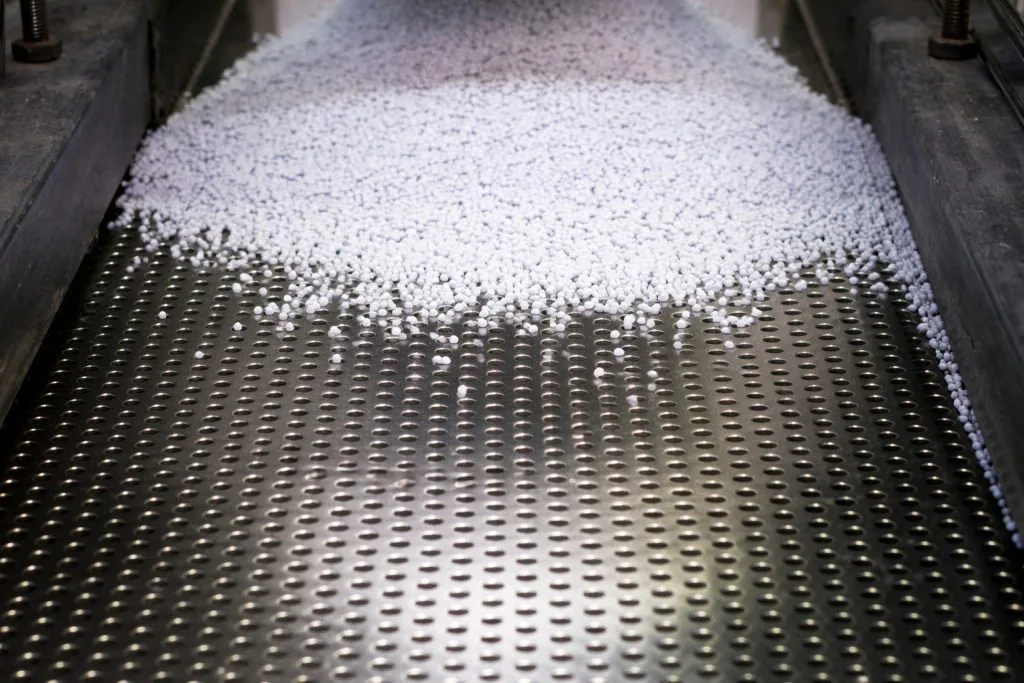
Halogen-free flame retardant compounds for wire, cable, EV battery systems, and data center infrastructure are among the fastest-growing segments in global polymer compounding.
Overview: Three Demand Drivers Converging on a Single Compound Category
In the first half of 2026, three of the largest infrastructure investment trends in the global economy are converging on a single polymer compound category that most compounders have historically treated as a specialty niche: halogen-free flame retardant (HFFR) compounds for wire and cable insulation, sheathing, and jacketing applications.
The AI-driven data center construction boom is driving demand for LSZH (Low Smoke Zero Halogen) cable compounds in quantities that the industry’s existing supply chain was not configured to deliver. The global electric vehicle transition is consuming HFFR automotive cable compound — high-temperature-rated, fluid-resistant, and halogen-free — at the rate of approximately 4.2 kilograms per vehicle, across production volumes heading toward 28 million units annually in 2026. And the accelerating buildout of renewable energy infrastructure — wind turbine cable systems, solar farm DC cabling, and grid interconnection projects — is creating demand for HFFR medium-voltage cable compounds in a market segment that has doubled in two years.
The global HFFR market was valued at $12.8 billion in 2025 and is projected to reach $22.6 billion by 2034, at a compound annual growth rate of 6.5%. For compounders with the formulation expertise and processing infrastructure to produce HFFR cable compounds consistently and at scale, this is the most structurally attractive growth segment in the polymer compounding market in 2026. For those without it, the demand surge is a competitive threat from better-positioned rivals.
This article explains the three demand drivers, the regulatory forces accelerating the shift from halogenated to halogen-free cable compound, the specific processing challenges of HFFR compounding — particularly the high mineral filler loading that defines most HFFR formulations — and the equipment decisions that determine whether an HFFR compounding line produces consistent, specification-compliant output or struggles with the dispersion, drying, and handling challenges that high-filler compounds impose.
The HFFR Market in Numbers: From $12.8 Billion to $22.6 Billion by 2034
The global HFFR halogen-free flame retardant market was valued at $12.8 billion in 2025 and is projected to reach $22.6 billion by 2034, expanding at a compound annual growth rate of 6.5% during the forecast period from 2026 to 2034. This growth is underpinned by tightening global fire safety regulations, the sweeping shift away from halogen-containing additives due to environmental and health concerns, and unprecedented growth in electrical and electronics, building and construction, and transportation end markets.
The adoption of HFFR compounds in data center infrastructure, renewable energy installations, and electric vehicle battery enclosures has accelerated sharply through 2025 and into 2026, creating a structurally positive demand environment. Consumer awareness around indoor air quality and toxic fume emissions during building fires has further reinforced purchasing decisions among architects, contractors, and procurement officers who specify cable materials for commercial buildings, transit systems, and industrial facilities.
Mineral-based HFFR systems — particularly aluminum trihydrate (ATH) and magnesium hydroxide (MDH) — continue to dominate volumetric consumption, while phosphorus-based and nitrogen-based chemistries are gaining share in high-performance polymer applications where thermal stability and lower loading levels matter. This split in HFFR chemistry creates two distinct compounding challenges that require different process approaches and different equipment configurations.
For compounders, the market size is less relevant than the margin profile: HFFR cable compounds consistently command a significant premium over standard PVC cable compound. The formulation complexity, the processing difficulty of high mineral filler loading, and the IEC/UL certification requirements that gate market entry create natural barriers that protect margins for qualified suppliers. In a year when commodity resin prices are surging 20 to 50 cents per pound, producing a value-added compound category with structural pricing power is a compelling competitive position.
Driver One: AI Data Centers — US Capacity Nearly Doubling by 2027
The scale of the AI-driven data center construction surge is not commonly understood in the polymer compounding industry — but its cable compound implications are direct and massive.
US data center power demand is expected to climb from 31 gigawatts in 2025 to 41 GW in 2026 and 66 GW by the end of 2027 — nearly doubling in two years, according to Goldman Sachs Research. Year-over-year capacity additions are scheduled to reach 13.6 GW in 2026 and 36.3 GW in 2027, compared with 6.4 GW realized in 2024. Globally, data center infrastructure spending is projected to approach $7 trillion over the next five years.
Every gigawatt of data center capacity requires hundreds of kilometers of internal cabling — power distribution, server interconnect, cooling system control, and fire protection systems — all of which must meet LSZH or HFFR specifications in most major jurisdictions. In a fire, PVC cable insulation releases hydrogen chloride gas and dense black smoke that are both toxic to occupants and corrosive to the server equipment that represents billions of dollars of investment. LSZH cable compound, when ignited, releases minimal toxic or corrosive gas — a requirement that most data center operators now mandate regardless of local building code minimums.
The cable compound volume implied by this construction surge is substantial. A large hyperscale data center campus of 100 MW capacity may require 5,000 to 10,000 tonnes of HFFR cable compound in its internal power and data cabling alone. With 11.5 GW of new US data center capacity scheduled for addition in the final three quarters of 2026 alone, the incremental HFFR compound demand from this single application is measured in tens of thousands of tonnes per year — in a market that was not building this infrastructure at anything close to this rate two years ago.
Driver Two: Electric Vehicles — 4.2 kg of Flame-Retardant Polymer Per Car
The electric vehicle transition is the other defining HFFR demand driver of 2026. With global EV sales expected to surpass 28 million units annually by 2026 based on IEA projections, and each vehicle requiring an average of 4.2 kilograms of flame-retardant polymer materials, the automotive segment alone represents a demand increment that is reshaping HFFR compound supply chains globally.
The HFFR compound requirements in an EV are fundamentally different from those in a combustion vehicle. The high-voltage battery system — operating at 400V to 800V in current platforms — requires cable insulation and sheathing that is simultaneously flame-retardant, thermally stable at continuous operating temperatures of 125°C to 150°C, resistant to automotive fluids including battery electrolyte, and halogen-free to comply with end-of-life vehicle recycling requirements.
The high-voltage charging cable — both the onboard cable between battery and motor and the DC fast-charging cord — is a particularly demanding application. Charging cables for 150 kW to 350 kW DC fast chargers carry high current for extended periods, generating substantial internal heat. The cable compound must maintain its flame-retardant and mechanical properties throughout the charging cycle temperature range, while remaining flexible enough for the physical handling that fast-charging cables endure in public charging environments.
HFFR compounds based on cross-linked polyolefins (XLPE), thermoplastic polyurethane (TPU), ethylene propylene diene monomer rubber (EPDM), and halogenated ethylene vinyl acetate (HV-EVA) — all halogen-free and flame-retardant — are the material categories competing for these EV applications. Each has distinct processing requirements, and the compounders who have invested in the formulation validation and processing infrastructure for high-performance EV cable compound are positioned to capture a market growing at double-digit rates through the decade.
Tier-1 automotive cable suppliers requiring long-term supply agreements for high-voltage EV cable compound are creating multi-year demand visibility for HFFR compounders — a commercial structure that is rare in commodity resin markets and that justifies dedicated processing line investment.
Driver Three: Renewable Energy Infrastructure — Wind, Solar, and Grid Cables
The third demand driver is the global renewable energy infrastructure buildout — specifically the cable compound requirements for wind turbine installations, solar farm DC cabling, and high-voltage grid interconnection projects.
Wind turbine nacelles and tower cable systems operate in extreme environments: offshore installations face salt spray, UV exposure, wide temperature cycles, and continuous mechanical flexing in a structure that must not create ignition risk. The EPDM-based and polyolefin-based HFFR compounds used in wind turbine cables must meet IEC 62893 and IEC 60502 standards for offshore and onshore renewable energy cable applications — standards that explicitly require halogen-free sheathing and insulation in most European market specifications.
Solar farm DC cable systems — which operate at DC voltages up to 1,500V in modern utility-scale installations — require UV-resistant, temperature-stable, halogen-free cable compounds for the DC string cabling that runs between panel rows and inverters. The cable runs in a large utility solar farm can exceed hundreds of kilometers, representing significant compound volumes per project.
Grid-scale energy storage systems — battery energy storage systems (BESS) used to balance renewable energy intermittency — require cable compound that meets the same high-voltage, flame-retardant, and halogen-free specifications as EV battery systems, but at much larger cable cross-sections and often in outdoor or partially enclosed installations where UV resistance is an additional requirement.
EPDM is projected to expand at a 5.81% CAGR through 2031 specifically because of its performance in these renewable energy applications — wind turbine seals and cables, solar farm cable sheathing, and energy storage system components all drive EPDM demand simultaneously with the EV applications described above.
The Regulatory Ratchet: RoHS, REACH, IEC Standards, and the End of Halogenated Cable
Underlying all three demand drivers is a regulatory framework that is progressively closing off the halogenated alternative. The shift away from halogenated flame retardants is not merely a compliance exercise: halogenated compounds, when burned, release toxic dioxins and furans — a health and environmental concern that has prompted both legislative action and voluntary industry commitments well beyond minimum legal requirements.
The EU’s RoHS Directive restricts the use of specific halogenated flame retardants in electrical and electronic equipment. REACH continues to expand its Substances of Very High Concern list, with several brominated flame retardants already subject to authorisation requirements. The IEC 60754 standard series tests for toxic and corrosive gas emissions from cable materials under fire conditions — specifically measuring hydrogen halide gas release that PVC and halogenated cable compounds generate. Meeting IEC 60754-1 and 60754-2 requirements effectively mandates halogen-free cable compound in most professional cable specifications.
The IEC 62821 and EN 50399 test standards for cable fire performance — the CPR (Construction Products Regulation) in Europe — create a tiered fire classification system for cables that increasingly disadvantages halogenated materials in the higher performance classes (Dca, Cca, Bca) required for public buildings, transport infrastructure, and commercial data centers. Traditional PVC cable insulation is declining in market demand as PVC is difficult to recycle, contains halogen, and releases carcinogenic fumes when exposed to heat.
Covestro and Lanxess announced a strategic partnership in June 2025 to co-develop halogen-free flame-retardant materials and masterbatches for global HFFR cable manufacturers. SABIC launched a new halogen-free flame-retardant polypropylene compound designed for low-smoke, zero-halogen HFFR cables in July 2025. These major material producer moves signal that the commercial center of gravity for cable compound development has definitively shifted to HFFR — not as a specialty segment, but as the mainstream.
What HFFR Compounding Actually Involves — and Why It Is Technically Demanding
For compounders new to HFFR production — or those evaluating whether to expand into the category — understanding the specific technical demands of HFFR compounding is essential before making equipment investment decisions.
HFFR compounding is fundamentally different from standard engineering plastic or polyolefin compounding in one critical dimension: filler loading. Unlike carbon black compounding (typically 2 to 5% loading) or glass fiber reinforcement (typically 20 to 40% loading), mineral-based HFFR compounding requires aluminum trihydrate (ATH) or magnesium hydroxide (MDH) loadings of 40% to 65% by weight to achieve the flame-retardant performance required by IEC standards.
At these loading levels, the compound is no longer primarily a polymer with an additive — it is a ceramic-rich composite where the polymer serves as a binder and processing medium for a predominantly mineral filler system. This fundamentally changes the processing behavior:
Viscosity is very high. A polyolefin compound with 60% ATH loading has a melt viscosity far higher than the unfilled base polymer. Extruder torque requirements increase substantially. Processing temperatures must be carefully controlled to balance viscosity reduction against ATH thermal decomposition — ATH begins releasing water at approximately 180°C, which limits processing temperature in a way that MDH (stable to approximately 300°C) does not.
Dispersion is the defining quality variable. ATH and MDH particles must be uniformly dispersed throughout the polymer matrix to achieve consistent flame-retardant performance. Agglomerated filler particles create localized regions of high filler concentration and low polymer content that are both mechanically weak and inconsistently flame-retardant. Achieving uniform filler dispersion at 60% loading requires both the right screw design and the right pre-mixing approach before the compound enters the extruder.
Coupling agent chemistry is critical. HFFR compounds at high filler loading require silane or titanate coupling agents that chemically bond the ATH or MDH particle surface to the polymer matrix — without which the mechanical properties of the compound (tensile strength, elongation at break) fall below IEC cable standard minimums. The coupling agent must be uniformly coated on the filler surface before or during compounding. HFFR wire and cable compounders using halogen-free flame-retardant solutions can benefit from adding coupling agents into their formulations to maintain tensile strength, tensile modulus, and elongation at break at high loading rates.
VOC management is non-negotiable. ATH releases water vapor during processing (above 180°C), and both ATH and MDH may carry surface treatment residues that volatilize at compounding temperatures. Cable compound produced from HFFR formulations must meet strict limits on volatile organic compound emission — both from in-process health and safety requirements and from the product performance perspective, as VOC residues in finished cable compound can affect long-term insulation resistance and can cause surface blistering during extrusion at the cable manufacturer.
The High Filler Loading Problem: ATH and MDH at 40–65% by Weight
The high mineral filler loading in HFFR compounds creates processing challenges at every stage of the compounding line — from incoming material handling through mixing, extrusion, pelletizing, and finished product quality control.
Bulk handling and conveying: ATH and MDH are fine, high-density powders with bulk densities typically in the range of 300 to 800 kg/m³ depending on particle size and surface treatment. Moving these materials from bulk bags or silo storage to the compounding line requires conveying systems designed for abrasive, moisture-sensitive powders. ATH is particularly sensitive to moisture: it can pick up atmospheric humidity that both reduces flame-retardant efficiency (by prematurely consuming some of the water release capacity that provides the flame-retardant mechanism) and creates mixing problems as the powder clumps around absorbed moisture.
Pre-mixing before the extruder: At filler loadings above 50%, simply feeding ATH or MDH separately through the extruder side feeder alongside the polymer pellets is often insufficient to achieve the uniform dispersion required for consistent IEC performance. Pre-mixing the filler with the polymer base and coupling agent before the extruder — in a high-intensity mixer — pre-coats the polymer particle surfaces with filler and coupling agent, ensuring that the extruder’s dispersive mixing action starts with a more homogeneous feedstock. This pre-mixing step is one of the most important process decisions in HFFR compounding, and it is where mixer selection directly determines compound quality.
Pelletizing for high-viscosity, abrasive compound: High-ATH or MDH content compounds are both more viscous and more abrasive than standard polyolefin compounds. Strand pelletizing systems must be designed with wear-resistant die materials and strand guidance systems that accommodate the higher melt viscosity. Underwater pelletizing — which eliminates the strand drawing step and the associated strand breakage risk from high-viscosity melts — is increasingly preferred for HFFR compounds at extreme filler loadings.
Drying of finished pellets: HFFR pellets — particularly ATH-based compounds — must be carefully dried before shipment and before use at the cable manufacturer. ATH-based compounds that have reabsorbed moisture during pellet cooling and handling will generate steam bubbles during cable extrusion, causing surface defects and internal voids in the cable insulation. The drying and deodorizing of finished HFFR pellets is therefore not optional post-processing — it is a quality-critical step that determines whether the compound performs as specified at the cable manufacturer’s extruder.
Key Material Platforms in HFFR Compounding: Polyolefins, EVA, TPU, EPDM, Silicone
HFFR compounding is not a single formulation approach — it encompasses several distinct polymer base systems, each with different processing requirements and end-application targets:
Polyolefin (PE/PP) HFFR compounds: The largest volume HFFR category, used for general-purpose building wire and cable sheathing. ATH or MDH filled PE or PP-based compounds, typically with silane coupling agents and antioxidant packages, processed at temperatures compatible with ATH’s thermal decomposition threshold. Processing temperature ceiling near 180°C (ATH) to 280°C (MDH) is the key constraint.
Ethylene vinyl acetate (EVA) HFFR compounds: EVA provides better inherent flame contribution than standard PE at equivalent filler loading, allowing slightly lower filler levels for a given IEC flame class — which improves mechanical properties. EVA-based HFFR is widely used in flexible cable applications. EVA compounds have lower processing temperatures than PE, which is compatible with ATH-based systems but requires careful temperature profiling in the extruder.
Thermoplastic polyurethane (TPU) HFFR compounds: TPU-based HFFR is the preferred platform for high-performance EV charging cables and robotics cable applications where extreme flexibility, abrasion resistance, and fluid resistance are required alongside flame retardancy. TPU is processed at higher temperatures than EVA or PE, and requires dried feedstock (TPU is strongly hygroscopic). HFFR TPU for automotive EV charging cables and windmill tower cable represents one of the fastest-growing HFFR subcategories in 2026.
EPDM and ethylene propylene rubber HFFR compounds: For applications requiring rubber elasticity combined with flame retardancy — flexible energy cables, vibration-dampening cable supports, and outdoor renewable energy cable systems — EPDM-based HFFR compounds provide the combination of flexibility, UV resistance, and temperature stability that thermoplastic systems cannot match. EPDM HFFR compounds are processed through rubber internal mixers and calendering or extrusion equipment rather than thermoplastic compounding lines, and require vulcanization as a downstream step.
Silicone rubber HFFR compounds: For the highest temperature applications — aerospace, industrial furnace cable, and EV battery thermal management cable in contact with high-temperature cooling systems — silicone rubber HFFR compounds offer continuous service temperatures above 200°C that no organic polymer system can match. Silicone compounding requires dedicated equipment and process expertise distinct from standard polyolefin or rubber HFFR lines.
Who Is Investing in HFFR Compounding Capacity Right Now
The structural demand growth in HFFR compounds is attracting capacity investment across the supply chain:
Major chemical producers are formulating and supplying HFFR base compounds and masterbatches to cable manufacturers who prefer to compound at the cable extrusion machine rather than in a separate compounding step. Covestro announced a strategic partnership with Lanxess in June 2025 to co-develop halogen-free flame-retardant materials and masterbatches for global HFFR cable manufacturers. SABIC launched a new halogen-free flame-retardant polypropylene compound for LSZH cables in July 2025.
Dedicated HFFR compounders are expanding capacity in Europe, Asia, and North America to serve cable manufacturers who prefer to purchase finished, certified HFFR compound rather than compounding in-house. HEXPOL — which acquired VICOM in 2021 specifically to add thermoplastic HFFR cable compound capability — operates HFFR compounding sites across Europe and the Americas, producing compounds in natural-colored granules packed in big bags for cable extrusion customers.
Vertically integrated cable manufacturers are building in-house HFFR compounding capability to reduce dependence on third-party compound suppliers and to control the formulation development that is critical for cable certification. This investment trend is particularly visible in Asia, where major cable manufacturers in China, South Korea, and India are building captive compounding lines.
ExxonMobil has positioned its Signature Polymers portfolio specifically for HFFR wire and cable compounders, offering elastomers optimized for the specific processing and performance requirements of high-ATH loading — acknowledging that HFFR compounding is a distinct application category requiring tailored base polymer design.
Processing Equipment That Determines HFFR Compound Quality
For compounding plant owners evaluating entry into HFFR production or upgrading existing HFFR lines, the auxiliary equipment chain is as important as the twin-screw extruder or internal mixer at the center of the line. The high filler loading, moisture sensitivity, and VOC management requirements of HFFR compounding impose specific demands at every stage:
Mixing — The Critical Pre-Dispersion Stage
The most important auxiliary equipment decision in an HFFR compounding line is the pre-mixer. Achieving uniform ATH or MDH dispersion at 50 to 65% loading before the extruder is the single most impactful upstream quality intervention available.
Nicety Machinery’s High Speed Mixer Machine provides the high-shear, high-temperature pre-mixing environment required for HFFR pre-blending. Operating at blade speeds that generate sufficient frictional heat to warm the polymer particle surfaces, the high speed mixer promotes coupling agent reaction with both the ATH/MDH filler surface and the polymer matrix — achieving the pre-coating effect that improves extruder dispersion efficiency and reduces the processing energy required to achieve uniform filler distribution. For HFFR compounds where the coupling agent loading is critical to achieving tensile strength and elongation specifications, precise, reproducible high-speed mixer operation is the upstream quality gate.
The Horizontal Mixer serves the complementary role in HFFR lines that use a two-stage hot/cool mixing sequence — receiving the hot, pre-blended HFFR mix from the high-speed mixer and cooling it to stable storage temperature while maintaining blend homogeneity. The cooling stage is important for ATH-based systems: cooling the blend below the threshold where ATH surface moisture desorption occurs prevents premature loss of the coupling agent surface treatment.
For HFFR facilities compounding multiple grades and base polymer systems, the Plastic Color Mixer handles precision dosing of coupling agent concentrates and specialty additive masterbatches at defined let-down ratios — ensuring that the coupling agent chemistry is applied at the correct concentration regardless of which grade is being produced.
The Vertical Silo Mixer provides inter-batch homogenization for facilities producing multiple hot-mix batches before extrusion — ensuring that any batch-to-batch variation in filler distribution or coupling agent coating is smoothed out before the compound enters the twin-screw extruder or internal mixer, protecting consistency across the full production run.
VOC Deodorizing Drying — Non-Negotiable for HFFR Quality
The VOC Deodorizing Drying System is the most operationally critical auxiliary equipment item in an HFFR compounding line — for two distinct and equally important reasons.
Before compounding: ATH and MDH powders, as well as the polyolefin or EVA base resins used in HFFR formulations, must be at controlled moisture levels before entering the compounding extruder. Excess moisture in ATH feedstock causes premature water release during extrusion — generating steam bubbles in the melt, causing extruder surging, and producing voids in the compound pellets that create surface defects during cable extrusion at the customer. The VOC Deodorizing Drying System removes feedstock moisture to the levels required for stable HFFR extrusion, protecting both compound quality and extruder stability.
After compounding: Finished HFFR pellets — particularly ATH-based compounds — must be dried after pelletizing to remove moisture reabsorbed during water-bath strand cooling and subsequent handling. HFFR pellets delivered to cable manufacturers with elevated moisture content generate steam bubbles during cable extrusion that cause insulation surface defects, internal voids, and potential partial discharge failures in finished cable. The VOC component of the system simultaneously removes the processing additive residues and surface treatment volatiles that can affect long-term cable insulation resistance if not removed from the finished pellet.
For TPU-based HFFR compounds — the fastest-growing HFFR category in EV cable applications — the drying step is even more critical. TPU is strongly hygroscopic, absorbing atmospheric moisture rapidly from the pellet surface. TPU HFFR pellets must be dried to below 0.03% moisture before cable extrusion or severe hydrolytic degradation of the TPU chain will result in catastrophic reduction of mechanical properties. The VOC Deodorizing Drying System’s combined moisture removal and volatile compound control capability makes it the single piece of auxiliary equipment that most directly determines whether finished HFFR compound meets IEC cable standard performance requirements at the customer’s cable extrusion line.
Post-Extrusion Pellet Drying — Centrifugal Dryer for Strand-Pelletized HFFR
For HFFR compounding lines using water-bath strand cooling followed by strand pelletizing, the Strand Line Centrifugal Dryer performs the first critical moisture removal step immediately after the water bath — before the HFFR pellets can reabsorb moisture from ambient air during the interval between strand cooling and the downstream VOC drying step.
The centrifugal dryer removes surface water from pellets mechanically — through centrifugal force rather than heat — which is the correct approach for ATH-based HFFR compounds where excessive heat application during post-pelletizing drying can initiate ATH dehydration and compound discoloration. By removing the bulk of the strand water mechanically at the centrifugal dryer stage, the subsequent thermal drying load on the VOC Deodorizing Drying System is reduced, improving drying efficiency and reducing the risk of over-drying at elevated temperatures.
Vibrating Elevation — Gentle Handling for Abrasive, High-Density HFFR Pellets
HFFR compound pellets are significantly denser than standard polyolefin pellets — reflecting the 40 to 65% mineral filler content that accounts for most of the compound weight. This density, combined with the abrasive nature of ATH and MDH filler particles that can be exposed at the pellet surface, makes HFFR pellets a demanding material for conveying and elevation equipment.
The Vibrating Spiral Elevator provides gentle height transition for HFFR pellets from the pelletizer level to the screening, drying, and packaging stages — moving pellets through vibration rather than high-velocity impact. This gentle handling approach is important for HFFR compounds for two reasons: it prevents the pellet-surface abrasion that can free ATH or MDH filler particles as dust (which is both a product quality issue and a plant housekeeping and respiratory health concern); and it avoids the mechanical stress that can fracture the more brittle HFFR pellets, generating fines that contaminate the screened product fraction and alter the bulk density specification of the finished compound.
The Z Elevator provides the inclined conveying alternative for height transitions in compact plant layouts where the footprint of a vibrating spiral elevator is not available — handling HFFR pellets gently in an enclosed, contamination-protected conveying path that protects both the product and the plant environment from mineral filler dust exposure.
Pellet Size Classification — Quality Gate for Certified Cable Compound
The Linear Vibrating Screener classifies HFFR compound pellets to the dimensional specification required by cable extrusion customers — removing fines (which can cause cable surface defects from localized viscosity differences in the extruder melt pool) and oversized pellets (which cause feeding inconsistency in cable extruder hoppers). For HFFR cable compounds supplied under IEC certification schemes, consistent pellet size is part of the compound quality declaration — the screener is the equipment that enforces that specification at the production output stage.
Sources
- DataIntelllo / Research: Global HFFR Halogen Free Flame Retardant Market — $12.8B in 2025, $22.6B by 2034, 6.5% CAGR
- WiseGuy Reports: Halogen-Free Flame Retardant Cable (HFFR) Market — Covestro/Lanxess Partnership June 2025, SABIC Launch July 2025
- PatSnap: Halogen-Free Flame Retardant Materials 2026 Guide — ATH/MDH Chemistry, RoHS/REACH Regulatory Framework — April 2026
- Goldman Sachs Research: US Data Center Power Demand Projected to Double by 2027 — May 2026
- Morgan Lewis: Data Center 2026 Outlook — Energy, Infrastructure, and Connectivity — December 2025
- EnerSys: Data Centers in 2026 — Five Trends Reshaping Power, Cost, and Resilience — January 2026
- HEXPOL: HFFR for Energy, Wire and Cable — Thermoplastic HFFR Portfolio and VICOM Acquisition
- ExxonMobil Chemical: Factsheet — Performance Polymers for Optimized HFFR Wire and Cable Compounds
- ChemPoint / SI Group: POLYBOND™ for HFFR Wire and Cable Markets — Coupling Agent Technology for High ATH/MDH Loading
- Synergy-Chem: Mineral-Filled Flame Retardant Halogen-Free Compounds for Wire and Cable — AFR, GFR, and HFFR TPU Grades
- Mordor Intelligence: Synthetic Rubber Market — EPDM 5.81% CAGR Through 2031, Wind Turbine and EV Demand
- Steer World: Engineering Plastics and Compounding — HFFR Twin Screw Extruder Applications

_画板-1-副本-3-pxeey2xejyohpkvf07tglhvew6ks2ts3pjvhagm60c.png "NICETY MACHINERY Co., LTD")