_画板-1-1.png)
By Nicety Machinery Co., Ltd | May 23, 2026
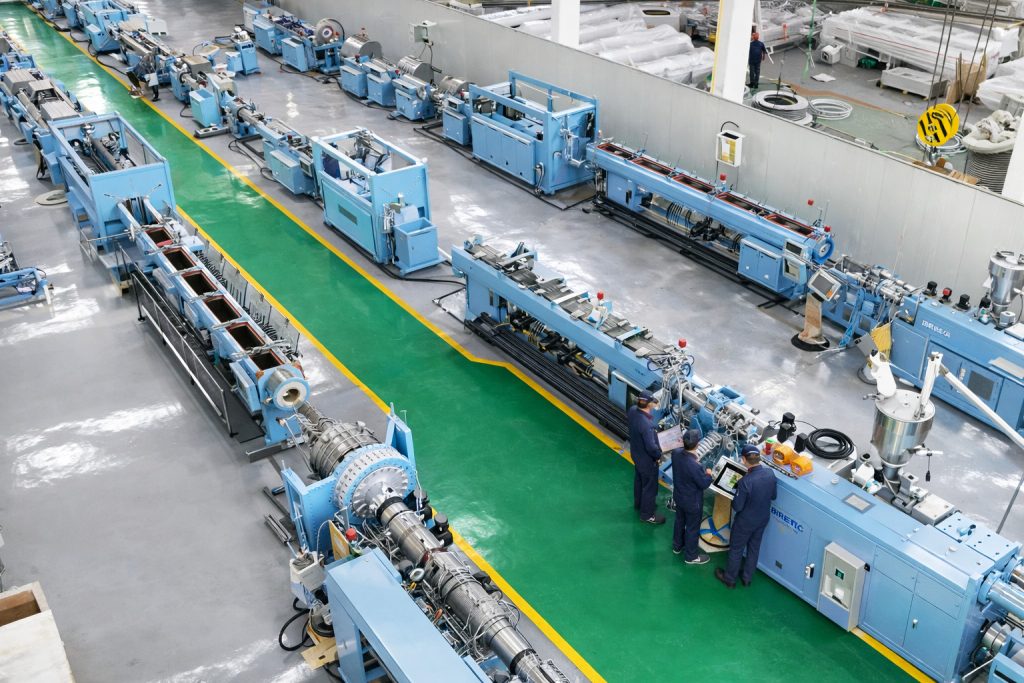
PVC pipe, profile, and compound processors worldwide are navigating the most significant stabilizer chemistry transition in decades. Photo: Unsplash
Overview
On May 11, 2026, Baerlocher USA hosted its 10th annual PVC Technical Summit — and the event drew a record-breaking audience, reflecting the urgency gripping every level of the PVC compounding supply chain right now. Expert speakers from Shintech, Westlake, Kaneka, Ineos, Rollepaal, Lubrizol, Innoleics, U.S. Silica, the Vinyl Institute, the Plastic Pipe and Fittings Association (PPFA), and the Resilient Floor Covering Institute (RFCI) covered the full technical and commercial landscape of PVC processing in 2026: polymerization fundamentals, the chemistry of processing aids, impact modifiers and stabilizers, codes and regulations, sustainability, and the supply chain headwinds from Middle East shipping disruptions.
The record attendance is not coincidental. PVC compounders and processors are navigating the most consequential formulation transition in decades. The EU’s complete ban on lead-based PVC stabilizers — effective November 29, 2024 — has created a global regulatory cascade that is forcing compounder recipe reformulations across pipe, profile, wire and cable, flooring, and rigid packaging applications. Simultaneously, Baerlocher and the wider industry are advancing the replacement of organotin stabilizers with calcium-zinc systems, while managing the cost and supply chain disruptions of the current commodity cycle. The 10th PVC Technical Summit landed at the precise intersection of all three pressures.
The Summit: Record Attendance, Industry-Wide Urgency
The Baerlocher PVC Technical Summit has run annually for a decade, providing a focused technical forum for PVC compounders, processors, resin producers, and additive suppliers to align on formulation science, regulatory compliance, and market direction. The 10th edition drew its largest-ever audience — a direct indicator of how much is in motion across the PVC compounding world in 2026.
The speaker lineup assembled the core of the North American PVC supply chain in one room. Shintech is the largest PVC resin producer in the United States. Westlake operates integrated VCM and PVC production and is actively pursuing the VYNOVA Wilhelmshaven asset in Europe. Kaneka is the leading producer of MBS (methacrylate-butadiene-styrene) impact modifiers for PVC. Ineos supplies VCM and operates European PVC and chlor-alkali assets. Rollepaal is a Dutch manufacturer of PVC pipe extrusion lines. Lubrizol develops specialty PVC processing aids and functional additives. The Vinyl Institute is the North American industry trade association for PVC.
The event also included a plant tour, case studies, and a discussion panel — formats that move beyond presentation and into operational reality. And economist Elliot Eisenberg of GraphsandLaughs gave an overview of U.S. economic forces at play in 2026, providing macroeconomic context for the supply chain and pricing discussions that ran throughout the summit.
Shipping disruptions in the Middle East are dramatically affecting global resin trade flows, and rising prices reflect the supply squeeze — a theme that ran as a backdrop through the entire event alongside the regulatory transition topics.
The Lead Ban That Changed Everything — Effective November 2024
The foundational event driving the current PVC stabilizer transition is the EU’s complete prohibition on PVC products containing lead above 0.1% by weight, which took effect on November 29, 2024. The regulation — implemented through the EU’s REACH framework — crystallized the urgency of migrating away from lead-based stabilizer systems that had been used in PVC processing for decades.
Lead-based stabilizers — primarily lead sulfate, dibasic lead phosphite, and lead stearate systems — offered exceptional long-term thermal stability, electrical insulation properties, and processing latitude at low cost. They dominated the PVC wire and cable and pipe markets in Europe and Asia for generations precisely because they worked reliably across a wide processing window. Their toxicity, however, made them ultimately incompatible with circular economy targets: PVC recyclate containing lead cannot be used in most new applications, and lead-stabilized PVC cannot be incinerated without emissions controls that smaller facilities cannot justify.
The EU ban has a supply chain tail that extends far beyond European processors. Any PVC compound or finished product sold into the European market must be lead-free. This means Asian pipe extruders, wire and cable compounders, and profile manufacturers supplying European construction or automotive customers must operate lead-free formulations — even if their own domestic regulations have not yet required it. The global reach of the EU regulatory framework, operating through supply chain requirements rather than direct enforcement, makes the November 2024 lead ban effectively a global event for export-oriented processors.
China’s Green Manufacturing Program and forthcoming restrictions in India are positioning Ca/Zn as the default choice for general-purpose PVC across Asian markets — the policy ripple is already visible. Suppliers have responded by refining Ca/Zn formulations to match organotin processing windows, thereby easing converters through line trials without throughput penalties.
Calcium-Zinc: The Chemistry Now at the Center of PVC Compounding
Calcium-zinc (Ca/Zn) stabilizer systems are the primary replacement technology for lead-based PVC stabilization across pipe, profile, rigid packaging, and most wire and cable applications. The transition from lead to Ca/Zn is not simply a drop-in substitution — it requires a reformulation of the entire PVC compound recipe, because Ca/Zn stabilizers interact differently with PVC’s thermal degradation mechanism than lead-based systems do.
PVC degrades thermally by releasing hydrogen chloride (HCl), which triggers a chain reaction that leads to polyene formation and discoloration, followed by cross-linking and brittleness. Lead stabilizers function primarily as HCl scavengers — reacting with released HCl to form lead chloride salts that are relatively inactive in further degradation. Ca/Zn systems operate similarly in principle but with different kinetics: calcium soaps scavenge HCl but can suffer from overconsumption of zinc, leading to a phenomenon called zinc burning — a catastrophic acceleration of degradation — if the zinc content is not carefully balanced.
Managing this zinc balance — and extending processing stability without lead’s forgiving overcapacity — requires precise formulation of co-stabilizers: phosphites, polyols, beta-diketones, hydrotalcites, and organic co-stabilizers that work synergistically with the Ca/Zn primary system to deliver equivalent processing stability and long-term heat aging performance.
Baerlocher’s approach centers on its vertically integrated supply chain to deliver high-purity mixed metal stabilizers, with regional production sites in North America and Asia ensuring proximity to key customers. The company’s new calcium-based capacity in Changzhou, China — designed specifically for the Asian market’s compressed compliance transition timeline — provides regional supply security that shortens lead times for Asian processors juggling new formulation requirements simultaneously with supply chain volatility.
For PVC compounders, the Ca/Zn transition also affects lubricant package design. Lead compounds historically contributed an internal lubricating effect that reduced friction between PVC chains during processing. Ca/Zn systems do not provide this lubrication, meaning external and internal lubricant levels — typically based on stearic acid derivatives, montan wax, or paraffin wax — must be rebalanced to maintain the processing window and surface finish that existing extrusion dies and calibration tooling are set up to produce.
Baerlocher’s Tin Replacement Program: Eliminating the Other Problematic Stabilizer
While the lead ban has been the most urgent driver, it is not the only stabilizer transition underway. Organotin stabilizers — dibutyltin (DBT) and dioctyltin (DOT) systems — have been widely used in PVC rigid applications, particularly transparent and food-contact applications such as rigid packaging, medical tubing, and potable water pipe, where their low color contribution and excellent initial color hold made them technically superior to early Ca/Zn systems.
Baerlocher’s Tin Replacement initiative — formally launched in 2025 and prominently featured at K Show 2025 and again at the PVC Technical Summit — aims to replace organotin systems with Ca/Zn-based alternatives that achieve equivalent optical performance. The program reflects both regulatory direction (organotin compounds are under REACH scrutiny as substances of very high concern) and industry sustainability commitments (tin compounds are not compatible with circular PVC recycling chains).
Due to evolving environmental regulations and sustainability goals, tin-based stabilizers are now being replaced by more eco-friendly and safer Calcium/Zinc-based systems. Baerlocher’s Tin Replacement program provides customers worldwide with a broad range of benefits, supporting their move toward greater sustainability.
The technical challenge in tin replacement is more demanding than lead replacement. Organotin systems in transparent rigid PVC applications — bottles, blister packs, medical containers — must be replaced by Ca/Zn formulations that maintain water-white clarity, resist yellowing under UV and thermal exposure, and meet food-contact safety approvals across multiple regulatory jurisdictions. Baerlocher’s program includes customized formulation support for each application category, recognizing that a tin replacement solution for PVC pipe does not directly translate to one for transparent rigid packaging.
Processing Aids, Impact Modifiers, and Lubricants: The Full Recipe Is Being Rewritten
One of the most technically dense sessions at the Baerlocher summit covered the interaction between PVC stabilizer transitions and the rest of the compound recipe — processing aids, impact modifiers, and lubricants. This interaction is the reason stabilizer replacement is a compounding project rather than simply a purchasing change.
Processing aids. Acrylic processing aids — primarily based on high-molecular-weight poly(methyl methacrylate) (PMMA) copolymers — accelerate PVC fusion, improve melt uniformity, and extend the processing window. In lead-based formulations, processing aid loading was tuned around a stabilizer system that provided a long early-color-hold period. Ca/Zn reformulations often require adjusted processing aid loading and molecular weight selection to maintain equivalent fusion kinetics and surface quality — particularly in profile extrusion and pipe applications where surface gloss and dimensional consistency are customer specifications.
Impact modifiers. Kaneka’s participation at the summit reflects the importance of MBS impact modifiers in rigid PVC. Ca/Zn transitions can affect the interaction between the stabilizer package and MBS core-shell particles, because Ca/Zn systems have different pH effects during processing that can influence particle-matrix adhesion. Chlorinated polyethylene (CPE) impact modifiers, used in pipe compounds and siding applications, interact with the lubricant package in ways that must be rebalanced when the stabilizer chemistry changes.
Lubricants. The lubricant balance — internal lubricants that reduce melt viscosity by promoting polymer-polymer slip, and external lubricants that provide die release and anti-plate-out performance — is intricately connected to stabilizer chemistry. U.S. Silica’s participation at the summit points to the role of mineral fillers (calcium carbonate, in particular) in PVC compound recipes, where the filler surface treatment chemistry interacts with both the stabilizer and lubricant package.
The practical message from the summit’s technical sessions: transitioning a PVC compound from lead or organotin stabilization to Ca/Zn is a multi-variable optimization problem, not a single-ingredient swap. It requires methodical plant trials, rheological characterization of the new compound, mechanical testing against application specifications, and careful process parameter adjustment on the extrusion or calendering line.
Middle East Supply Disruption: The Additive Supply Chain Is Also Squeezed
The PVC resin supply squeeze from Middle East shipping disruptions received attention at the summit, but the supply chain pressure on PVC additive ingredients deserves equal focus. Several key raw materials in PVC stabilizer systems have Middle Eastern or Asian supply concentration points that are exposed to current logistics disruptions:
Zinc oxide and zinc stearate. The zinc component of Ca/Zn stabilizer systems is sourced primarily from zinc oxide producers in China and Europe. Chinese zinc smelting operations — which supply the majority of global refined zinc — are not directly affected by Middle East logistics, but global freight congestion has extended delivery lead times and increased inventory holding requirements for additive producers sourcing from China.
Stearic acid and fatty acid derivatives. The calcium soaps in Ca/Zn systems are manufactured from stearic acid, which is derived from palm oil (predominantly Malaysian and Indonesian supply) or tallow (North American supply). Palm-derived stearic acid supply chains have been affected by Southeast Asian logistics congestion, and the substitution between palm-based and tallow-based stearic acid is not always technically neutral in PVC stabilizer formulations.
Phosphite co-stabilizers. Organophosphite co-stabilizers — critical for extending the long-term stability of Ca/Zn systems — are specialty chemicals manufactured by a small number of global producers. Supply concentration risk in this ingredient category is higher than for the primary Ca/Zn salts themselves.
For PVC compounders managing stabilizer reformulation simultaneously with an additive supply squeeze, building strategic inventory of transition-critical ingredients — particularly Ca/Zn primary stabilizers and phosphite co-stabilizers — and qualifying alternate approved sources before supply tightens further are the highest-priority procurement actions.
What This Means for PVC Compounders in Asia, Europe, and the Americas
The Baerlocher PVC Technical Summit’s record attendance signals that the industry understands the scale of what is changing simultaneously:
Europe: Lead ban compliance is mandatory since November 2024. PVC processors with legacy lead-stabilized compound recipes are already in violation if they are still producing. The priority is validating Ca/Zn reformulations for each application category, qualifying new stabilizer suppliers, and recertifying compounds under relevant product standards (EN 1401 for PVC-U pressure pipe, EN 12608 for window profiles, etc.).
Asia: China’s lead-free transition is underway through the Green Manufacturing Program, with enforcement timelines that vary by application sector. Export-oriented processors serving European automotive and construction customers are already required to be lead-free. Domestic-market processors are watching the regulatory calendar closely. Baerlocher’s new Changzhou calcium-based stabilizer capacity was built specifically for this transition.
Americas: The United States does not have a federal lead ban equivalent to the EU’s REACH restriction, but NSF 61 requirements for potable water pipe and fittings, California Proposition 65 restrictions, and customer sustainability specifications are pushing North American PVC pipe and profile compounders toward Ca/Zn systems independently of federal regulation. The PPFA’s participation at the Baerlocher summit — representing the pipe and fittings industry — signals that the U.S. pipe sector is actively navigating this transition.
Equipment for PVC Dry-Blend and Compound Lines Running New Stabilizer Systems
PVC compounding — particularly for rigid pipe, profile, and window frame applications — centers on a dry-blending process that requires precise, high-energy mixing to achieve uniform distribution of stabilizers, lubricants, processing aids, and fillers throughout the PVC powder matrix. When stabilizer systems change, the mixing process must be re-optimized to ensure the new Ca/Zn package disperses as uniformly as the legacy lead system, within the thermal constraints of the new chemistry.
The dry-blend mixing stage is where compound quality is fundamentally determined — and where the sensitivity of Ca/Zn chemistry to processing temperature and shear makes equipment performance more critical than with the more forgiving lead-based systems:
High-shear hot mixing for PVC dry blend: The High Speed Mixer Machine is the central piece of equipment in any PVC dry-blend compounding line. Operating at high blade speeds, it generates the frictional heat and shear required to achieve the specific temperature profile that PVC dry blending demands — typically a hot mixing stage reaching 110–120°C where the stabilizer, lubricants, and processing aids are absorbed into the PVC particle surface, followed by transfer to a cooling mixer. Ca/Zn stabilizer systems have narrower optimal temperature windows than lead-based systems, making precise, repeatable hot mixer performance more critical than ever.
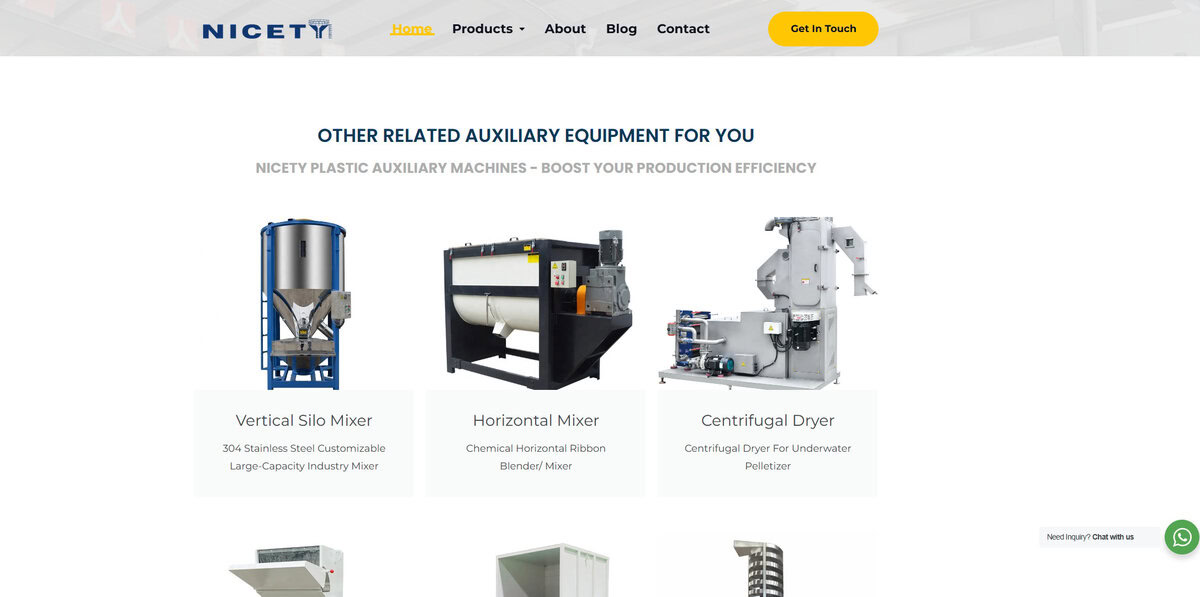
Cooling and stabilization after hot mixing: After the hot stage, the PVC dry blend must be rapidly cooled to prevent overstabilizer consumption and to set the surface treatment of the PVC particles before they are conveyed to storage or the extruder. The Horizontal Mixer serves as the cooling mixer in a two-stage hot/cool mixing system, bringing blend temperature down while maintaining the homogeneity achieved in the hot stage.
Powder conveying without segregation or contamination: PVC dry-blend powder is a segregation-sensitive mixture — calcium carbonate filler, stearic acid lubricants, and impact modifier particles all have different particle sizes and bulk densities that can stratify during pneumatic or mechanical conveying. The Screw Conveyor and Vibrating Spiral Elevator move pre-blended PVC dry blend from the cooling mixer to storage silos or the extruder hopper while maintaining blend uniformity, preventing the filler-stabilizer segregation that causes gelation inconsistency on the extrusion line.
Precision additive dosing for reformulation trials: During stabilizer system transition, compound formulations must be trialed at multiple stabilizer loadings and co-stabilizer ratios. The Plastic Color Mixer provides precise let-down blending capability for additive concentrates and masterbatch systems, enabling accurate small-batch reformulation work before full production scale-up.
Pelletizing for pre-compounded PVC grades: For compounders producing pre-compounded PVC pellets rather than dry blend — particularly for injection molding or flexible PVC applications — the Extrusion Pelletizing Line converts the extruded compound into uniform pellets. The Linear Vibrating Screener classifies pellets after cooling, removing fines and oversized particles that would affect feeding consistency in downstream processing equipment.
Silo blending for multi-batch homogenization: Large PVC compounding operations often produce multiple hot-mix batches that must be combined before extrusion to achieve inter-batch consistency. The Vertical Silo Mixer homogenizes multiple batches of PVC dry blend in the storage silo, smoothing out any batch-to-batch variation in stabilizer distribution before the compound reaches the extruder.
In an environment where every PVC compound recipe is being actively reformulated — and where Ca/Zn chemistry is less tolerant of mixing variability than the lead-based systems it is replacing — the precision and repeatability of every stage in the dry-blend and compounding process is a direct determinant of compound quality, customer approval retention, and production yield.
Sources
- Plastics Technology: Baerlocher Hosts 10th PVC Technical Summit — May 11, 2026
- Baerlocher: K Show 2025 — Tin Replacement Initiative for a More Sustainable PVC Industry — October 2025
- Baerlocher: Towards a Circular Economy — Recycled Materials and Stabilizer Innovation
- Baerlocher: PVC Stabilizers Product Overview
- Mordor Intelligence: PVC Stabilizers Market — Ca/Zn Transition and Regulatory Drivers
- 360iResearch: Heat Stabilizers for PVC Plastisol Market — Baerlocher, BASF, PMC, Songwon Competitive Landscape
- Plastics Technology: May 2026 Commodity Resins and Industry News Roundup
- Vinyl Institute: PVC Industry Resources and Regulatory Guidance
- Plastic Pipe and Fittings Association (PPFA): Technical Resources

_画板-1-副本-3-pxeey2xejyohpkvf07tglhvew6ks2ts3pjvhagm60c.png "NICETY MACHINERY Co., LTD")