_画板-1-1.png)
By Nicety Machinery Co., Ltd | August 2, 2026

On July 30, BASF highlighted new research showing that engineering plastics cannot be recycled effectively through one universal process. The correct route must match the polymer chemistry, contamination level and quality required in the next application.
The research is particularly relevant to compounded polyolefins, polyamides and polyurethanes used in automotive, electrical, construction and other demanding applications.
Why One Recycling Process Is Not Enough
Engineering plastics often contain reinforcements, flame retardants, pigments, fillers and multiple polymer components. These formulations improve product performance but make recycling more difficult than processing relatively pure packaging polymers.
According to the BASF researchers, recyclers must first characterize and sort incoming material before selecting a recovery process. Poorly defined waste streams can produce inconsistent recycled compounds even when the extrusion process is stable.
Four Routes for Different Waste Streams
| Recycling route | Most suitable feedstock | Main consideration |
|---|---|---|
| Mechanical recycling | Clean, homogeneous and well-sorted plastics | Energy-efficient, but sensitive to contamination and polymer degradation |
| Solvent-based recycling | Sorted but compositionally complex plastics | Selectively dissolves and cleans a target polymer |
| Depolymerization | Aged or contaminated polymers such as PA6 | Converts polymers back into building blocks for high-quality reuse |
| Pyrolysis or gasification | Highly mixed residues unsuitable for other routes | Recovers chemical feedstock but requires substantially more energy |
BASF cited the recovery of polyamides from automotive shredder residue as a potential solvent-based application. The company also pointed to its loopamid process, which converts polyamide 6 textile waste back into material suitable for new fibers. BASF started its first commercial loopamid facility in Shanghai in early 2025.
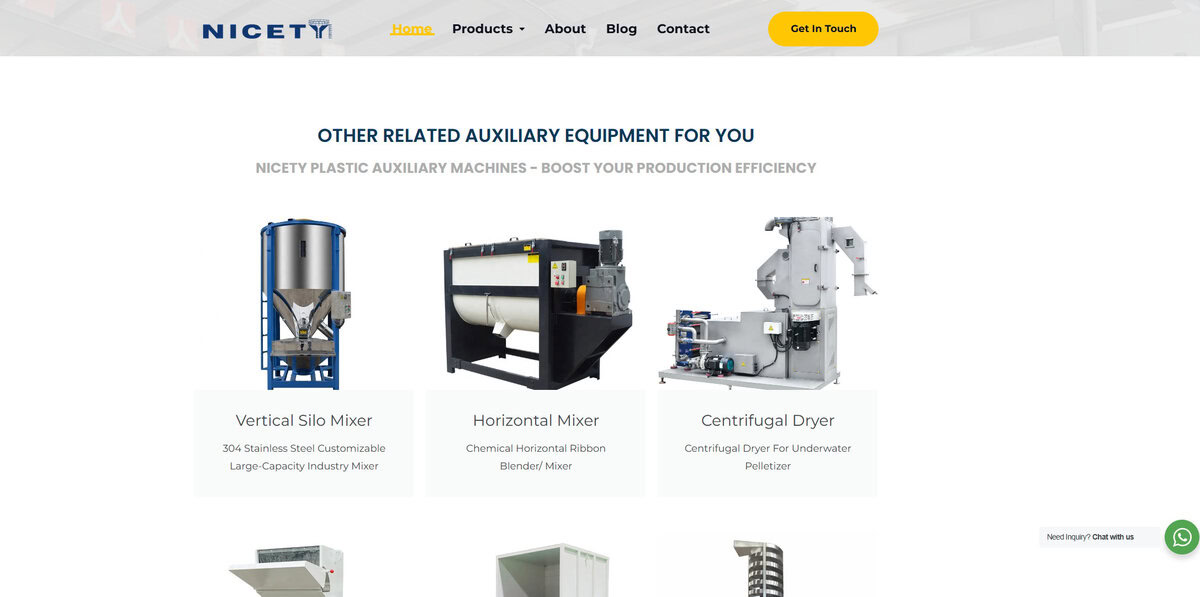
Mechanical recycling remains the preferred low-energy route when clean feedstock is available. Where washing is required, a plastic centrifugal dryer can help reduce surface moisture before extrusion and pelletizing.
What This Means for Plastics Processors
The study reinforces a practical rule for compounders: equipment must be selected according to the physical form and condition of the recovered material.
Dry pellets and regrind can be homogenized in a vertical silo mixer, while powders, fillers and pigments are better handled by a horizontal ribbon blender. Processors comparing different configurations can review these plastic mixer options.
After extrusion, a vibrating spiral elevator can combine vertical conveying with controlled pellet cooling. For post-consumer recycled materials with persistent odors or volatile residues, a dedicated VOC odor-removal and drying system may provide an additional treatment step.
These auxiliary processes do not replace sorting or polymer-specific recycling technology, but they can improve moisture control, formulation consistency and final pellet handling.
The Remaining Scale-Up Challenge
BASF said several recycling technologies for polyamides and polyurethanes have already demonstrated technical feasibility at pilot scale. Wider commercialization still depends on reliable waste collection, sufficient feedstock volumes, competitive process economics and stable recycling regulations.
The central conclusion is clear: high-quality engineering-plastic recycling will require a portfolio of complementary technologies rather than dependence on mechanical or chemical recycling alone.

_画板-1-副本-3-pxeey2xejyohpkvf07tglhvew6ks2ts3pjvhagm60c.png "NICETY MACHINERY Co., LTD")