_画板-1-1.png)
By Nicety Machinery Co., Ltd | June 17, 2026
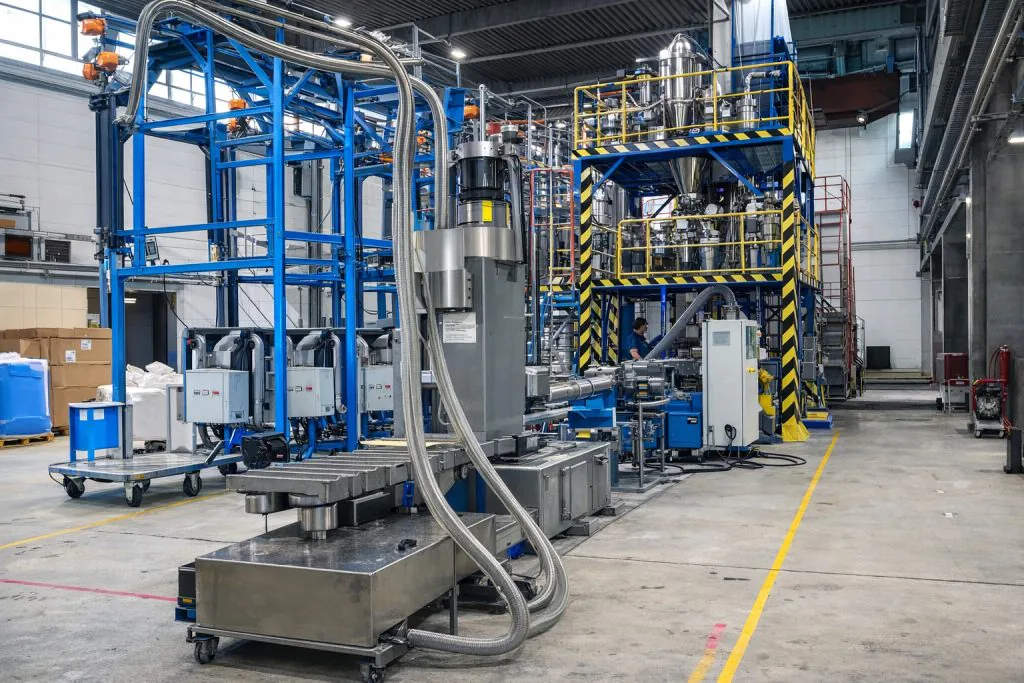
India’s engineering plastics and specialty polymer compounding capacity is expanding rapidly in 2026, driven by automotive, electronics, infrastructure, and global supply chain diversification.
Overview: Three Signals That India’s Compounding Moment Has Arrived
In the space of three months in early 2026, three separate investment events confirmed what market analysts had been projecting for years: India has crossed the threshold from a promising emerging market for plastic compounding into an active global investment destination where international compounders are committing capital, forming joint ventures, and building production capacity at a pace that will structurally reshape Asia’s polymer processing supply chain.
On April 16, 2026, Rhode Island-based Teknor Apex Company announced a joint venture with Shriram Polytech Ltd. — a subsidiary of India’s DCM Shriram Ltd. — to form a new compounding entity called PolyTek, combining Shriram Polytech’s established domestic manufacturing capability in vinyl compounds with Teknor Apex’s global specialty polymer formulation expertise. The deal, valued at $5.6 million for Teknor Apex’s 50% stake, targets vinyl compounds, thermoplastic elastomers, and engineering thermoplastics for one of Asia’s largest and fastest-growing industrial ecosystems.
Before that, Italian compounder Sirmax Group — the fourteenth-plant, $500 million revenue European compounding leader — announced that its third Indian facility, under construction near Hosur in Tamil Nadu’s industrial corridor, is on track to complete by the end of 2026. Combined with the expanded Palwal plant, the commissioning of the Hosur site will push Autotech-Sirmax India’s total compounding capacity above 82,000 tonnes per year — making India one of Sirmax’s largest manufacturing footprints outside Europe.
And in February 2026, Plastindia 2026 closed as one of the most successful editions of India’s flagship plastics industry exhibition, confirming the country’s position as a global plastics hub and a destination where international machinery and materials suppliers are fighting for market share.
These three events, taken together, tell a clear story: the global compounding industry is moving to India — and 2026 is the year that transition became undeniable.
The PolyTek Joint Venture: Teknor Apex and DCM Shriram Build India’s Next Specialty Compounder
The Teknor Apex and DCM Shriram joint venture, announced April 16, 2026, is the most strategically significant new compounding partnership formed in India this year — and it reflects a commercial logic that any compounder evaluating the Indian market should study carefully.
Teknor Apex B.V., a subsidiary of Teknor Apex Company, announced it has entered into a joint venture with Shriram Polytech Ltd., a subsidiary of DCM Shriram Ltd., one of India’s leading industrial companies engaged in PVC compounds. The joint venture will operate under the brand name PolyTek.
By combining Shriram Polytech’s strong domestic presence and manufacturing capability in vinyl compounds with Teknor Apex’s global formulation capabilities, the joint venture aims to deliver high-performance and technically advanced, specialty polymer solutions for diverse industrial applications.
Donald Wiseman, Chief Executive Officer of Teknor Apex, said: "Our collaboration combines Shriram Polytech’s presence in vinyl materials with Teknor Apex’s formulating expertise to deliver high-performance solutions for one of Asia’s largest industrial ecosystems. By combining our strengths, we gain immediate access to a well-established local platform, deep market insight, and a strong manufacturing foundation."
The joint venture reflects a shared commitment to operational excellence, scale, sustainability, and responsible growth. PolyTek will focus on providing advanced polymer solutions that meet evolving customer needs while aligning with global environmental standards.
DCM Shriram’s management noted that it has entered a JV with a US company for its PVC compounding business and plans to accelerate the growth. In the Vinyl segment, revenue increased 4% during FY26, aided by improved PVC volumes and operational efficiencies.
The structural logic of the PolyTek deal is a template worth understanding. Teknor Apex — which manufactures vinyl compounds, thermoplastic elastomers, and engineering thermoplastics across the United States, Europe, and Asia — needed Indian market access at scale without the cost and lead time of building a greenfield facility. Shriram Polytech needed the formulation depth and global customer relationships that Teknor Apex brings to move up the value chain from standard vinyl compounds into specialty polymer grades. Each party contributes what the other cannot quickly replicate.
For compounders watching from outside India, the PolyTek model offers a clear lesson: the most capital-efficient entry into India’s compounding market in 2026 is not a greenfield build — it is a partnership with an established domestic operator that already has plant infrastructure, trained workforce, regulatory approvals, and customer relationships in place. The time-to-market advantage of that approach, in a market growing at the rates India’s compounding sector is showing, more than justifies the shared economics.
Sirmax’s Third Indian Plant: Italy’s Largest Independent Compounder Goes All-In on South Asia
Italian compounder Sirmax Group started building a new compounding factory in India. It will be the company’s third facility in India upon completion, and its fourteenth global plant. The new facility is being built near Hosur, located in the southern state of Tamil Nadu, and is scheduled to start operations in 2026.
After acquiring the land from the Indian state government of Tamil Nadu, construction of the new plant has commenced and is scheduled for completion by 2026, as outlined in a specific agreement stipulating both the timeline for completion and the obligation to initiate production within three years. This operation is part of the Group’s strategy to boost its foreign subsidiaries.
Once its third plant is built in southern India by 2026, capacity on the subcontinent will reach 82,000 tonnes/year.
Sirmax is targeting 20,000 tonnes annual production in India by late 2026.
With a total investment of approximately $10 million, this initiative is deemed strategic, addressing the escalating demand for thermoplastic compounds in the region.
The Hosur location is not accidental. Tamil Nadu’s Hosur industrial corridor — anchored by electronics manufacturing, two-wheeler automotive production, and a rapidly expanding EV manufacturing cluster — is one of India’s highest-density engineering plastics consumption zones. Tata Motors’ EV manufacturing operations, Samsung Electronics, and numerous Tier-1 automotive and electronics suppliers operate in the corridor, creating immediate demand for the glass-filled PP, engineering thermoplastic, and recycled polymer compounds that Sirmax produces.
Sirmax has developed a polypropylene compound with 5% talc additive containing 30% recycled material derived from post-consumer waste. This PP compound from the Green Isofil family resembles the mechanical and aesthetic characteristics of virgin plastic, and its carbon footprint is reduced by up to 21% compared with 100% virgin raw material.
This recycled-content compound development — validated for automotive interior applications — positions Sirmax India to supply both the sustainability-driven brand requirements of global automotive OEMs and the cost-sensitivity of domestic Indian automakers simultaneously. It is the kind of dual-market positioning that makes India strategically attractive for a compounder with Sirmax’s European technical heritage and Asia-Pacific production ambitions.
Sirmax President and CEO Massimo Pavin stated that within the next five years, Sirmax plans to construct an engineering polymers factory in the United States — a product line currently manufactured in Europe and India but not yet in the US. Amidst these expansions, Sirmax is also exploring potential acquisitions or joint ventures.
Plastindia 2026: Record-Breaking Show Confirms India as a Global Plastics Player
Plastindia 2026, held in Gandhinagar, Gujarat in February 2026, closed as one of the most successful editions of India’s premier plastics industry exhibition. The show — which runs every three years — brought together domestic Indian plastics manufacturers, compounders, processors, and international machinery and material suppliers in a format that increasingly mirrors the scale and commercial gravity of Chinaplas and interpack for their respective markets.
The record-breaking success of Plastindia 2026 is significant for what it reveals about the state of India’s plastics manufacturing ecosystem. Unlike previous editions where the show was primarily a domestic industry event with selective international participation, the 2026 edition saw substantial international machinery and material supplier presence — reflecting the recognition by European and American companies that India’s plastics processing market has crossed a scale threshold that makes it a serious commercial priority.
For the compounding segment specifically, Plastindia 2026 showcased the full range of India’s polymer processing ambition: from commodity PP and PE compounding for packaging and construction through engineering thermoplastic compounds for automotive and electronics, to specialty compound grades for medical, electrical, and infrastructure applications that were, until recently, exclusively imported from European or American producers.
The Vinyl India 2026 event — held concurrently — brought the global PVC industry together explicitly to navigate the turbulent conditions of the current market: European PVC producer insolvencies (Vynova Wilhelmshaven, Runcorn), Middle East supply disruption, and the ongoing Ca/Zn stabilizer transition triggered by the EU lead ban. India’s PVC compounding sector — anchored by companies like Shriram Polytech, now operating as part of PolyTek — faces these same pressures while simultaneously serving a domestic PVC pipe, profile, and cable market growing at rates that European demand cannot match.
Why India, Why Now: The Five Structural Drivers Behind the Investment Wave
The concentration of compounding investment in India in 2026 is not coincidental. Five structural forces are converging simultaneously to make this the most attractive moment in a decade for capacity expansion in India’s polymer compounding sector:
1. Automotive production and EV transition at scale. India is the world’s third-largest automotive market and is in the early stages of an EV transition that is driving demand for new compound grades — battery enclosure materials, high-temperature cable compounds, lightweight structural components — that domestic compounders are just beginning to develop. Asia Pacific dominates with 45% market share, led by China, India, Japan, and South Korea’s robust automotive, electronics, and packaging sectors. India’s share of that demand is growing fastest.
2. Electronics manufacturing shift from China. The global semiconductor and electronics supply chain diversification accelerated by US-China trade tensions is redirecting significant manufacturing investment to India. Apple’s iPhone assembly expansion in Tamil Nadu and Karnataka, Samsung’s display and component manufacturing, and dozens of electronics subassembly operations are creating demand for engineering plastic compounds — PC, ABS, PA, PBT-based housings, connectors, and structural components — that Indian compounders are positioning to supply domestically rather than importing.
3. Government infrastructure investment. India’s Gati Shakti National Master Plan — a $1.4 trillion infrastructure investment framework covering roads, rail, ports, power, and digital infrastructure — is driving sustained demand for PVC pipe compounds, PE conduit compounds, and engineering plastic components across India’s construction and utilities sectors. Infrastructure-driven polymer demand in India is among the most reliable demand drivers in the global compounding market.
4. Supply chain diversification from China. Global manufacturers seeking to reduce single-country concentration in their polymer supply chains are qualifying Indian sources for engineering compound grades previously sourced exclusively from Chinese compounders. This qualification work — which takes 12 to 24 months for automotive and electronics applications — is already underway, meaning the commercial volume will begin flowing to Indian compounders over the 2026 to 2028 window.
5. Cost-competitiveness with rising technical capability. The demand for recycled modified plastics is expected to grow at a CAGR of 8.5% from 2026 to 2031, creating significant growth opportunities for plastic modification plants that can adapt to this trend. India’s compounding operations — with lower energy, labor, and overhead costs than European equivalents — can compete on both price and quality for a widening range of compound grades as technical capability rises through the Sirmax, PolyTek, and similar investments.
What India’s Compounding Plants Are Actually Producing: PP, Engineering Plastics, Vinyl, TPE
The compound portfolio produced by India’s major compounders in 2026 covers a wider range than external observers often appreciate:
Polypropylene compounds — glass fiber reinforced, talc filled, impact modified, and UV-stabilized PP grades for automotive interiors, appliance housings, and consumer goods — remain the largest volume category. Polypropylene dominated the product segmentation with a market revenue share of above 29%, processable using any thermoplastic method including injection molding, extrusion blow molding, and general-purpose extrusion with good fatigue and chemical and temperature resistance.
Engineering thermoplastic compounds — PA6, PA66, ABS, PC, PC/ABS, PBT, POM, and specialty blends — are increasingly produced domestically in India rather than imported. Autotech-Sirmax India’s portfolio covers the full engineering thermoplastic range: polypropylene compounds, engineering plastics, long-glass fibre compounds, bio-degradable compounds, and circular economy materials for India and South East Asian markets.
Vinyl and PVC compounds — flexible PVC for wire and cable sheathing, rigid PVC for pipe and profile, and specialty vinyl compounds for flooring and medical applications — are the anchor product of Shriram Polytech, now operating as PolyTek. India’s PVC compound market is supported by domestic Shintech and Reliance resin supply, making it less exposed to the Middle East supply disruption that has affected European and North American PVC compounders.
Thermoplastic elastomers (TPE) — the flexible compound category that Teknor Apex brings to the PolyTek joint venture — are in strong demand across India’s footwear, consumer goods, automotive sealing, and medical sectors. India is one of the largest global footwear manufacturing countries, and TPE sole compounds represent a high-volume application that Teknor Apex’s formulation expertise directly addresses.
Recycled and bio-based compounds — Sirmax has developed a PP compound with 30% recycled material content that retains impact and scratch resistance, resolves stickiness and odor, and reduces carbon footprint by up to 21% compared with 100% virgin raw material. Indian production of recycled-content compounds is growing as both domestic brand owners and global OEM customers impose sustainability requirements on their Indian suppliers.
The Processing Challenges Specific to Indian Compounding Operations
Compounding plant operators in India face a distinct set of operational challenges that differ from those encountered by European or North American compounders — and understanding them is essential for international investors entering the market through JVs or greenfield investment:
Raw material quality variability from domestic sources. India’s domestic polymer production has expanded substantially — Reliance, IOCL, and GAIL supply significant volumes of PE, PP, and PVC — but quality consistency, particularly in specialty grades, can be more variable than material sourced from European or US producers with tighter specification control. Compounding lines must be designed with the formulation flexibility to manage incoming resin variation without compromising compound output quality.
Humidity and temperature extremes in processing environments. India’s climate — with monsoon-season humidity levels above 90% in many industrial regions, and summer temperatures that affect plant-level ambient conditions — creates moisture management challenges for hygroscopic engineering resins that are more acute than in temperate European manufacturing environments. PA, PC, and PBT feedstocks require robust drying systems that maintain specification performance year-round through monsoon conditions.
Power supply variability. Industrial power supply in many Indian manufacturing zones, while improving, still experiences voltage fluctuations and interruptions that affect precision compounding extruder control. Equipment with robust power conditioning and automatic parameter recovery is a practical requirement rather than a luxury specification.
Skilled operator availability and training requirements. High-performance twin-screw compounding lines require trained operators to manage the process window, diagnose deviations, and maintain quality documentation. The availability of experienced compounding line operators varies significantly by industrial region, making process automation and reliable auxiliary equipment that reduces operator skill dependency particularly valuable.
VOC and odor management for automotive and consumer grades. Indian automotive OEMs — Maruti Suzuki, Tata Motors, Mahindra, Hyundai India — impose increasingly stringent VOC emission limits on interior plastic components, aligned with global fogging test standards (VDA 278, GMW 15634). Compounds produced for these applications must meet deodorization specifications that require both the right formulation and the right post-processing drying and deodorizing steps.
What Global Compounders Entering India Must Get Right
The PolyTek and Sirmax investments both reflect best practices that any compounder entering India in 2026 should consider:
Partner for market access, invest in technology. The PolyTek model — Teknor Apex’s global formulation capability combined with Shriram Polytech’s domestic manufacturing and market presence — reduces market entry risk and shortens the time to competitive commercial scale. Building greenfield without a local partner in India adds 18 to 24 months to the market entry timeline and misses the current investment window.
Locate near automotive clusters. Sirmax’s Hosur plant choice — in the middle of Tamil Nadu’s EV and electronics manufacturing corridor — puts compound production within logistics proximity of the highest-value end-markets. India’s automotive clusters (Chennai/Hosur, NCR/Gurgaon/Manesar, Pune, and Ahmedabad) are the demand anchor for engineering and PP compound in India.
Build for recycled content from day one. India’s sustainability requirements for automotive and consumer goods compounds are moving toward international standards. Capacity built today without PCR processing capability will require retrofitting within three to five years. Designing drying, mixing, and quality control systems for PCR feedstock from the outset is more capital-efficient than retrofitting.
Invest in robust auxiliary equipment for the Indian climate. Drying systems, VOC management, and material handling equipment designed for European climate conditions may underperform in India’s humidity and temperature environment without specification adjustment. Selecting auxiliary equipment rated for tropical operating conditions — and sized for the drying loads that monsoon-season humidity imposes — is a fundamental plant design decision for Indian compounding operations.
Equipment That Supports High-Quality Compounding in India’s Fast-Growing Plants
For compounding plants operating or expanding in India — whether domestic operations like Shriram Polytech’s PolyTek facilities, Italian-Indian JVs like Autotech-Sirmax, or new entrants following the 2026 investment wave — the auxiliary equipment chain determines whether the plant’s output quality meets the international standards that global automotive and electronics customers require.
Plastic Mixing — The Foundation of Compound Consistency
In India’s variable feedstock environment, pre-blending quality before the compounding extruder is the most impactful lever available to maintain compound consistency. Nicety Machinery offers a comprehensive range of plastic mixer solutions covering every stage of the pre-blending process:
The High Speed Mixer Machine is the central pre-blending tool for engineering plastic and PP compounding operations. At high blade speeds, it generates the shear and heat required to achieve uniform coating of PP or engineering resin particles with glass fiber, talc, additives, and coupling agents before the extruder — the upstream dispersion step that directly determines compound quality and reduces extruder energy consumption per kilogram. For Indian compounding operations processing recycled PP content alongside virgin resin for automotive applications, the high speed mixer is where PCR odor bodies and surface contaminants are first exposed to the shear and thermal environment that initiates the deodorization process.
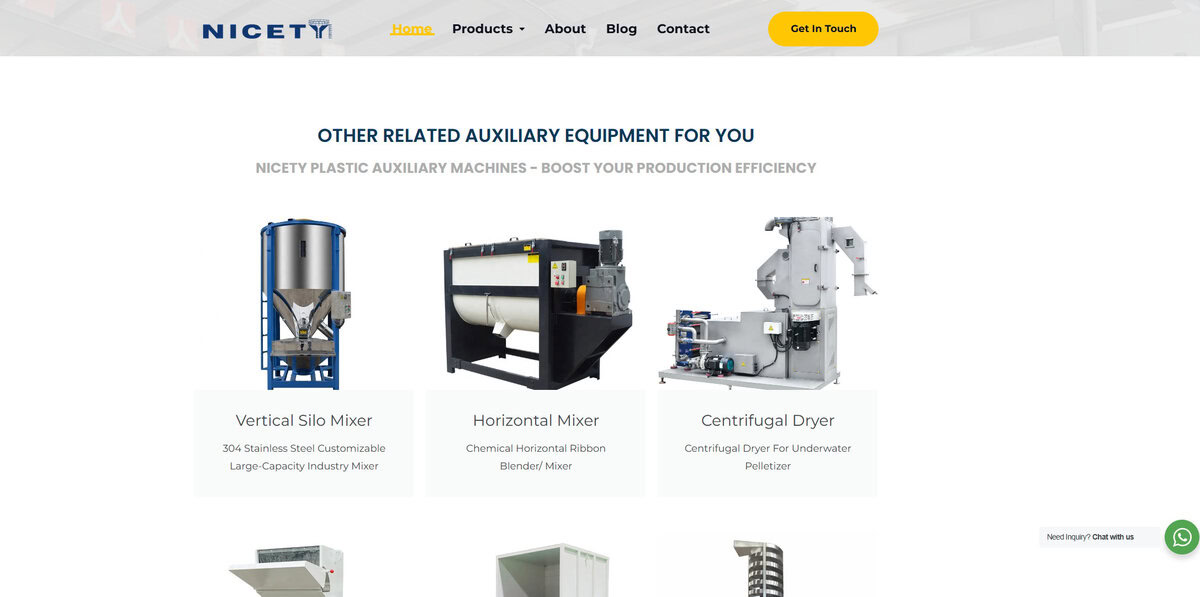
The Horizontal Mixer handles pellet-to-pellet bulk blending — the consistent mixing of compound pellets, regrind, and masterbatch before extrusion — ensuring batch homogeneity across the production runs that Indian compounders running multiple compound grades on the same line require. For PVC compounding operations within PolyTek’s facilities, the horizontal mixer serves as the cooling mixer in the two-stage hot/cool mixing sequence that PVC dry-blend production requires.
The Vertical Silo Mixer homogenizes material across multiple production batches in the storage silo — smoothing batch-to-batch variation before the compound enters the twin-screw extruder. For Indian operations producing multiple tonnes of compound per shift, silo-level homogenization is a practical necessity for maintaining compound consistency across extended production runs.
The Plastic Color Mixer provides precision masterbatch and colorant let-down at defined ratios — critical for automotive interior compound grades where color consistency and surface aesthetic are customer specification requirements for Maruti Suzuki, Tata, and Hyundai India supply chains.
VOC Deodorizing Drying — Critical for India’s Climate and Automotive Specifications
The VOC Deodorizing Drying System is the single most important auxiliary equipment investment for Indian compounding plants for two compounding reasons specific to the Indian operating environment:
Monsoon-season humidity management. PA6, PA66, PC, and PBT engineering resins are strongly hygroscopic. In India’s monsoon season — June through September — ambient relative humidity in manufacturing plant environments can remain above 80% for weeks at a time, even with basic air conditioning. Engineering resin pellets and powder exposed to this humidity reabsorb moisture rapidly, even after drying. A VOC Deodorizing Drying System with desiccant-based moisture removal and a closed conveying path from drying to extruder hopper is the equipment solution that maintains engineering resin moisture specification year-round in India’s climate, protecting compound quality through the humidity cycle.
Automotive VOC compliance for domestic OEM supply. Indian automotive OEM customers — particularly Maruti Suzuki, Tata Motors, and the Indian operations of Toyota, Hyundai, and Honda — are imposing increasingly stringent fogging and VOC emission limits on plastic interior compounds aligned with global standards (VDA 278, ISO 12219). Meeting these limits requires both the right compound formulation and the right post-processing deodorization step. The VOC Deodorizing Drying System removes the residual volatile organic compounds from compound pellets after extrusion — delivering the finished compound deodorization performance that domestic and international automotive customers require without compromise.
Centrifugal Drying — Surface Moisture Removal After Pelletizing
The Strand Line Centrifugal Dryer removes surface water from compound pellets mechanically immediately after the water-bath strand cooling step — before hygroscopic engineering resin pellets can reabsorb moisture from the warm, humid air environment of an Indian manufacturing plant. In European plants, the ambient humidity between the water bath and the downstream dryer is a manageable variable. In Indian plants during monsoon season, it is a genuine quality risk that the centrifugal dryer eliminates by reducing pellet surface moisture to near-zero before the pellets reach ambient exposure.
For PP compound and PVC compound lines — where moisture management is less critical than for engineering resins — the centrifugal dryer still delivers operational value by reducing the thermal drying load on downstream equipment, improving throughput efficiency on the post-pelletizing line.
Vibrating Spiral Elevator — Gentle Material Elevation for Glass-Filled and Engineering Compound Pellets
The Vibrating Spiral Elevator handles height transitions in compounding plants gently — moving glass-filled PA, PC, ABS, or PP compound pellets from the pelletizer or dryer level to screening and packaging stages without the pellet surface impact and fines generation that belt conveyors or pneumatic lifting systems produce. For automotive compound grades where surface cleanliness and absence of fines is a customer specification requirement, the vibrating spiral elevator’s gentle handling approach protects pellet quality through the final stages of the production line.
In Indian plant layouts — which are frequently more compact than European greenfield designs due to land cost constraints in industrial estate locations — the vibrating spiral elevator’s small footprint and vertical lift capability make it the practical choice for height-transition conveying between pelletizer, dryer, and screener without requiring the horizontal floor space that alternative conveying approaches demand.
The Z Elevator provides an alternative inclined conveying solution for plants where the vibrating spiral’s circular footprint is not compatible with the plant layout — handling pellets and granules in an enclosed, segregation-resistant path between process stages.
Post-Pelletizing Size Classification
The Linear Vibrating Screener classifies compound pellets to the dimensional specification required by automotive and electronics injection molding customers — removing fines and oversized pellets that cause feeding inconsistency in precision injection molding machines. For Indian compounders seeking to supply global automotive Tier-1 customers operating in India, consistent pellet size and absence of fines are baseline quality requirements that the screener enforces at the production output stage.
Sources
- Teknor Apex Official Press Release: Teknor Apex and DCM Shriram Forge JV PolyTek — April 16, 2026
- Plastics News: Teknor Apex, DCM Shriram Form PolyTek Compounding JV in India — April 16, 2026
- Indian Chemical News: DCM Shriram Sells 50% Stake in Shriram Polytech to Teknor Apex for $5.6 Million — April 17, 2026
- Indian Chemical News: DCM Shriram Posts 42% Surge in FY26 Profit — May 15, 2026
- Sirmax Group Official Press Release: New Production Plant for Sirmax Group in India — December 2023
- Sustainable Plastics: Sirmax Building New Compounding Factory in India — December 2023
- Plastics Today: Sirmax Develops PP Compound With Recycled Content for Auto Interiors — India Capacity to Reach 82,000 tonnes/year
- TecnA Plastics & Rubber: Sirmax Group — Global Strategy Unfolding — March 2024
- Autotech-Sirmax India: Investment Over INR 500 Million Towards Expansion — Plastemart
- Grand View Research: Plastic Compounding Market — Sirmax India Target 20,000 Tonnes by Late 2026
- Future Market Insights / OpenPR: Extruders and Compounding Machines Market to Reach $123.8 Billion by 2036 — Twin Screw 58% Share — May 2026
- Kerke Extruder: Global Plastic Compounding Market $62.7 Billion in 2026, CAGR 6.8% to 2031 — May 2026
- Plastemart: Plastindia 2026 Concludes With Record-Breaking Success

_画板-1-副本-3-pxeey2xejyohpkvf07tglhvew6ks2ts3pjvhagm60c.png "NICETY MACHINERY Co., LTD")