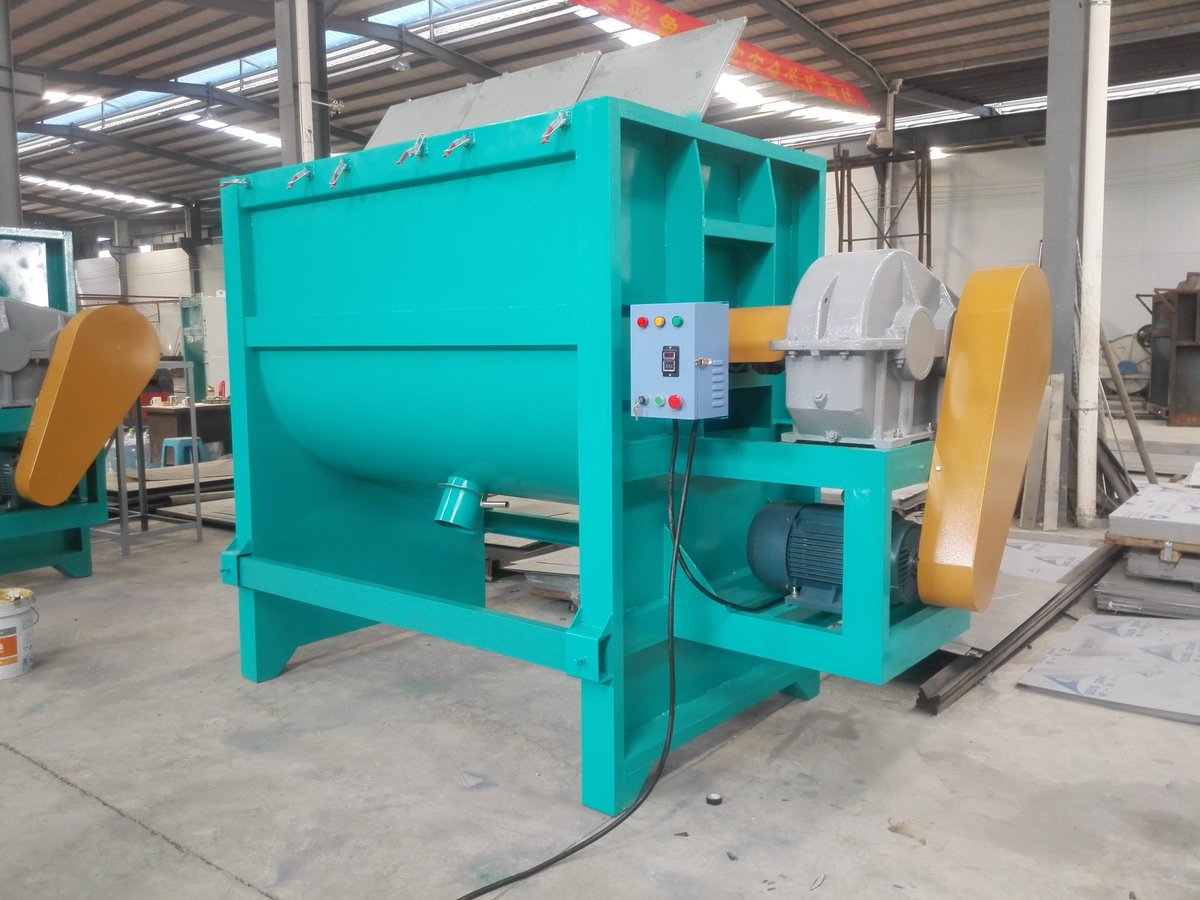
_画板-1-1.png)
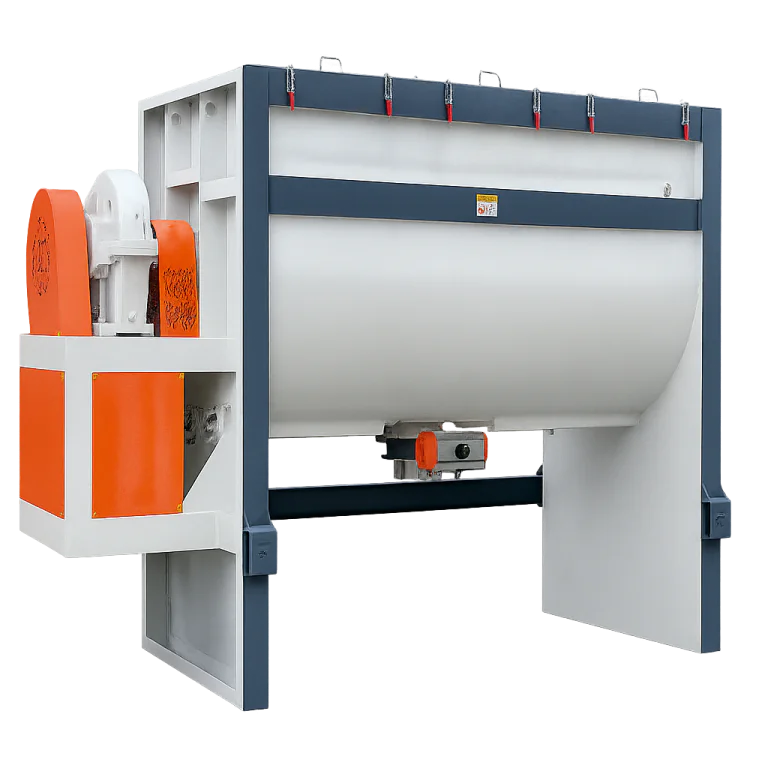
Ribbon Blender for Plastics & Rubber Processing
Factory-direct ribbon blenders engineered for precision dry-mixing of engineering plastic resins, compounds, masterbatches, and rubber/elastomer granules. SS304 construction. Capacities from 500kg to 5 ton. CE-certified.
16+
500-5000kg
15+
24/7
CE
we are Ribbon blenders China Manufacturer
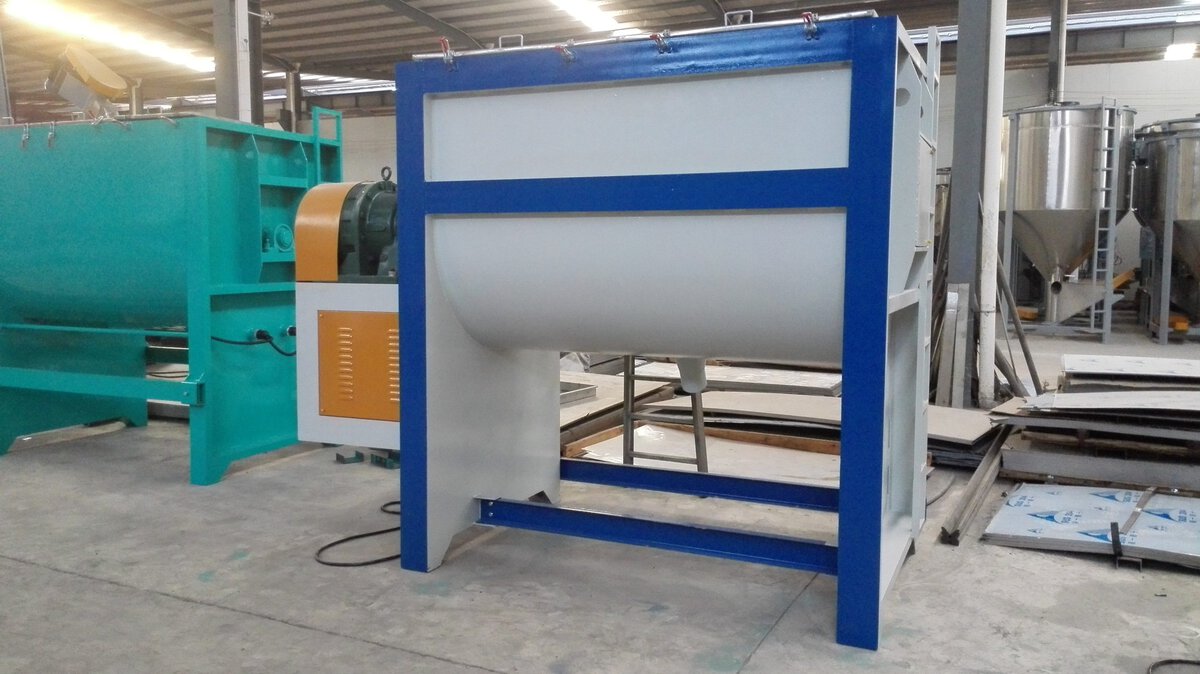
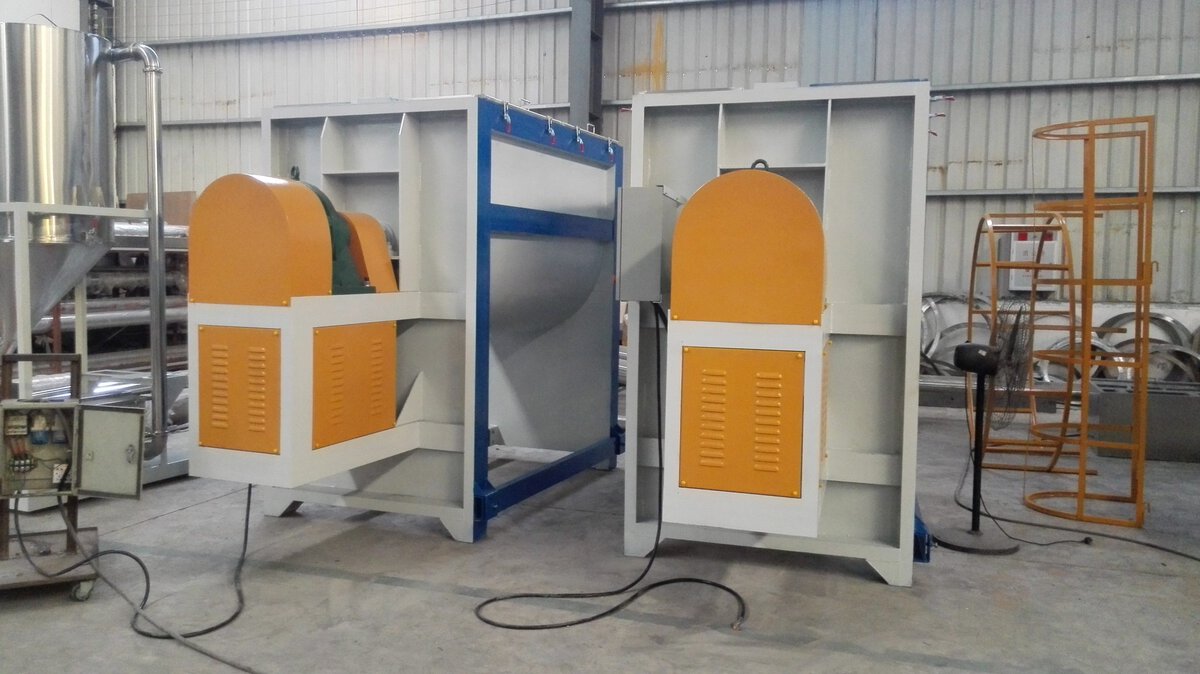
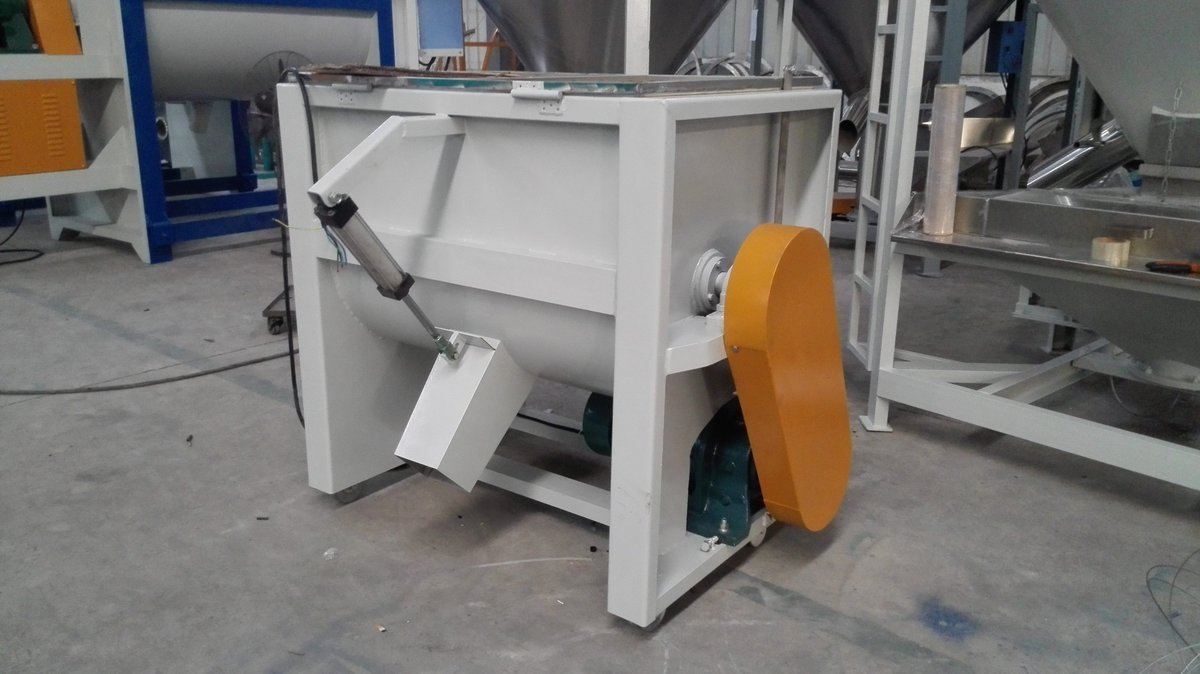
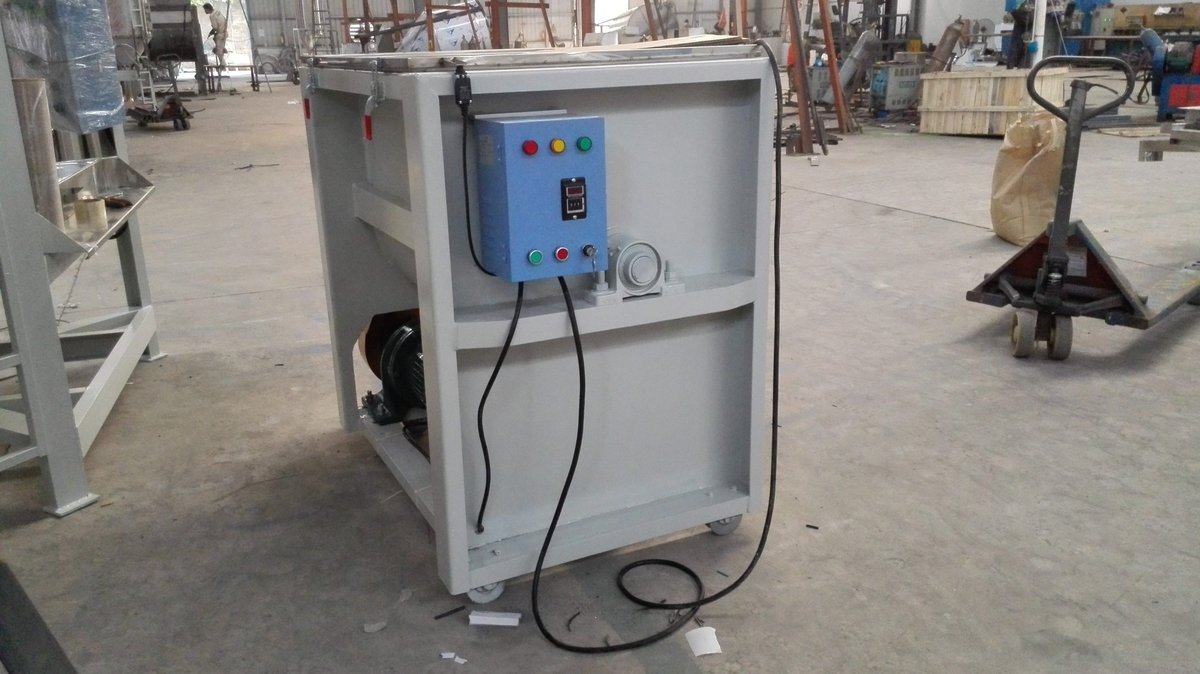
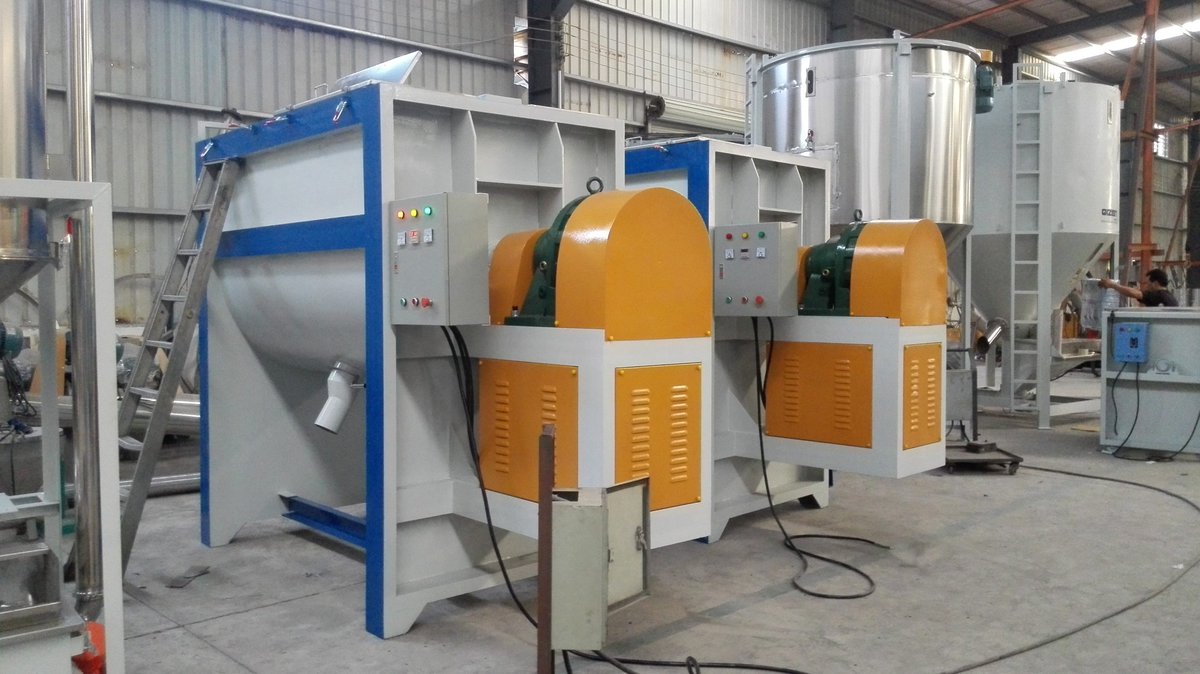
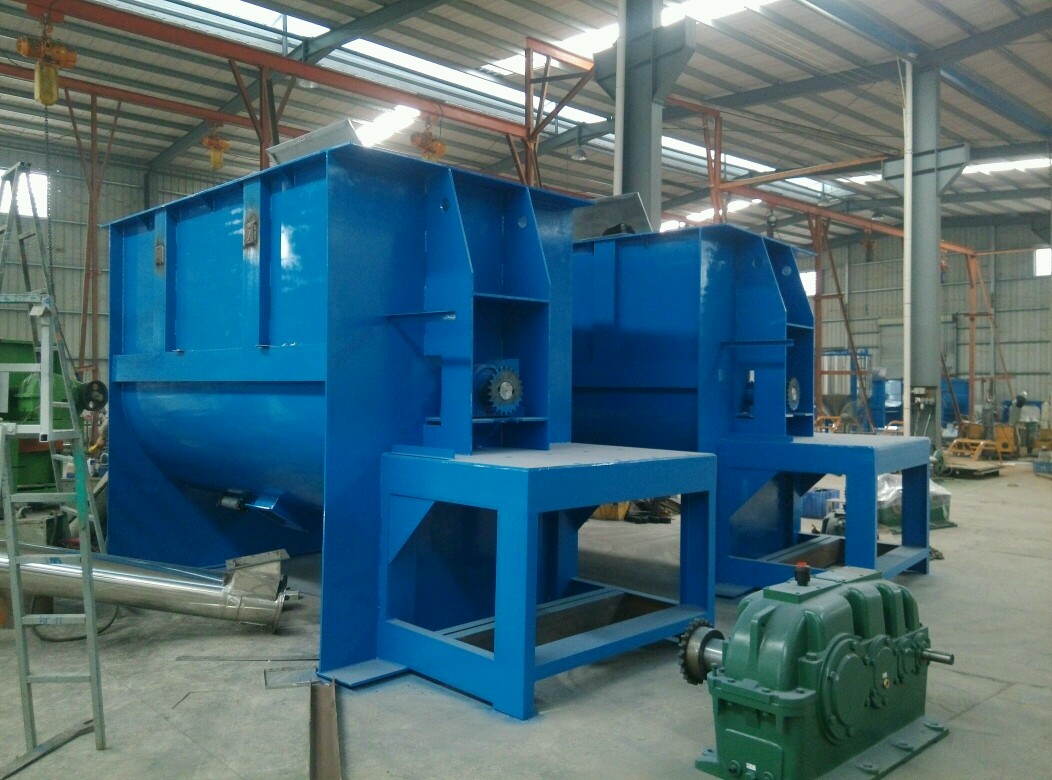
A ribbon blender (also called a horizontal ribbon mixer) is an industrial batch-mixing machine that uses a double-helix agitator — inner and outer ribbons rotating in opposite directions — to produce fast, homogeneous blending of powders, granules, and pellets.

Ribbon blender for powder drying and mixing.
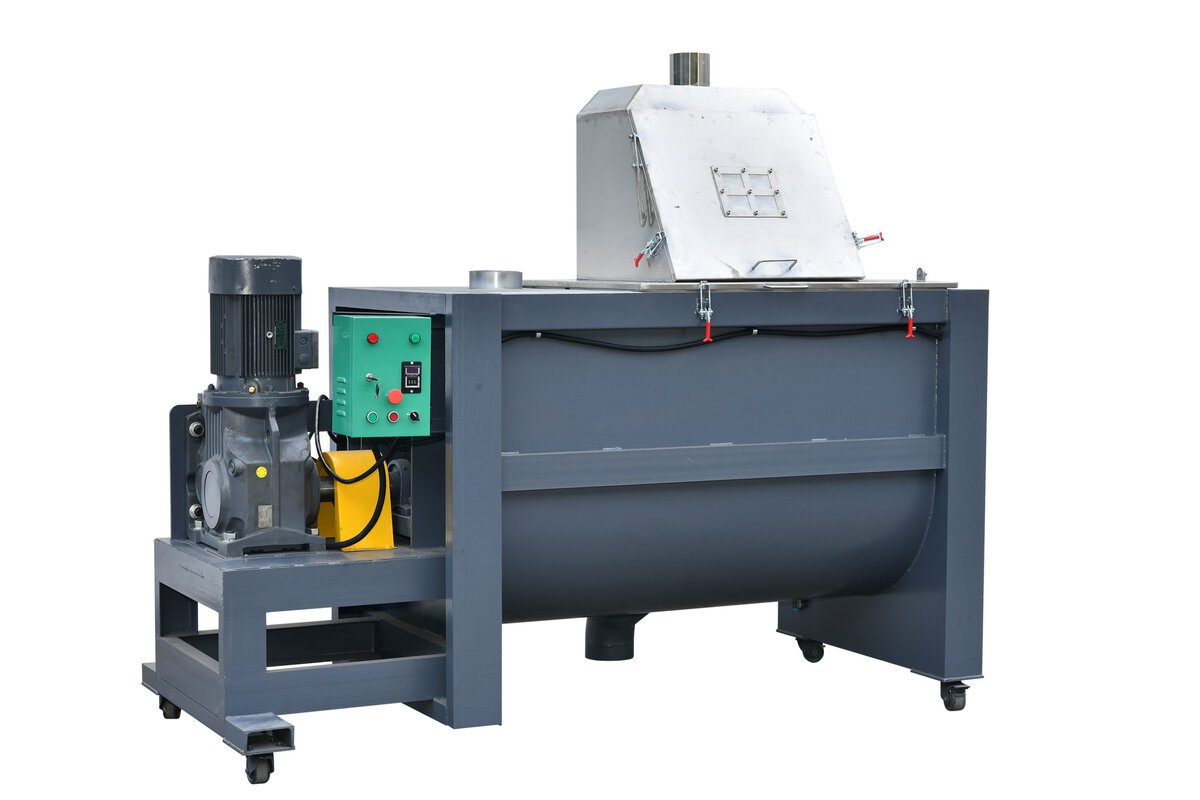
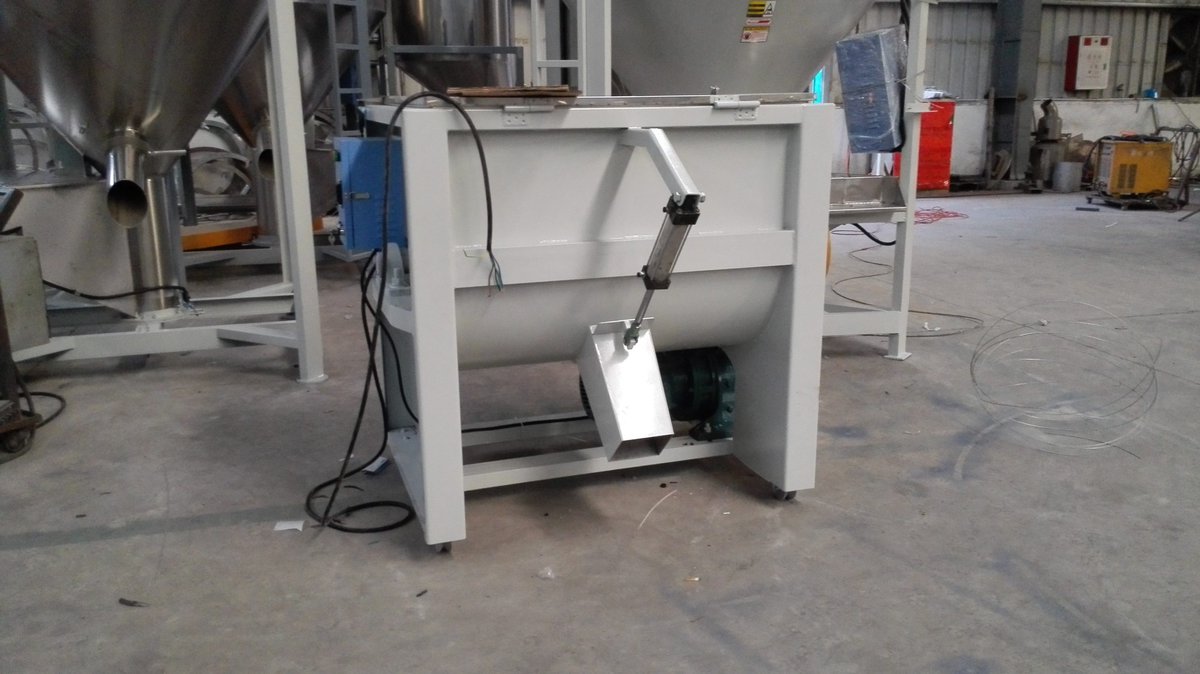
Ribbon blender with dust prevention function for feeding materials

Double-layer heat-insulating horizontal Ribbon Blender
💡 In plastic compounding and engineering plastics manufacturing, uniform pre-blending of the base resin with additives (stabilizers, flame retardants, lubricants, pigments, glass fiber, etc.) is critical before extrusion. A poorly mixed batch leads to inconsistent properties, color streaks, degraded mechanical performance, and costly scrap.
Nicety’s ribbon blenders are purpose-built for the demanding requirements of the plastics and rubber industries, with stainless steel wetted surfaces, tight agitator-to-trough clearances, and easy full-access covers for fast product changeover.
- Batch & Efficient Homogenization

Satisfaction Guaranteed

1 Year Quality Warranty

On Time Delivery Guaranteed
Standard Model Range of Our Ribbon blenders
Standard configurations below. All parameters are customizable for OEM and project-specific requirements.
| Model | Mixing Capacity | Motor Power | Heating Power | Size (L*W*H) |
|---|---|---|---|---|
NCW-500 |
500Kg |
5.5Kw – 6 Pole |
12Kw |
2200*1100*1800mm |
NCW-1000 |
1000Kg |
11Kw – 6 Pole |
24Kw |
2900*1400*2200mm |
NCW-2000 |
2000Kg |
22Kw – 6 Pole |
32Kw |
3400*1450*2400mm |
NCW-3000 |
3000Kg |
30Kw – 6 Pole |
36Kw |
4200*2600*1600mm |
NCW-5000 |
5000Kg |
45Kw – 6 Pole |
48Kw |
4500*1950*2800mm |
- Specify Your Mixer - Batch & Efficient Homogenization
Talk to a Ribbon Blender Engineer
Share your material type, batch size, and mixing specification. We’ll confirm the right agitator configuration and provide a factory-direct quotation within 24 hours.
4 Questions to Specify Your Mixer Blade Type
💡 Work through these in order. Most plastic compounding applications resolve at Question 1 or 2.
- If yes → Paddle blade type. The ribbon’s continuous axial drag and tight wall clearance will fracture LGF strands and crack hollow-sphere fillers. Paddle’s short-zone tumbling action is the only safe choice.
If yes → Double ribbon blade type is almost always correct. It handles the widest range of plastic and rubber materials with the fastest cycle time and best additive distribution.
If yes, and material is severely cohesive, please consider plow elements or consult us about a ploughshare mixer instead.


If yes → Double ribbon blade type or upgrade to triple ribbon. The additional mixing intensity achieves the CV (<3%) required for trace stabilizers, UV absorbers, or antistatic agents, and compensates for the longer trough span of large blenders.
Still unsure? Ask Nicety’s application engineers.
Send us your material data sheet, batch size requirement, and target blend uniformity. We’ll recommend the correct agitator configuration and provide a quotation — typically within 24 hours, at no obligation.

Double Ribbon Agitator
This is the most widely specified configuration for plastic compounding pre-blending worldwide. Two continuous helical ribbons — one outer, one inner — are welded concentrically onto the same shaft. The outer ribbon moves material axially toward the discharge center; the inner ribbon simultaneously moves material in the opposite direction, toward the end walls. This counter-current action creates a turbulent vortex zone at the shaft center where intensive cross-mixing occurs.
Plow (Ploughshare) Agitator
Plow agitators mount multiple wedge-shaped or ploughshare-profile blades on radial arms. As the shaft rotates at higher tip speeds, the plough profiles “throw” material upward and outward from the wall — creating a fluidized bed effect in the central trough region. Unlike ribbons (which move material axially over long distances), plows create short-range, high-frequency collisions across the entire batch volume simultaneously.


Paddle Agitator
Vacuum conveying units handle material transfer between silos and continuous internal circulation under sealed vacuum conditions, enabling dust-free conveying and preventing odor leakage. Continuous circulation ensures uniform drying and deodorization of all material batches.
Which Industries and Applications Benefit from VOC Deodorizing Drying Systems?
Nicety ribbon blenders are specified by compounders, masterbatch producers, and engineering plastics processors for the following core applications.
Tell Us What's your material type And We'll tailor-make solutions for you
What Can Our Ribbon Blender Process?
Designed around the material diversity of modern plastic compounding lines.
Frequently Asked Questions
Most Popular Questions.
Everything buyers ask before ordering a ribbon blender for plastic or rubber processing.
Nicety ribbon blenders are suited for engineering plastic resins (PA6, PA66, PC, PBT, POM), PVC compound powders, masterbatch pellets, rubber/EPDM granules, glass fiber reinforcements, flame retardant additives, UV and heat stabilizers, carbon black, and most dry or semi-dry polymer processing materials. The stainless steel construction and controlled shear make it ideal for both free-flowing pellets and fine powders.
Our standard ribbon blender lineup ranges from 500L to 5,000L total trough volume (effective working capacity 80% of total). Custom capacities outside this range can be engineered on request. For continuous mixing applications, we can integrate the ribbon blender into automated dosing and conveying systems.
Yes. We offer models with optional jacketed troughs for heating (steam or hot oil circuits) or cooling (chilled water), making them suitable for temperature-sensitive polymer blends, wax-coated fillers, and rubber compounding processes where thermal control is critical to product quality.
Standard wetted-surface construction is 304 stainless steel. 316L stainless steel is available for corrosive applications including PVC compounds, halogenated flame retardant systems, or anything requiring enhanced chemical resistance. Carbon steel construction is available for cost-sensitive, non-corrosive, dry material applications.
For standard plastic pellet-and-additive blending applications, cycle times of 10-20 minutes are typical for smaller units (up to 500L). Larger units or materials with significant density differences may require 10–20 minutes. The actual required cycle time depends on the materials being mixed and the target homogeneity specification — our team can advise based on your specific blend.
Yes. Nicety Machinery offers full OEM and custom engineering services, including custom capacity, trough material selection, agitator configuration, drive power, discharge mechanism, heating/cooling jackets, dust-tight covers, and PLC automation. Our engineering team works directly with buyers to define the specification before fabrication begins. White-label branding for OEM resellers is available.
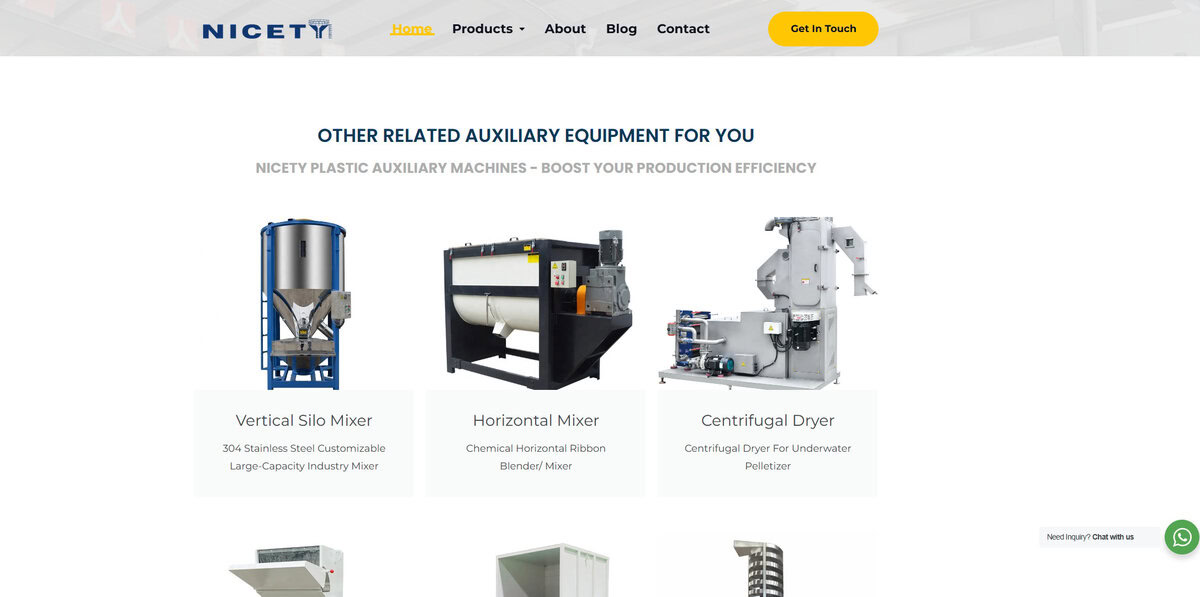
Other Related Auxiliary Equipment for you
NICETY PLASTIC Auxiliary MACHINES - BOOST YOUR Production efficiency
Want to improve or increase the output of your plastics processing plant?
Contact us to receive our brochure. We specialize in plastic mixing, conveying, and centralized material handling systems.
Contact Us
Have A Question? We're Here To Help!
Get in Touch
- +86 186-1510-1559
- [email protected]
Address
- Nicety Machinery Co., Ltd
- Hengjiang Industrial Zone, Dongguan City, Guangdong Province China
Whether you have questions about plastics mixing, blending, centralized feeding systems, or other plastics processing auxiliary equipment such as material handling and cooling, feel free to ask us. Our team is ready to provide you with the guidance and insight you need.
Send us a message
One of our sales consultants will contact you within 24 hours.
_画板-1-副本-3-pxeey2xejyohpkvf07tglhvew6ks2ts3pjvhagm60c.png "NICETY MACHINERY Co., LTD")