_画板-1-1.png)
Blenders play a crucial role in plastic processing, especially when it comes to ensuring uniformity and consistency in materials. But what makes the vertical blender a standout option for many plastic manufacturers?
A vertical blender is an essential piece of machinery used to mix plastics and additives for processing. This guide will dive into its function, types, and factors affecting its performance in plastic modification applications.
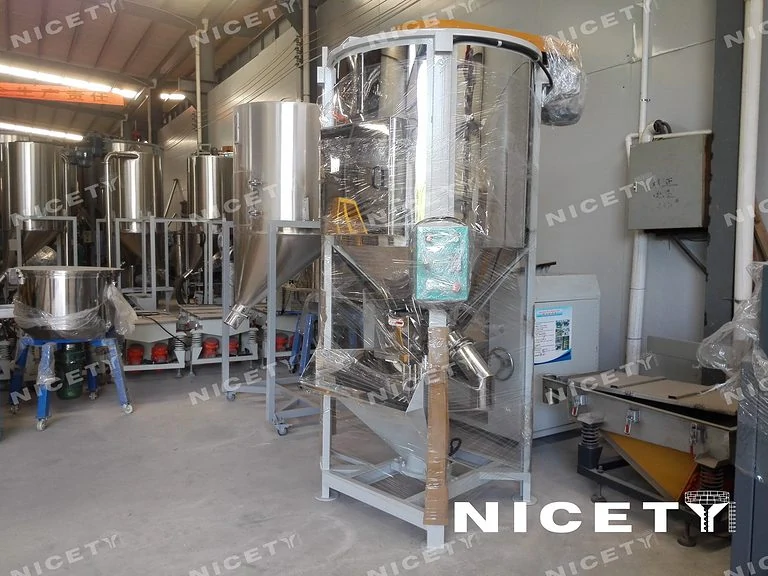
VERTICAL Spiral silo mixer manufacturer[/caption]
Vertical blenders are widely used in plastic processing due to their efficient mixing capabilities. To fully understand their application, we’ll explore the concept of vertical blenders, how they differ from other types, and what affects their mixing efficiency.
What is a vertical blender?
Vertical blenders are mixing machines designed with a vertical axis, meaning they rotate in a vertical plane to achieve homogeneous mixing. These machines are used for mixing dry powders, granular materials, and additives. In plastic processing1, they help blend plastic pellets with additives, fillers, or colorants, ensuring consistent material quality.

The vertical design allows the blender to efficiently stir materials without needing a large footprint. This makes it ideal for facilities with space constraints. Its simple design is easy to maintain, and it is highly effective for batch mixing2, which is common in plastic modification processes.
Key Features:
- Vertical rotation axis
- Suitable for batch mixing
- Ideal for blending small to medium quantities
- Simple design and low maintenance
Vertical blenders are often used in plastic recycling plants where various plastics are blended before reprocessing, such as PP, PE, PET. The efficiency of mixing is key for ensuring high-quality recycled products.
What are the three types of blenders?
Blenders are categorized based on their mixing action and design. The three primary types of blenders used in plastic processing are vertical blenders3, horizontal blenders4, and conical blenders5. Each type serves different purposes depending on the specific application and material requirements.

Here’s a breakdown of the three types:
| Blender Type | Design | Application | Benefits |
|---|---|---|---|
| Vertical Blender | Vertical axis | Small to medium batch mixing | Efficient, space-saving |
| Horizontal Blender | Horizontal axis | Larger volumes of material mixing | Greater throughput, versatile |
| Conical Blender | Conical shape | Specialized applications | Uniform, gentle mixing |
Each of these blenders is designed to handle different capacities and blending characteristics. Horizontal blenders are typically better for larger quantities, while vertical blenders excel in more compact, controlled applications. Conical blenders are used for more delicate mixing where avoiding material degradation is important.
What is the difference between a vertical mixer6 and a horizontal mixer7 in terms of application?
The primary difference between vertical and horizontal mixers lies in their design and efficiency in handling different types of materials. A vertical mixer uses a vertical shaft to stir materials, while a horizontal mixer operates with a rotating horizontal shaft.

In terms of plastic processing and modification, here are the key points of differentiation:
| Feature | Vertical Mixer | Horizontal Mixer |
|---|---|---|
| Mixing Action | Vertical rotation | Horizontal rotation |
| Batch Size | Smaller to medium | Larger quantities |
| Space Requirement | Compact | Larger footprint |
| Efficiency | High for small batches | High for continuous mixing |
In plastic processing, vertical mixers are often preferred for their space-saving design and efficiency with smaller to medium batches. They are ideal for blending additives into pellets or mixing recycled plastic. On the other hand, horizontal mixers are used in larger-scale operations where high-volume mixing is required.

The efficiency of a vertical blender in plastic processing is influenced by various factors such as material properties8, mixer speed9, and the design of the blender itself. These factors determine how effectively the blender can achieve uniform mixing, which is essential for ensuring high-quality products.

1. Material Characteristics:
The type of plastic being processed has a significant impact on the mixing efficiency. For example, plastics with a high density or large size may require different settings than lighter, smaller materials. Properly matching the material type to the blender is critical for optimal results.
2. Speed and Rotation:
The rotation speed of the vertical blender directly impacts how quickly and uniformly the materials mix. A higher speed can promote faster mixing but may result in uneven distribution of additives. Adjusting the speed to suit the material type and desired blend quality is crucial.
3. Blender Design:
The geometry of the mixing blades and their arrangement inside the blender play a key role in efficiency. Vertical blenders with well-designed mixing arms ensure that materials are continually moved and mixed, minimizing dead spots. Additionally, choosing a blender with the correct blade angle and placement helps achieve the best results.
4. Batch Size:
The size of the batch being mixed affects how well the blender can handle the materials. Too large a batch can lead to uneven mixing, while smaller batches are generally more uniform. The efficiency of mixing can improve with a properly sized blender for the specific batch size.
5. Mixing Time:
The time spent in the blender also affects the quality of the mix. Over-mixing can lead to material degradation, while under-mixing may result in inconsistent blends. Timing is critical to achieving the right balance between thorough mixing and material integrity.
Conclusion
Vertical blenders are an excellent choice for plastic processing and modification, offering efficient, compact, and effective mixing. By understanding the different types, applications, and factors affecting their performance, you can make an informed decision when selecting the right blender for your needs.
-
This resource will explain the role of vertical blenders in plastic processing, highlighting their importance in achieving consistent material quality. ↩
-
Discover the significance of batch mixing in plastic modification, including how vertical blenders contribute to efficient and effective mixing. ↩
-
Explore how vertical blenders can enhance efficiency and save space in your plastic processing operations. ↩
-
Discover the versatility and greater throughput of horizontal blenders for handling larger quantities in your projects. ↩
-
Learn about the uniform and gentle mixing capabilities of conical blenders, perfect for delicate materials. ↩
-
Explore how vertical mixers enhance efficiency and space-saving in plastic processing, ideal for small to medium batches. ↩
-
Discover the benefits of horizontal mixers for high-volume mixing in large-scale plastic processing operations. ↩
-
Understanding the impact of material properties on blending can help optimize the process for better quality and efficiency. ↩
-
Finding the right mixer speed is crucial for achieving uniform mixing without compromising material integrity. ↩

_画板-1-副本-3-pxeey2xejyohpkvf07tglhvew6ks2ts3pjvhagm60c.png "NICETY MACHINERY Co., LTD")