_画板-1-1.png)
By Nicety Machinery Co., Ltd | May 7, 2026
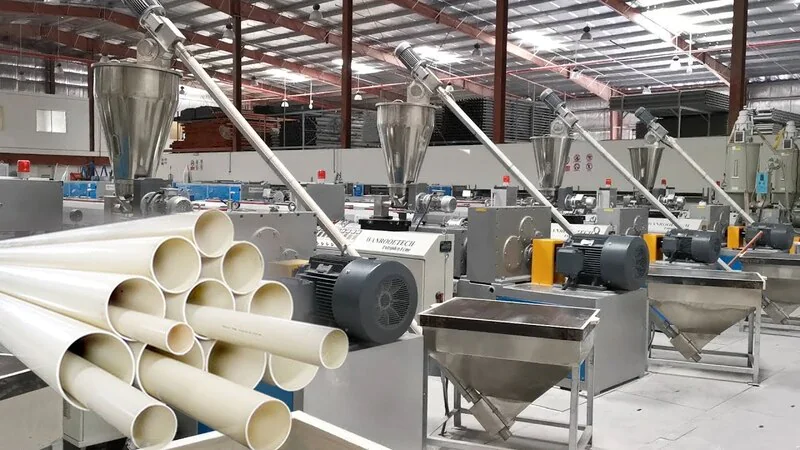
PVC and VCM production underpin pipe, profile, wire, cable, and rigid packaging industries globally.
Overview
On April 27, 2026, Houston-based Westlake Corporation and its German subsidiary Westlake Vinnolit GmbH & Co. KG signed a non-binding letter of intent with the preliminary insolvency administrator of VYNOVA Wilhelmshaven GmbH to acquire the company’s polyvinyl chloride (PVC) and vinyl chloride monomer (VCM) production site in Wilhelmshaven, Germany. The move is one of the most watched distressed-asset transactions in the European polymer industry this year — and it is the latest development in a multi-site collapse that has been unfolding across Vynova Group’s European operations since mid-2025. For PVC compounders, pipe and profile extruders, and rigid packaging processors across Europe, the implications for regional supply structure are direct and immediate.
The Deal: Westlake Signs LOI for Wilhelmshaven PVC-VCM Site
Westlake Corporation and its subsidiary Westlake Vinnolit GmbH & Co. KG entered into a non-binding letter of intent with the preliminary insolvency administrator of VYNOVA Wilhelmshaven GmbH on April 27, 2026, to acquire a polyvinyl chloride and vinyl chloride monomer production site in Wilhelmshaven, Germany.
The proposed transaction remains at an early stage, subject to negotiating definitive agreements, receiving necessary regulatory approvals, formal commencement of insolvency proceedings for VYNOVA Wilhelmshaven GmbH, and final approval by the creditors’ committee.
The move signals Westlake’s interest in opportunistic growth through distressed-asset acquisitions in Europe, with implications for suppliers, customers, and creditors tied to the Wilhelmshaven facility if the deal ultimately proceeds.
Westlake disclosed the transaction via an SEC Form 8-K filing on May 1, 2026, classifying the disclosure under Regulation FD. The company confirmed approximately $900 million in 2026 capital expenditure plans alongside $2.5 billion in cash and investments on hand — giving it the liquidity headroom to pursue the acquisition if negotiations proceed.
What Is VYNOVA Wilhelmshaven — and Why Did It Collapse?
Vynova Wilhelmshaven GmbH has been operating one of Europe’s largest plants for the production of suspension PVC (S-PVC) since 1981, and also produces vinyl chloride monomer, an essential building block for making PVC. Situated on the western side of the Jade Bight on the North Sea, the Wilhelmshaven site has direct access to Germany’s only deep-water port.
The business employs around 360 people, whose salaries were guaranteed for a period of three months to the end of February 2026 through insolvency substitute benefits under German law.
On December 12, 2025, the Local Court of Wilhelmshaven ordered provisional insolvency administration for the company’s assets and appointed Dr. Christian Kaufmann from PLUTA Rechtsanwalts GmbH as provisional administrator.
The collapse of a plant operating continuously since 1981 — with deep-water port access and integration into Europe’s chlorovinyl supply chain — is not a site-level operational failure. It reflects the economics of European PVC production hitting a wall. The PLUTA team stabilized operations temporarily through a loan from creditor banks Nord/LB and Volksbank Wilhelmshaven eG, with the insolvency administrator simultaneously conducting an investor search process.
That investor search process has now produced its first concrete candidate: Westlake.
A Pattern of European PVC Failure: Beek, Runcorn, Wilhelmshaven
The Wilhelmshaven filing is not an isolated event. It is the third major Vynova site to be shuttered, idled, or placed in insolvency proceedings within a single twelve-month period — a pattern that tells a clear structural story about the state of European PVC production.
Beek, Netherlands (closed November 2025): Vynova announced the closure of its PVC powder plant at the Chemelot Industrial Park in Geleen, resulting in the loss of around 100 jobs. The decision followed continued weak demand, global overcapacity in PVC production, and strong competition from regions with lower costs and less stringent regulation. The Beek site had been operational since 1972 — 53 years of continuous operation ended in a matter of months.
Runcorn, United Kingdom (insolvency, December 2025): Vynova hired an administrator for its plant in Runcorn, England, which makes chlorine and ethylene dichloride. The chlorine was produced in a joint venture with Ineos Inovyn; the EDC was shipped to the Wilhelmshaven plant in Germany, where it was used to make vinyl chloride and then polyvinyl chloride. The Runcorn insolvency directly disrupted the feedstock supply chain to Wilhelmshaven — tightening the squeeze on that site from the upstream direction.
Wilhelmshaven, Germany (insolvency, December 2025 → Westlake LOI, April 2026): The largest of the three, with the deepest integration into European PVC supply and the most significant consequences for downstream compounders and processors.
Together, the three developments point to mounting financial pressure across Vynova’s European operations as a whole, rather than an isolated site-level issue.
Why European PVC Production Is Structurally Under Siege
The Vynova collapse is the most visible symptom of a structural crisis in European PVC and chlorovinyl production that has been building for several years. Three forces are converging simultaneously:
Energy cost disadvantage. PVC and VCM production are electrochemistry-intensive. The chlor-alkali process — electrolysis of brine to produce chlorine, caustic soda, and hydrogen — consumes very large amounts of electricity. European industrial electricity prices, already elevated before 2022, have remained structurally higher than those in the Middle East, North America, and Asia. The Wilhelmshaven site’s energy costs were flagged explicitly by the insolvency administrator as a key burden — the emergency creditor loan was specifically used to cover high prepayment demands from electricity and gas suppliers.
Global overcapacity and Chinese competition. Vynova’s own CEO, Christophe André, stated when announcing the Beek closure: "The European PVC market is under strong pressure due to global overcapacity, persistently weak demand, and increased competition from regions with lower production costs and less stringent regulations. These conditions are unlikely to improve in the near term." Chinese PVC production capacity has expanded massively over the past decade, with calcium carbide-based PVC routes giving Chinese producers a feedstock cost structure that European ethylene-based producers cannot match at current energy prices.
Regulatory cost burden. European chemical regulation — REACH, the EU’s Industrial Emissions Directive, and carbon pricing under the EU ETS — imposes compliance and abatement costs that are simply not present for producers in competing regions. These costs are structural, not cyclical, and they compound the energy disadvantage.
In the same week that Vynova filed for insolvency in Germany, Westlake itself was shutting down US facilities making polyvinyl chloride, vinyl chloride, and chlorine, citing low prices in export markets. The irony is sharp: Westlake was simultaneously closing overcapacity in the US and is now eyeing Europe’s distressed assets — a textbook example of industry rationalization playing out across multiple geographies at the same time.
What Westlake Is Actually Buying — and Why It Makes Sense
If the Wilhelmshaven acquisition proceeds, Westlake would be purchasing three strategically valuable assets at distressed-asset pricing:
Physical infrastructure with deep-water port access. The Wilhelmshaven site has operated since 1981 with direct access to Germany’s only deep-water port — meaning raw material imports (ethylene, EDC) and product exports can be handled at large vessel scale. This infrastructure cannot be replicated cheaply.
VCM integration. The site produces both VCM and S-PVC, giving the operator control over the key feedstock conversion step — from ethylene and chlorine to VCM — as well as the polymerization step. A standalone VCM producer in Europe has strategic value as a supplier to PVC compounders and processors who do not have integrated upstream chemistry.
A foothold in European PVC supply at a moment of contraction. Westlake already operates European compounding through Westlake Global Compounds, with sites in France, Germany, Italy, Spain, Romania, Portugal, and Vietnam. Westlake Global Compounds produces PVC, CPVC, TPE/TPV, TPO, XLPE, polypropylene, and silicone compounds for wire and cable, building materials, pipe and fittings, consumer goods, automotive, and medical applications. Adding upstream PVC and VCM production in Germany tightens that vertical integration.
As European PVC production capacity shrinks due to plant closures and insolvencies, the producers who remain — with efficient, strategically located assets — will be better positioned to serve a tighter regional market. That is the bet embedded in the LOI.
What This Means for PVC Compounders and Processors
For PVC compounders, pipe and profile extruders, rigid packaging processors, and wire and cable compound manufacturers operating in Europe or sourcing European-produced S-PVC, the Vynova collapse and Westlake’s potential acquisition carry concrete operational implications:
Regional S-PVC supply is tightening. The closure of Beek (225,000 tonnes/year capacity) and the continuing insolvency of Wilhelmshaven remove significant European S-PVC supply from the market. Processors who relied on Vynova as a supplier are already sourcing alternatives, and spot S-PVC availability in Northwest Europe has tightened accordingly.
Supply chain geography is shifting. With European production contracting, more PVC supply is being sourced from the Middle East, Turkey, and Asia. This increases lead times, adds logistics cost, and introduces currency exposure — all of which need to be factored into raw material procurement planning.
Compound formulation stability may require review. Suspension PVC from different producers can have different particle size distributions, porosity, and K-value profiles. Processors switching from Vynova S-PVC to alternative sources should validate their existing compound formulations, especially for applications with tight dimensional or surface finish tolerances, before committing to large production runs.
Qualification of the new Westlake-owned plant’s output. If the Wilhelmshaven transaction closes and Westlake restarts or continues production, the site’s S-PVC will technically be a new supplier qualification — even if the production equipment and grades are unchanged. Customers with supplier approval lists governed by ISO 9001, IATF 16949, or sector-specific standards should plan for the requalification process.
Processing Equipment for PVC and Rigid Polymer Compounding Lines
PVC compounding — whether for rigid pipe and profile grades, flexible plasticized formulations, or specialty wire and cable compounds — places specific demands on front-end material preparation and post-extrusion handling. As European PVC supply tightens and processors work with multiple S-PVC sources, the consistency of the mixing and processing steps becomes even more critical for maintaining compound quality.
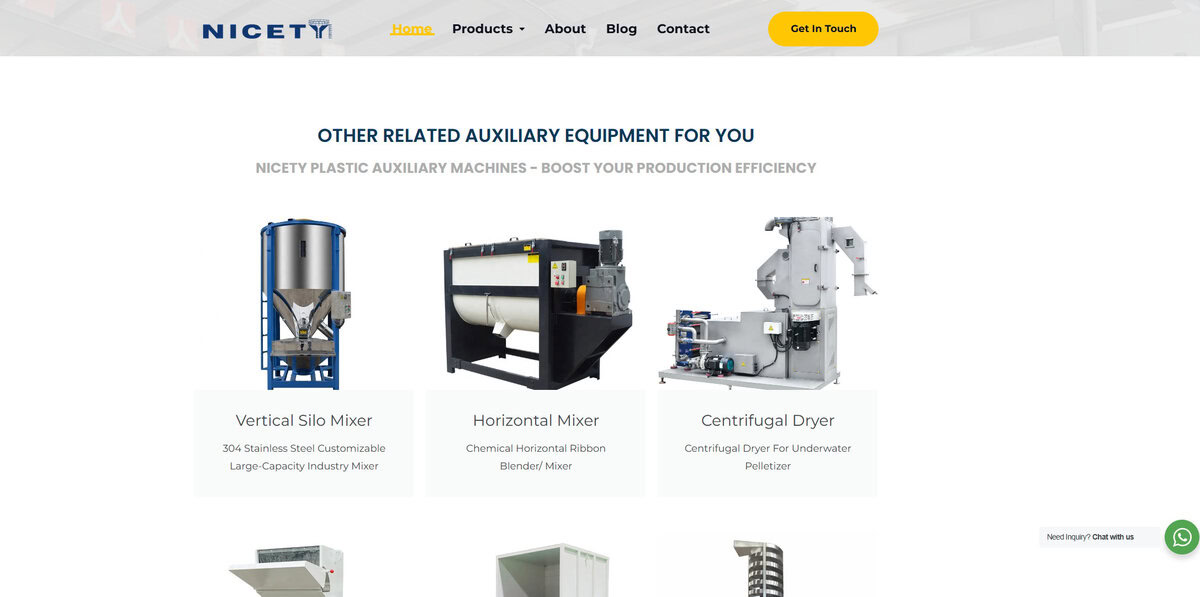
- High-intensity mixing for PVC dry blending: PVC rigid compound production typically begins with a high-speed dry-blend step, where PVC powder, stabilizers, lubricants, fillers, and impact modifiers are combined at elevated temperature before entering the extruder. Nicety Machinery’s High Speed Mixer Machine is purpose-designed for this operation, delivering the shear energy and temperature control required for consistent PVC dry blend quality across batches.
- Cooling and bulk mixing after the hot mixer: After the hot mixing stage, PVC dry blend is typically transferred to a cooling mixer before storage or extrusion. The Horizontal Mixer handles this stage, bringing the blend temperature down while maintaining homogeneity.
- Powder and pellet conveying: PVC powder, calcium carbonate filler, and other bulk additives need to be moved between storage silos, blending equipment, and the extruder hopper reliably and without segregation. The Screw Conveyor and Vibrating Spiral Elevator handle these transfer steps in compact plant layouts.
- Pelletizing for compounded PVC grades: For PVC compound producers supplying pre-compounded material to downstream processors, the Extrusion Pelletizing Line converts the extruded compound melt into uniform pellets ready for bagging, big-bag packaging, or silo storage.
- Pellet size classification: The Linear Vibrating Screener removes fines and oversized particles from the pelletized compound, ensuring every shipment meets the particle size specification that downstream injection molders and extruders require.
- Masterbatch and colorant blending: For PVC compound lines that produce colored grades or incorporate masterbatch-based stabilizer systems, the Plastic Color Mixer provides precision let-down blending before the final extrusion step.
In a European PVC supply environment where established producers are exiting and new supply sources are being onboarded, processing consistency is the variable that determines whether a compounder maintains customer approvals and product quality — or loses business to competitors with better-controlled lines.
Sources
- Westlake Corporation SEC Form 8-K: Letter of Intent for VYNOVA Wilhelmshaven — Filed May 1, 2026
- Canadian Plastics: Westlake Eyes Buying German PVC Plant — May 4, 2026
- Plastics News: Westlake to Acquire German PVC Plant — May 1, 2026
- TipRanks / Globe and Mail: Westlake Eyes German PVC Asset in Strategic Expansion — April 2026
- PLUTA Press Release: Provisional Administrator Appointed for Vynova Wilhelmshaven — December 12, 2025
- PLUTA Press Release: Vynova Wilhelmshaven Continuing to Operate, Investor Process Under Way — December 23, 2025
- Vynova Group Official Press Release: Intention to Cease PVC Production at Beek Site — July 2025
- Polimerica: Trouble for Two Vynova Sites — January 2026
- Chemical & Engineering News: Dec. 23 Business Watch — Westlake Closes US Vinyl Capacity; Vynova Insolvencies — December 2025
- ChemOrbis: Vynova Runcorn Follows Wilhelmshaven into Insolvency — December 2025
- Westlake Global Compounds: Company Overview and Global Footprint

_画板-1-副本-3-pxeey2xejyohpkvf07tglhvew6ks2ts3pjvhagm60c.png "NICETY MACHINERY Co., LTD")