_画板-1-1.png)
The plastics industry needs fast, efficient mixing — but not all mixers are created equal.
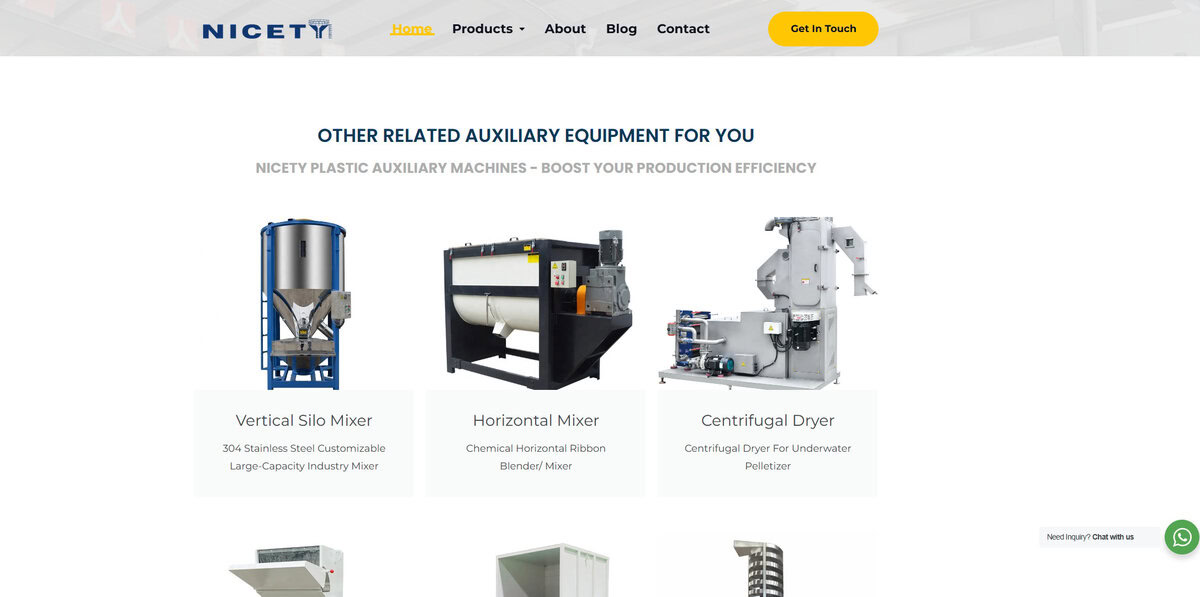
A Henschel mixer machine (also called High Speed Mixer Machine) is a high-speed, high-efficiency industrial mixer designed for rapid and uniform mixing of plastics, rubber, and chemical additives.

Mixing affects every step in plastic processing. If the mix is off, everything downstream fails. That’s why understanding what a Henschel mixer does, and where it shines, is key to building a stable, efficient production line.
What materials is Henschel mixer machine best at mixing?
It’s frustrating when materials clump or mix unevenly — that’s often a sign of the wrong mixer choice.
Henschel mixers1 are best at mixing PVC2, PE, PP, ABS, and various rubber granules with additives such as stabilizers, pigments, plasticizers, and lubricants.

I’ve seen firsthand how well Henschel mixers handle dry blend compounds, especially rigid PVC and soft PVC formulations. The high-speed blade design creates a vortex motion that forces the material upward and outward. This not only cuts mixing time but also ensures the additives are fully integrated into the base resin.
Here’s a simplified view of how materials interact in the mixing chamber:
| Material Type | Behavior in Henschel Mixer | Resulting Mix Quality |
|---|---|---|
| PVC Resin | Heats quickly, disperses evenly | High dispersion |
| PE/PP Pellets | Stays free-flowing, blends well | Consistent color & flow |
| Rubber Crumbs | Good friction mixing | Even texture & density |
| Additives | Fully activated by heat/friction | Improved compound flow |
For color matching or modifying flow characteristics, Henschel mixers are unbeatable. I often recommend them when customers have tight control requirements or batch-to-batch consistency issues.
What advantage of the Henschel mixer machine?
Time, energy, and quality — if you want to save all three, the right mixer makes all the difference.
The biggest advantages of a Henschel mixer are fast cycle times, uniform mixing, low energy usage, and full material activation through frictional heat.

When I switched a production line from a traditional slow mixer to a Henschel mixer, the impact was immediate. Batch times dropped by 40%. More importantly, the quality of the output rose sharply. The secret is in the mixer’s rotor design and precision control system.
Here’s how the advantages break down:
| Advantage | Description |
|---|---|
| Speed | Mixes batches in 5–10 minutes |
| Consistency | Uniform mix without dead zones or hotspots |
| Energy Efficiency | Uses less energy than traditional mixers over time |
| Heat by Friction | Helps activate stabilizers without external heat source |
| Versatility | Can mix powder, pellets, flakes, and liquids |
| Automation Friendly | Can integrate easily into centralized feeding systems |
I often advise plant managers like Mohammed Ali to invest in Henschel mixers if they’re scaling up and need stable, repeatable results with less labor. These mixers are also great for automation setups.
Are Henschel mixers suitable for centralized feeding systems3?
Adding a centralized system can cause bottlenecks if the mixer isn’t compatible.
Yes, Henschel mixers are often used in centralized feeding systems because of their ability to handle large batch sizes and rapid mixing times.

In many of my projects, centralized feeding systems reduced labor and error, but only after we selected the right mixer. A Henschel mixer works well in both pre-mixing and post-mixing positions. It allows timed feeding, efficient throughput, and consistency that’s critical when blending regrind or masterbatch.
For factories transitioning to automation, this compatibility saves time and avoids costly delays. I’ve even seen it used in twin-screw extruder setups, where uniform feed is everything.
What are the limitations of Henschel mixers?
Every machine has its limits. Knowing them helps you use them better.
Henschel mixers are not ideal for ultra-high viscosity mixing4 or for materials requiring low-shear conditions.

While these mixers shine in many areas, I caution against using them for very delicate or shear-sensitive additives5. For example, when mixing foaming agents or heat-sensitive stabilizers, the high frictional heat can degrade the compound if settings are not controlled.
Maintenance is also a key issue. Because these mixers run fast and hot, regular blade and seal inspection is necessary. Skipping it can lead to batch contamination or motor overloads.
Conclusion
Henschel mixers offer fast, uniform, and efficient mixing for plastics — but they must be used correctly to get the best results.

Explore this link to understand why Henschel mixers excel in achieving uniform mixing and consistency in various materials. ↩
Discover how Henschel mixers enhance the mixing process for PVC, ensuring better dispersion and quality in your applications. ↩
Discover the advantages of centralized feeding systems and how they can streamline your production process. ↩
Understanding the challenges of ultra-high viscosity mixing can help you choose the right equipment and techniques for your specific needs. ↩
Exploring shear-sensitive additives will provide insights into how to handle delicate materials effectively during mixing processes. ↩

_画板-1-副本-3-pxeey2xejyohpkvf07tglhvew6ks2ts3pjvhagm60c.png "NICETY MACHINERY Co., LTD")