_画板-1-1.png)
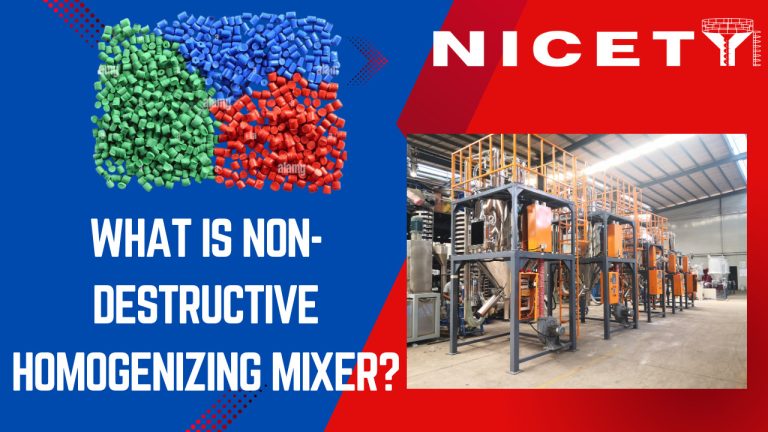
Mixing plastic raw materials without damaging their shape or quality is a challenge for many manufacturers. A new method changes the game and makes uniform mixing easier.
A non-destructive homogenizing mixer is a machine that blends plastic materials by using a suction device and gravity, rather than traditional stirring screws or ribbons, to achieve uniform mixing without damaging the materials.

When I first explored the world of plastics mixing, I quickly realized that traditional mixing equipment often damaged or degraded raw materials. Many factory owners face this problem. It makes consistent production and high product quality harder to achieve. The solution? A new type of mixer that does not rely on mechanical stirring, but instead uses air movement and gravity to mix material gently. In this post, I will explain what a non-destructive homogenizing mixer is, how it works, what kinds of materials it handles, and why it might be the best choice for your factory.
How does a non-destructive homogenizing mixer work?
Getting high-quality, uniform plastic blends without mechanical force was once just a dream. Today, the non-destructive homogenizing mixer makes it possible.
A non-destructive homogenizing mixer uses a suction device to lift and tumble plastic granules with gravity, mixing them gently and thoroughly without using screws, ribbons, or other mechanical stirrers.

When I walk through a plastic processing plant, I see traditional mixers with their screws and blades. Over time, these moving parts can grind or break delicate plastic pellets. Fine powders can clump, while larger granules lose their shape. With a non-destructive homogenizing mixer, things look different. Air is pulled through a suction device, creating a controlled updraft. This lifts the raw plastic and lets it tumble gently inside the mixing chamber1. The mixer does not rely on brute force. Instead, the repeated lifting and dropping lets gravity do the work. This means the material stays whole, reducing fines, dust, and heat damage. The process can be paired with a heating unit, so the mixer dries plastic while blending it. This is especially helpful in humid regions or with hygroscopic plastics. There are no complicated moving parts inside, which cuts maintenance and cleaning times, too.
| Feature | Traditional Mixer | Non-destructive Homogenizing Mixer |
|---|---|---|
| Mixing Method | Mechanical (screws/ribbons) | Suction device + gravity |
| Damage to Material | High | Minimal to none |
| Maintenance | Frequent | Simple, less frequent |
| Suitable for Drying | Limited | Yes, with heating device |
| Cleaning Time | Long | Short |
What types of plastic materials are suitable for homogenization using a non-destructive homogenizer?
Mixing different plastic raw materials often leads to quality problems, especially with delicate or expensive resins. Not all mixers are up to the task.
Over the years, I’ve worked with everything from hard ABS pellets to soft, sticky TPU granules. A non-destructive homogenizing2 mixer is suitable for a wide range of plastics, including delicate pellets, recycled granules3, powders, and blends of different sizes or materials that may be damaged by mechanical force.

In my experience, the types of plastics that benefit most from non-destructive homogenizing are those that can be damaged by conventional mixing. This includes soft pellets4, brittle resins, powders that tend to cake, and recycled materials with variable shapes and sizes. For example, if I need to mix virgin PP pellets with ground-up recycled material, I do not want to generate extra fines or dust. Non-destructive mixers handle these jobs well. The gentle mixing prevents breakage and preserves particle shape, ensuring that all the raw material is usable in the next processing step. Also, materials that absorb water from the air—like PET, PA, or ABS—can be dried and blended at the same time, saving steps and energy. Even masterbatch and colorants, which require even distribution without agglomeration, can be handled by this mixer.
| Plastic Material | Challenge in Mixing | Mixer Advantage |
|---|---|---|
| Soft Pellets (TPU/TPE) | Deformation, sticking | Gentle handling, no heat spots |
| Recycled Granules | Irregular shape, dust | No grinding, preserves integrity |
| Powders (PVC, PE) | Caking, uneven distribution | Fluidization avoids clumping |
| Hygroscopic Plastics | Needs drying | Heating and blending combined |
| Masterbatch/Colors | Uneven distribution | Uniform, non-agglomerated mixing |
What are the advantages of a non-destructive homogenizing mixer?
Factories always want to improve efficiency, quality, and product consistency. The right mixer can make a huge difference in daily operations.
A non-destructive homogenizing mixer offers low maintenance5, minimal material damage, energy savings6, faster cleaning, and can combine blending with drying for better efficiency and product quality.

I have seen production lines slow down or stop because mixers break down or take too long to clean. With fewer moving parts and a simple suction device, non-destructive homogenizing mixers are easy to maintain. There is less wear, less dust, and fewer parts to break. This saves both time and money. Gentle mixing keeps raw materials whole, improving finished product quality. When the mixer also dries materials, I save one step in the production process, reducing energy consumption and labor. For factories producing a wide range of plastic products or using recycled feedstocks, the flexibility and speed of a non-destructive mixer help meet quality standards and customer demands. The result is a more stable production line, less waste, and greater reliability for every batch.
| Advantage | Description | Benefit |
|---|---|---|
| Low Material Damage | No mechanical force on raw materials | Higher yield, better product quality |
| Low Maintenance | Fewer moving parts, easy to clean | Less downtime, lower costs |
| Energy Efficient | Combines mixing and drying | Reduced utility bills |
| Fast Cleaning | Simple chamber design | Shorter changeover times |
| Versatile | Suitable for many material types | Greater flexibility in production |
Conclusion
A non-destructive homogenizing mixer is the best choice for mixing and drying plastic raw materials gently and efficiently, improving quality and reducing downtime in plastics processing.
If you’re interested in purchasing or upgrading your equipment with a non-destructive homogenizing mixer, feel free to contact the author on the right side to learn more about Nicety’s equipment, solutions, and receive personalized quotes.

-
Learn about the mixing chamber’s function and its importance in achieving uniform blends without damaging materials. ↩
-
Understanding non-destructive homogenizing can enhance your knowledge of efficient plastic processing techniques. ↩
-
Learning about recycled granules processing can improve sustainability practices in your production. ↩
-
Exploring the characteristics of soft pellets can help you optimize their use in various applications. ↩
-
Discover the low maintenance advantages that can lead to significant cost savings and less downtime in production. ↩
-
Learn how these mixers can reduce energy consumption while improving production efficiency. ↩

_画板-1-副本-3-pxeey2xejyohpkvf07tglhvew6ks2ts3pjvhagm60c.png "NICETY MACHINERY Co., LTD")