_画板-1-1.png)
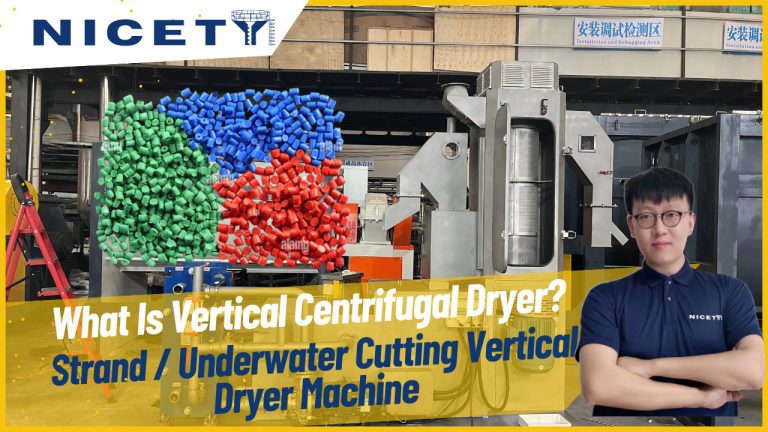
Plastic recycling plants often struggle with excessive moisture in their plastic pellets, reducing product quality and increasing production costs. This problem can be effectively solved using a plastic centrifuge dryer.
A plastic centrifuge dryer is a high-speed drying machine that removes moisture from plastic pellets or flakes by spinning them rapidly, using centrifugal force to expel water effectively.

Understanding how a plastic centrifuge dryer works and why it’s essential will help you optimize your pelletizing system for better efficiency and improved product quality.
How does a plastic centrifuge dryer work?
Plastic materials often retain moisture after washing or pelletizing, causing issues during downstream processes.
A plastic centrifuge dryer1 rapidly spins wet plastic pellets or flakes in a cylindrical drum with perforated walls. The centrifugal force2 generated pushes moisture outward, effectively drying the material.

Key Components of a Plastic Centrifuge Dryer
| Component | Function |
|---|---|
| Rotating Drum | Spins the plastic materials to apply centrifugal force |
| Perforated Wall | Allows moisture to escape while retaining plastic pellets |
| Blower System | Circulates warm air for faster drying |
| Vibration Mechanism | Helps dislodge stuck particles and improve uniform drying |
| Drain System | Collects and removes the expelled moisture |
This combination of mechanical force and airflow ensures the pellets are dry and ready for further processing.
Why is moisture control3 crucial in plastic pelletizing?
Wet pellets pose significant risks to the pelletizing process and product quality.
Excessive moisture can cause defects in the final product, reduce extrusion efficiency4, and lead to pellet degradation during storage.

Problems Caused by Moisture in Plastic Pellets
- Poor Product Quality: Moisture can lead to bubbles, cracks, or inconsistent shapes in the finished product.
- Lower Extrusion Efficiency: Wet pellets reduce throughput rates and can cause clogging in downstream equipment.
- Storage Issues: Pellets with residual moisture are more prone to contamination and bacterial growth.
- Electrical Issues: In certain types of processing equipment, moisture can cause short circuits and machine malfunctions.
A plastic centrifuge dryer plays a crucial role in mitigating these risks, ensuring that pellets meet industry moisture standards.
What types of plastics benefit from a centrifuge dryer?
Different plastics require specific drying techniques to achieve optimal results.
Plastic centrifuge dryers are most effective for materials like PE, PP, PET, and HDPE5, which require precise moisture control6 after washing or pelletizing.

Best Practices for Drying Various Plastics
| Plastic Type | Recommended Drying Method | Drying Temperature |
|---|---|---|
| PP (Polypropylene) | Centrifuge Dryer7 + Hot Air Dryer | 60-80°C |
| PE (Polyethylene) | Centrifuge Dryer + Hot Air Dryer | 50-70°C |
| PET (Polyethylene Terephthalate) | Centrifuge Dryer + Dehumidifier | 140-160°C |
| HDPE (High-Density Polyethylene) | Centrifuge Dryer Only | 50-70°C |
Selecting the appropriate drying process ensures pellets achieve optimal moisture levels for downstream use.
How do you choose the right plastic centrifuge dryer for your plant?
Choosing the right centrifuge dryer depends on your production scale, material type, and efficiency goals.
For optimal performance, consider factors like drying capacity8, energy efficiency9, noise levels, and maintenance requirements10.

Key Factors to Consider
- Capacity: Match dryer capacity to your production volume.
- Material Compatibility: Ensure the dryer suits your primary plastic types.
- Energy Efficiency: Look for models designed to minimize power consumption.
- Noise Levels: Consider quieter machines for better workplace comfort.
- Maintenance Requirements: Choose machines with accessible components for easier upkeep.
Investing in the right centrifuge dryer can significantly improve productivity and product quality.
How to maintain a plastic centrifuge dryer?
Proper maintenance is essential to keep your plastic centrifuge dryer operating efficiently.
Regular cleaning, lubrication, and inspection11 help prevent breakdowns and maintain optimal drying performance.

Essential Maintenance Checklist
| Task | Frequency |
|---|---|
| Clean drum perforations | Weekly |
| Inspect motor bearings12 | Monthly |
| Lubricate moving parts13 | Monthly |
| Check vibration system | Quarterly |
| Replace worn-out seals | As needed |
By following a consistent maintenance routine, you can reduce downtime and prolong the life of your equipment.
What are common issues with plastic centrifuge dryers and how to fix them?
Even with regular maintenance, issues can arise that affect performance.
Typical problems include uneven drying, excessive noise, and reduced efficiency due to clogging or worn components.

Common Problems and Solutions
| Problem | Possible Cause | Solution |
|---|---|---|
| Uneven Drying14 | Clogged perforations | Clean drum perforations |
| Excessive Noise15 | Loose motor bearings | Tighten or replace bearings |
| Reduced Efficiency16 | Moisture buildup in the drain | Clean drain and moisture traps |
| Frequent Overheating | Blocked ventilation system | Clear air ducts and filters |
Addressing these issues promptly can prevent costly downtime and keep your pelletizing system running smoothly.
-
Explore this link to understand the detailed mechanics and benefits of using a plastic centrifuge dryer in industrial applications. ↩
-
Learn about centrifugal force and its crucial role in drying processes, enhancing your understanding of material processing. ↩
-
Understanding moisture control is essential for maintaining product quality and efficiency in plastic pelletizing processes. ↩
-
Learn how moisture impacts extrusion efficiency to optimize your plastic processing operations and reduce defects. ↩
-
Explore how centrifuge dryers enhance moisture control for these plastics, ensuring quality and efficiency in processing. ↩
-
Understanding moisture control can help improve the quality of plastic products and reduce defects in manufacturing. ↩
-
Learn about the mechanics of centrifuge dryers and their advantages in plastic drying processes for better production outcomes. ↩
-
Understanding drying capacity is crucial for matching the dryer to your production needs effectively. ↩
-
Exploring energy-efficient models can help you save on operational costs while maintaining high performance. ↩
-
Knowing maintenance needs can help you choose a dryer that minimizes downtime and maximizes productivity. ↩
-
Explore this resource to learn effective maintenance practices that can enhance the performance and longevity of your centrifuge dryer. ↩
-
Understanding the importance of motor bearing inspection can prevent costly repairs and ensure smooth operation of your dryer. ↩
-
Discover the best lubrication techniques to keep your centrifuge dryer running efficiently and avoid mechanical failures. ↩
-
Understanding the causes of uneven drying can help you maintain optimal performance and prevent costly repairs. ↩
-
Identifying the sources of excessive noise can lead to quicker fixes and a more efficient drying process. ↩
-
Improving efficiency not only saves energy but also enhances the overall productivity of your drying system. ↩

_画板-1-副本-3-pxeey2xejyohpkvf07tglhvew6ks2ts3pjvhagm60c.png "NICETY MACHINERY Co., LTD")