_画板-1-1.png)

The melt flow index1 jumps around, and every batch feels like a gamble. I know that pain. The right mixing method2 makes MFI stable, predictable, and easy to control.
The most stable melt flow index in modified plastics usually comes from continuous, intensive mixing with accurate dosing and good temperature control, such as twin-screw compounding with proper screw design, stable feeding, and controlled residence time.
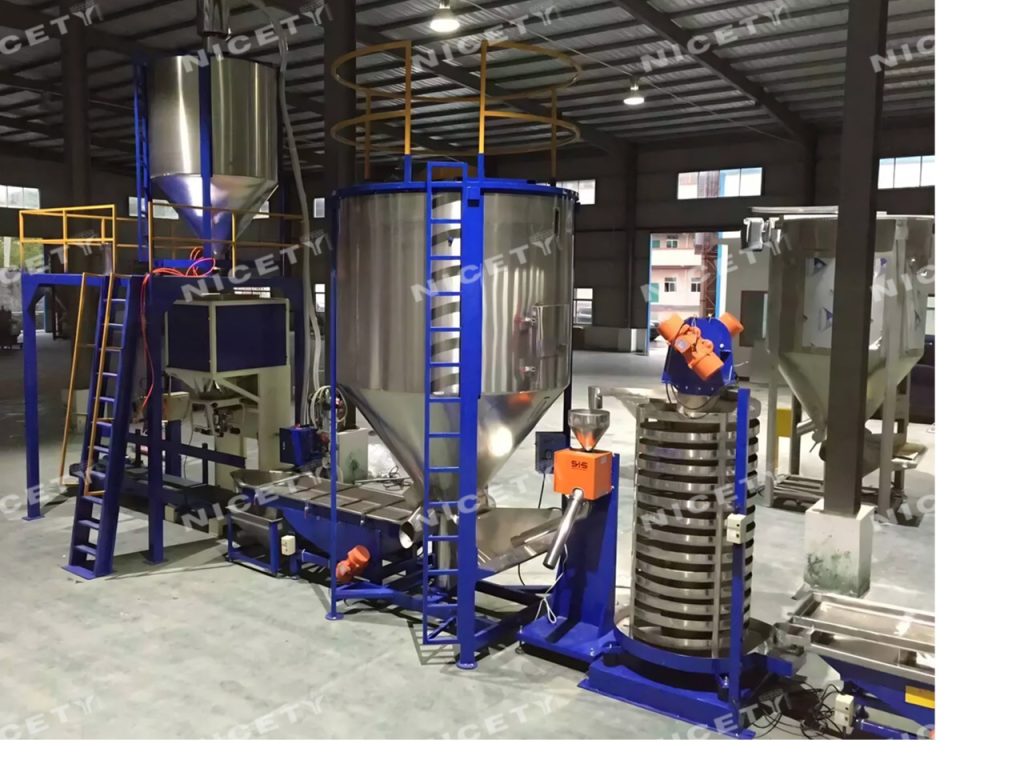
I write this as someone who lives between machines and data. I talk to plant owners like you every week. When MFI is unstable, it is rarely just the polymer. It is almost always the way we mix, feed, and cool it. In this article, I will walk through how different mixing methods affect MFI stability3, what I have seen on real production lines, and how you can choose or upgrade your mixing system to get tight MFI control and fewer quality complaints4.
Why does mixing method affect melt flow index stability so much?
MFI only looks like a simple number on a test report. In reality, it is a reflection of how evenly we melt, mix, and thermally treat the polymer inside the machine.
The mixing method affects MFI stability because it changes shear5, temperature profile, residence time6, and dispersion of additives. When these are uneven, MFI drifts between batches, even if you use the same recipe and the same raw materials.

In my work with modified PP, PE, and recycled ABS lines, I often see this pattern. When the plant uses simple single-screw with weak mixing and hand dosing, the same “grade” shows very different MFI. When they switch to a well-designed twin-screw with accurate feeders, the MFI curve suddenly calms down. The reason is simple. The better mixer gives more uniform shear and temperature. The polymer granules and additives see almost the same thermal and mechanical history each pass. So the polymer chain breakage7 and additive dispersion8 become predictable. That is what stabilizes MFI.
Here is a simple comparison of how process factors change with mixing method:
| Mixing method | Shear uniformity | Temperature uniformity | Additive dispersion | Typical MFI variation* |
|---|---|---|---|---|
| Manual premix + single screw | Low | Low–medium | Poor–medium | ±10–20% |
| Single screw with static mixer | Medium | Medium | Medium | ±8–15% |
| Co-rotating twin-screw | High | High | High | ±3–8% |
| Twin-screw + gravimetric feeding9 | Very high | High | Very high | ±2–5% |
*Illustrative values from typical production observations, not fixed standards.
Which mixing method usually gives the most stable melt flow index for modified plastics10?
If I have to pick one answer, I always look first at a well-designed co-rotating twin-screw compounding11 line with gravimetric feeding.
A co-rotating twin-screw with proper screw elements and stable feeding usually gives the tightest MFI range, because it offers intensive and uniform mixing, controllable residence time, and consistent energy input.
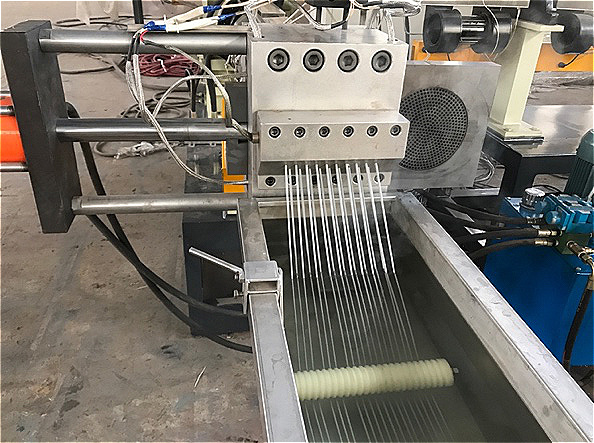
When I help a plant like Mohammed Ali’s upgrade, I do not start with the catalog. I start with his target MFI and the allowed variation, for example 20 g/10 min ±5%. Then we look at the real mixing needs: how many additives, how fine the dispersion, how sensitive the polymer is to shear. In most modified plastics cases, we end up with a twin-screw compounding line. This is because the twin-screw gives us zones. We can design conveying, kneading, and mixing blocks to match the material. We can position side feeders for fillers or recycled edges. We can control barrel temperatures in each zone. This design freedom lets us tune the energy input per kilogram. When energy input is stable, MFI becomes stable.
A simplified view of how different methods affect MFI stability in a typical PP+filler compound might look like this:
| Method | Average MFI (g/10 min) | Standard deviation | Comment |
|---|---|---|---|
| Batch mixer + single screw | 18.5 | 3.0 | Big swings between batches |
| Single screw + static mixer | 19.0 | 2.2 | Better, but still unstable |
| Twin-screw, volumetric feeders | 19.3 | 1.2 | Good, some drift from dosing |
| Twin-screw, gravimetric feeders | 19.4 | 0.6 | Very stable and predictable |
These numbers are just an example, but they reflect what I often see in real projects.
Is batch mixing12 or continuous compounding13 better for MFI stability?
Many factories still rely on batch mixing in high-speed mixers, then feed that premix into a single screw. It works, and the investment is lower, but MFI often moves up and down from batch to batch.
Continuous compounding with a twin-screw extruder usually gives more stable MFI than batch mixing plus single screw, because it reduces batch-to-batch variation and allows tighter control of dosing and process conditions.
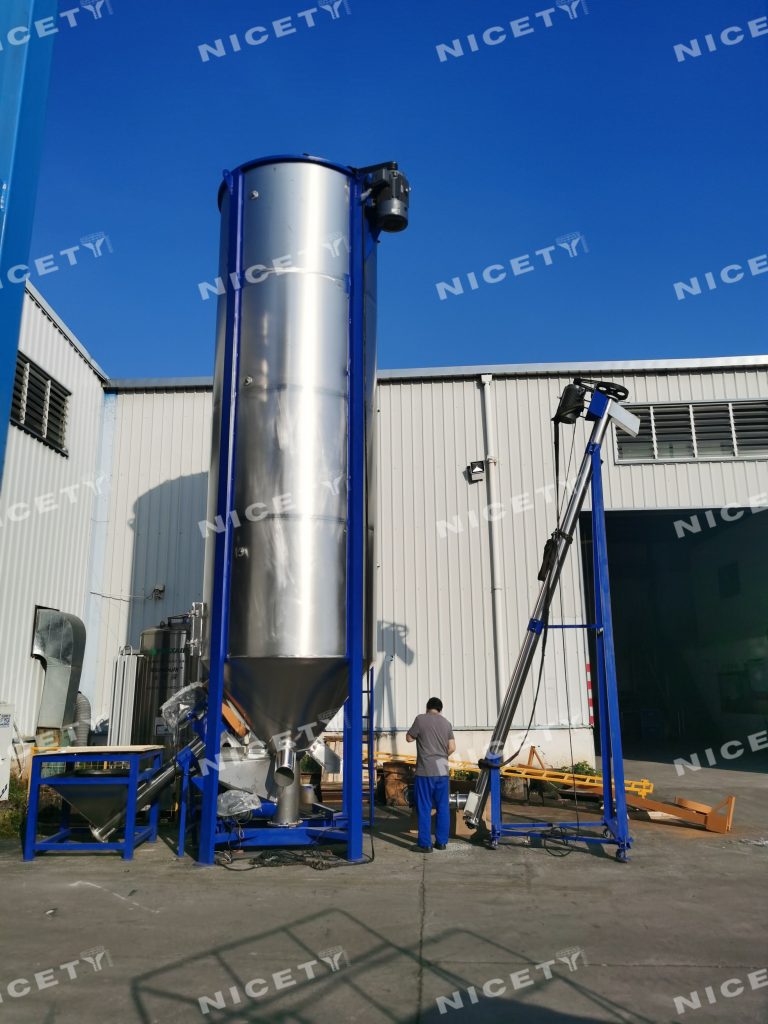
When I visit plants that use batch mixing, I often see three common problems. First, operators load materials by eye or by manual weighing. Even a 1–2% error in lubricant or compatibilizer can change MFI. Second, the mixer loading sequence changes with shift or operator. Sometimes powders are added earlier, sometimes later. That changes local heating and dispersion. Third, cooling time14 of each batch is not always the same. If the batch stays hot longer, some degradation may continue. All these details add up and show up as MFI drift.
Continuous compounding works in a different way. Raw materials go in at a steady rate. The twin-screw applies similar shear and temperature to every piece of material. If we use gravimetric feeders, each component keeps its set ratio automatically. The line becomes like a “steady flow reactor” for the polymer. This makes the MFI much more stable.
Here is a simple comparison:
| Aspect | Batch mixing + single screw | Continuous twin-screw compounding |
|---|---|---|
| Dosing consistency | Depends on operator, manual steps | Automatic, high repeatability |
| Batch-to-batch variation | High | Low (quasi continuous) |
| Residence time control | Poor | Good |
| MFI stability | Sensitive to human factors | Mostly defined by machine settings |
| Suitable for | Small orders, simple recipes | Stable products, large volume |
I do not say that batch systems are always bad. They can be enough for low-end products. But when a customer needs tight MFI control, especially for automotive or film applications, continuous compounding wins almost every time.
How do screw design and shear level influence melt flow index stability?
Even on the same machine frame, screw design can make or break MFI stability. Too gentle, and additives are not dispersed. Too aggressive, and the polymer degrades and MFI increases over time.
Screw design and shear level influence MFI stability by controlling dispersive and distributive mixing. Balanced screw elements give good dispersion without overheating, so polymer chain length stays stable and MFI variation stays low.

When I review a problematic line, I look carefully at three points. First, the location and angle of kneading blocks. High-angle kneading blocks create strong shear. They break up agglomerates and mix well, but if they extend over too long a section, local melt temperature can rise by 10–20°C. That extra heat shortens polymer chains. MFI increases and sometimes drifts upward as the screw wears. Second, the ratio between conveying and mixing elements. Too many conveying elements give uneven mixing and pockets of un-melted material, which cause MFI scatter. Third, venting zones. If volatiles and moisture cannot escape, they create bubbles and micro-defects that affect flow and appearance.
Here is a typical comparison of screw concepts for a PP + 30% talc compound:
| Screw concept | Main feature | MFI stability effect |
|---|---|---|
| High shear, many kneading blocks | Strong dispersion | Risk of degradation, MFI drift upward |
| Medium shear, segmented mixing zones15 | Balanced dispersion and flow | Good MFI stability |
| Low shear, mostly conveying elements | Gentle on polymer | Poor dispersion, MFI scatter |
In practice, I often recommend a medium-shear design with localized intensive zones and proper cooling. This gives good dispersion of fillers and additives while keeping the melt temperature close to target. The result is a stable MFI from shift to shift.
How important is feeding and dosing accuracy for stable MFI?
Many people blame the extruder when MFI is unstable. I learned to check the feeders first. If we cannot keep the formulation stable, we cannot keep MFI stable, no matter how good the extruder is.
Feeding and dosing accuracy are critical for MFI stability, because small errors in lubricant, stabilizer, or recycled content directly change viscosity and flow behavior of the melt.
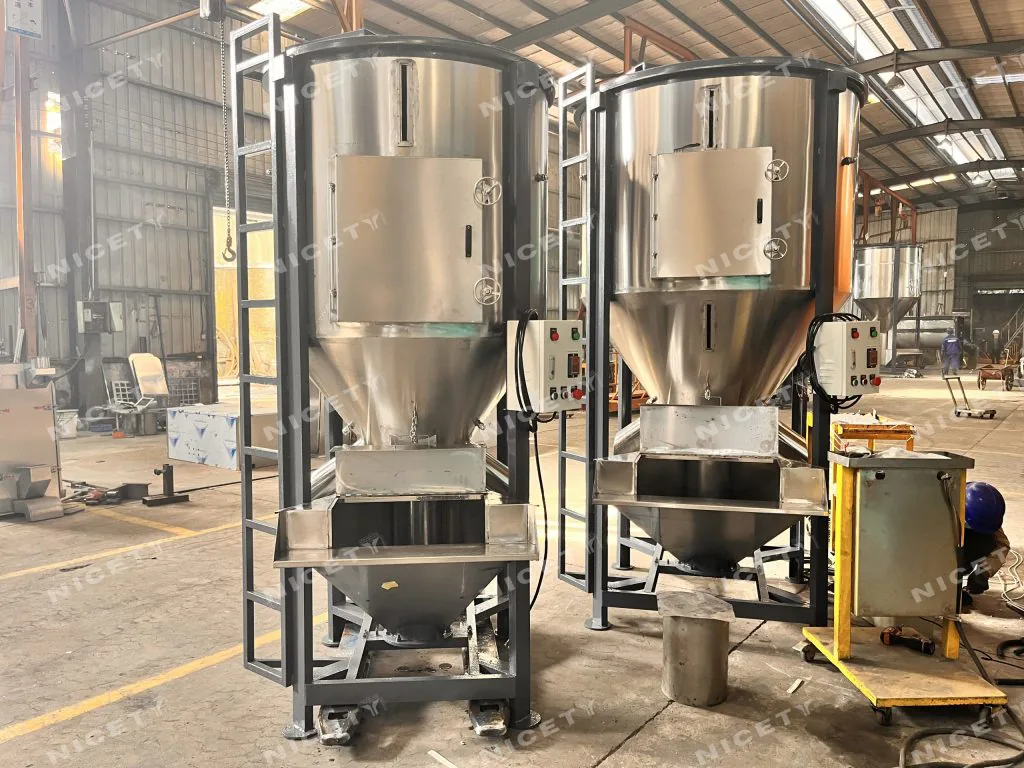
I remember one project where we tried to stabilize the MFI of a recycled PE compound. The customer used volumetric feeders16. According to the recipe, the stabilizer should be 1.0%. In reality, it wandered between 0.7% and 1.4% depending on bulk density and refilling timing. The result was a visible MFI swing. After we installed gravimetric feeders and tuned the refill strategy, the stabilizer stayed within ±0.05%. The MFI curves before and after looked like two different products.
Here is how different feeding methods typically affect MFI consistency:
| Feeding method | Typical accuracy (per component) | Effect on MFI |
|---|---|---|
| Manual weighing per batch | ±2–5% | Large MFI variation |
| Volumetric feeders | ±1–3% (depends on bulk density) | Medium MFI variation |
| Gravimetric feeders | ±0.2–0.5% | Small MFI variation |
Gravimetric systems also make it easier to track and log data. When I talk with quality teams, they like this because they can correlate MFI results with feeding trends. That helps find problems faster and gives confidence to customers who audit the line.
Conclusion
The most stable MFI comes from continuous twin-screw compounding with smart screw design, accurate gravimetric feeding, and tight temperature control17 across the whole line.
-
Understanding MFI is crucial for ensuring the quality and consistency of plastic materials. ↩
-
Discover various mixing methods and their impact on plastic properties. ↩
-
Find out techniques to achieve stable MFI for high-quality plastic products. ↩
-
Discover strategies to minimize quality complaints and improve customer satisfaction. ↩
-
Understanding shear is key to optimizing the mixing process for plastics. ↩
-
Learn how residence time affects the quality of plastic materials. ↩
-
Learn about the factors that lead to polymer chain breakage and how to prevent it. ↩
-
Explore the significance of additive dispersion in enhancing plastic performance. ↩
-
Gravimetric feeding ensures precise dosing, leading to better product consistency. ↩
-
Explore the diverse applications of modified plastics in various industries. ↩
-
Learn how twin-screw compounding enhances mixing and stability in plastic production. ↩
-
Explore the pros and cons of batch mixing for different plastic applications. ↩
-
Continuous compounding offers significant advantages in efficiency and quality. ↩
-
Cooling time is a critical factor in ensuring the quality of plastic products. ↩
-
Learn about the importance of mixing zones for effective plastic processing. ↩
-
Understanding volumetric feeders helps in optimizing material dosing in production. ↩
-
Temperature control is vital for maintaining the quality and consistency of plastics. ↩

_画板-1-副本-3-pxeey2xejyohpkvf07tglhvew6ks2ts3pjvhagm60c.png "NICETY MACHINERY Co., LTD")