_画板-1-1.png)
Compounding plastic is a key step in plastic processing, but choosing the right mixer is crucial. This article explores the best mixers for plastic pellets compounding.
Snippet paragraph: Compounding plastics requires specialized mixers to achieve uniformity. Learn about the different types of mixers and their suitability for plastic pellet compounding.
Transition paragraph: Understanding how mixing impacts the final product is essential for selecting the right equipment. Keep reading to find out more.
What is Compounding Plastic?

Compounding plastic creates blends with improved qualities. It’s a critical step in manufacturing products like plastic pellets. Compounding is a crucial process that influences the quality of final plastic products. When plastics are compounded, they are combined with various additives such as stabilizers, colorants, and fillers. These components must be mixed thoroughly to ensure uniformity. The type of mixer chosen affects how evenly the materials are blended, which in turn impacts product quality. For plastic pellet compounding, the consistency of the mixture is paramount. Unevenly mixed materials can lead to defects, poor performance, or variations in color and texture.
Key Compounding Factors:
- Material Flowability: Different plastics and additives have varying flow characteristics, which affect mixing efficiency.
- Temperature Sensitivity: Some materials are heat-sensitive, and an unsuitable mixer could cause degradation.
- Viscosity: Thicker, more viscous compounds may need a more robust mixer.
Types of Mixers for Compounding
- High-Speed Mixers: These are typically used for smaller batches and are great for fast blending of additives into base polymers.
- Banbury Mixers: Often used for rubber and thermoplastic processing, offering high shear mixing for consistency.
What is a Mixer Machine?
Mixers come in various designs, from batch mixers to continuous mixers systems. The choice depends on production scale and specific needs.

Choosing the right type of mixer is vital for optimizing your compounding process. Mixers can be broadly classified into batch mixers and continuous mixers. Batch mixers work on a fixed volume of material in one go. They’re ideal for smaller runs and can ensure precise control over mixing. However, continuous mixers are designed to handle an uninterrupted flow of materials, making them more suitable for large-scale production.
In addition to batch and continuous mixers, there are also specialized designs, such as high-shear mixers, which offer intense mixing for more difficult-to-blend materials, and ribbon blenders, which are ideal for blending large quantities of plastic pellets with additives.
Key Mixer Types:
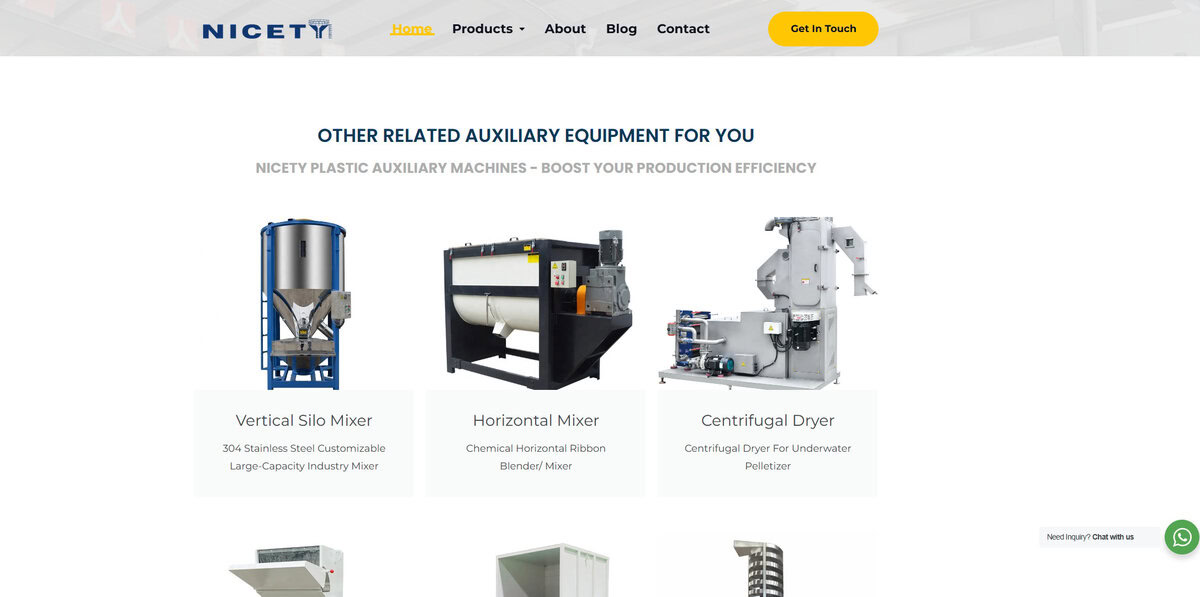
- Vertical Mixers: These mixers feature a vertical axis and are well-suited for materials that need a lower shear force for blending. They often have a gentle mixing action.
- Horizontal Mixers: Designed with a horizontal axis, these mixers are ideal for larger volumes of plastic pellets and additives, ensuring a quicker and more consistent blend.
Considerations for Choosing a Mixer:
Mixing Speed: The speed of the mixer affects how quickly and uniformly materials are blended.
Material Compatibility: Some mixers are better suited for specific types of plastics or additives.
Types of Mixers:
- Batch Mixers: Handle a fixed amount of material at a time. Excellent for small-scale production or specialty compounds.
- Continuous Mixers: Designed for high-volume, continuous processing. Suitable for large factories or mass production.
- High-Shear Mixers: Used for materials requiring intense blending to break down particles or improve dispersion.
| Type of Mixer | Ideal Use Case | Pros | Cons |
|---|---|---|---|
| Batch Mixers | Small-scale or custom compounding | Precise control, flexible | Slower production rate |
| Continuous Mixers | Large-scale, high-volume production | Higher throughput, consistency | Less flexibility |
| High-Shear Mixers | Complex or difficult-to-blend materials | Intense mixing, effective dispersing | High energy consumption |
What is the Main Function of a Mixer?
A mixer ensures uniformity in the mixture, which is critical for producing high-quality plastic products. Let’s look at the key functions it serves.

A mixer is designed to serve the primary function of achieving a homogeneous blend of materials. This is especially important in plastic compounding, where uniformity in the material mix directly affects the final product’s strength, durability, and appearance. For example, when plastic pellets are mixed with colorants, any inconsistency in the blending process can result in color streaks or uneven product performance. Mixers also help with the dispersion of additives, like flame retardants or stabilizers, which are crucial for the material’s long-term stability.
While mixing is essential for uniformity, it also has secondary functions like improving material properties, enhancing flowability, and reducing waste. For instance, some mixers can also incorporate heat into the process, which is essential for certain plastic materials that need to be softened or activated during compounding.
Functions of a Mixer in Plastic Compounding:
- Material Homogenization: Ensures all materials are evenly mixed for optimal performance.
- Heat Integration: Some mixers incorporate heat for materials that require it during processing.
- Additive Distribution: Ensures that additives are evenly distributed within the base resin.
Conclusion
Choosing the right mixer for plastic pellet compounding ensures consistent quality and performance. Factors like material type, batch size, and processing requirements must all be considered.


_画板-1-副本-3-pxeey2xejyohpkvf07tglhvew6ks2ts3pjvhagm60c.png "NICETY MACHINERY Co., LTD")