_画板-1-1.png)
By Nicety Machinery Co., Ltd | June 13, 2026
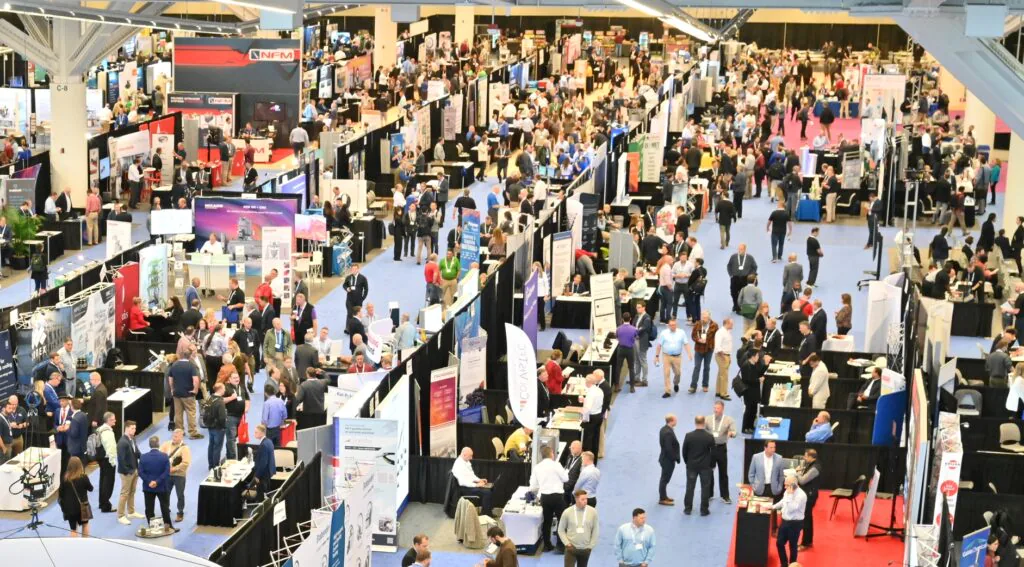
PLAST 2026 at Fiera Milano closed yesterday after four days as Europe’s most comprehensive annual showcase of plastics and rubber processing machinery, materials, and technology.
Overview: PLAST 2026 by the Numbers — Europe’s Premier Rubber and Plastics Machinery Show
PLAST 2026 — the twentieth edition of Italy’s premier international trade fair for plastics and rubber processing — closed yesterday, June 12, 2026, after four days at the Fiera Milano exhibition centre in Rho, Milan. The show ran from June 9 to 12 and brought together over 1,000 exhibiting companies across six halls, with 45% of exhibitors from outside Italy — a result that organizers described as carrying particular significance given the complex global market environment in which it arrived.
The 2026 edition succeeds the 2023 show, which recorded 50,000 square metres of net exhibition space and 38,000 visitors. Organized by Promaplast and representing the Italian plastics and rubber machinery industry association AMAPLAST, PLAST is held every three years and consistently serves as the European platform where the full range of plastics and rubber processing machinery — extrusion, injection moulding, blow moulding, thermoforming, compounding, granulation, and recycling — is displayed alongside raw materials, additives, masterbatches, molds, dies, laboratory equipment, and downstream ancillary systems.
A strategically notable feature of the 2026 edition was its co-location with Xylexpo, the international biennial show for wood processing and furniture technologies — allowing free visitor movement between the two exhibitions and reflecting the deepening cross-industry interest in advanced polymer materials in wood-composite applications.
PLAST 2026 is part of the Innovation Alliance roadmap, a structured industrial partnership covering Italy’s leading capital goods machinery trade fairs: PRINT4ALL (Milan 2027), IPACK-IMA, GREENPLAST and INTRALOGISTICA ITALIA (Milan 2028). The Alliance represents what organizers describe as a system project worth 26 billion euros — a coordinated sequence of events covering the full industrial production supply chain from materials processing through packaging, print, and logistics.
Three Satellite Shows Under One Roof: RUBBER, 3D PLAST, and PLAST-MAT
A defining structural feature of PLAST 2026 is its three dedicated satellite shows, each targeting a specialist industry vertical within the broader plastics and rubber ecosystem:
RUBBER (fifth edition): Dedicated exclusively to the rubber processing industry — machinery, materials, additives, and testing equipment for natural and synthetic rubber compounding, mixing, vulcanization, and finished rubber goods production. In 2026, with synthetic rubber prices 23% higher year-on-year and EPDM demand growing at nearly 6% CAGR through 2031 on the back of EV, renewable energy, and weatherstripping growth, the RUBBER satellite show arrived at a particularly active moment for the industry. Exhibitors at RUBBER 2026 addressed the full rubber processing chain from internal mixers and open mills through calenders, rubber extruders, and vulcanization presses to testing and quality control systems.
3D PLAST (fourth edition): Focused on additive manufacturing technologies for plastics — 3D printing systems, filament and resin materials, and hybrid manufacturing approaches that intersect with conventional polymer processing. For compounders, this satellite show represents the growing intersection between compounding technology and the filament and pellet materials required for industrial polymer additive manufacturing.
PLAST-MAT (third edition): Dedicated to innovative plastic materials and advanced composites — a direct showcase for new polymer grades, engineered compounds, fiber-reinforced materials, and specialty formulations that represent the output of the compounding industry’s development pipeline.
The three-satellite structure reflects PLAST’s ambition to serve not just machinery purchasers but the entire plastics and rubber industrial ecosystem — material developers, process engineers, quality managers, and production directors across every manufacturing segment that touches polymer processing.
Compounding and Pelletizing Technology: Smart Factories and PCR Processing at the Forefront
For compounding plant operators, the most significant technology category at PLAST 2026 was the new generation of twin-screw compounding and pelletizing lines integrating smart factory architectures — IoT connectivity, predictive maintenance, and real-time energy analytics — directly into the machine control system, rather than as after-market additions.
JWELL Machinery, presenting at Hall 13, Booth T33 under its banner "We Know Extrusion," showcased compounding and pelletizing lines positioned as core technology for plastic recycling processing. JWELL’s co-rotating twin-screw compounding lines feature advanced vacuum degassing specifically designed to convert post-consumer waste into premium-grade, homogenous pellets — addressing one of the most technically demanding applications for compounding extruders in 2026. The company’s differentiating proposition at PLAST was the native integration of cloud-based IoT monitoring, predictive maintenance tracking, and real-time energy consumption analytics embedded directly into the machine control architecture from the factory floor up.
The significance of this integration for plant managers is direct: smart monitoring platforms embedded in the compounding extruder itself — rather than retrofitted as external sensors — enable temperature profile optimization and material waste reduction during the startup and changeover phases that account for a disproportionate share of production losses and energy consumption on twin-screw lines. In a market where resin costs are at record highs and energy represents 20 to 30% of total production cost, real-time extruder process data translating directly into energy and yield optimization decisions has measurable financial value per production shift.
JWELL representatives at the show floor reported that European processors are demonstrating unprecedented interest in intelligent compounding solutions that combine high throughput with precision process control — a shift that reflects the dual pressure of regulatory compliance documentation requirements (PPWR recycled content traceability) and raw material cost pressure (the imperative to minimize waste of expensive resin).
The vacuum degassing capability highlighted by JWELL directly addresses the PCR processing challenge: post-consumer recycled polyethylene and polypropylene carry elevated volatile organic compound loads that must be continuously removed during compounding to prevent compound quality degradation and to achieve the odor performance required for food-contact and consumer goods applications. A compounding extruder with deep vacuum degassing integrated into the barrel design is not a luxury for PCR-focused operations — it is a process requirement.
Extrusion Machinery: Energy Efficiency, PFAS-Free Aids, and Foam Innovations
The extrusion machinery segment at PLAST 2026 reflected three concurrent technology pressures facing processors across pipe, profile, film, sheet, and foam applications:
Energy efficiency as competitive differentiator. With European industrial electricity prices remaining structurally elevated, extrusion machinery manufacturers are competing on specific energy consumption (SEC) per kilogram of output as a primary commercial argument. Multiple exhibitors presented new screw and barrel designs, gearbox configurations, and drive system upgrades aimed at reducing electrical energy input per kilogram of processed material — a specification that has moved from secondary consideration to primary purchasing criterion for energy-intensive extrusion operations.
PFAS-free processing aids for film extrusion. Wells Performance Materials presented its latest PFAS-free processing aids for film extrusion — new aids demonstrating enhanced performance in metallocene and metallocene-blended polymer systems — at Interplas 2026, running June 2–4 just before PLAST. The PFAS (per- and polyfluoroalkyl substances) replacement theme was also present at PLAST, reflecting the EU’s accelerating regulatory restriction of fluoropolymer-based processing aids in food-contact film applications. PFAS-free processing aids designed as a dynamic low-friction surface coating on the extruder screw, barrel, and die allow polymer melt to pass through with reduced resistance — providing the melt fracture elimination and surface quality improvement of traditional fluoropolymer aids without the regulatory exposure. For blown and cast film extruders supplying food packaging markets in Europe, the PFAS replacement transition is not optional — it is an upcoming compliance requirement with a defined regulatory timeline.
Foam injection and physical blowing agent technology. Presma exhibited at PLAST 2026 a multi-station press equipped with an in-fill system for the introduction of physical blowing agents into the plasticizing unit — a technology positioned for structural foam components where weight reduction targets drive material specification decisions. Physical blowing agent (PBA) injection into the polymer melt during plasticization — using CO₂ or nitrogen rather than chemical blowing agents — delivers cleaner foaming chemistry and avoids the residue and VOC concerns of chemical blowing agents, an increasingly important consideration for automotive interior and packaging applications where outgassing specifications are tightening.
Amut’s extrusion and recycling portfolio. Italian machinery manufacturer Amut took center stage at PLAST 2026 with technological developments spanning both plastics extrusion and recycling — a combined presentation that reflects the converging commercial reality: extrusion lines for virgin and recycled polymer processing are increasingly designed from the start to handle both feedstock types, rather than being optimized exclusively for one or the other.
Recycling and Granulation: Industrial-Scale PCR Processing Comes of Age
The recycling machinery segment at PLAST 2026 — represented both on the main floor and through the dedicated RUBBER satellite — reflected the maturation of industrial-scale PCR processing from a specialist niche into a mainstream manufacturing capability.
CMG Granulators presented a technological offering specifically designed to meet the new demands of the industrial recycling market. CMG’s presence at PLAST with a recycling-focused portfolio reflects the company’s reading of where machinery investment is concentrating in European processing: not in expansion of virgin polymer throughput, but in building the capability to process post-consumer and post-industrial recyclate at the quality and consistency levels that compound and film customers now require.
The granulation technology challenge for PCR processing is distinct from virgin resin granulation in several important dimensions. PCR feedstock — whether baled film, rigid bottle flake, or sorted mixed polymer streams — arrives with variable contamination levels, variable bulk density, variable moisture content, and variable melt flow characteristics that change from batch to batch and season to season. Granulation systems designed for PCR processing must incorporate pre-washing or dry-cleaning capabilities, degassing, and melt filtration that removes the contamination present in post-consumer streams without degrading the polymer chain length that determines the mechanical performance of the granulated output.
The PlasticsEurope biennial report "The Circular Economy for Plastics: A European Analysis," published in May 2026, provides the data backdrop to the recycling technology investment visible at PLAST: Europe’s recycled plastics production stood at 8.4 million tonnes in 2024, against 46.1 million tonnes of total plastics production — a recycling rate of approximately 18% against the PPWR’s trajectory toward 30% mandatory recycled content for specific packaging categories. Closing that gap requires both more recycling infrastructure investment and better compounding technology for incorporating recycled content into high-performance applications.
Rubber Industry at PLAST 2026: The Satellite Show That Reflects a Market in Transition
The RUBBER satellite show at PLAST 2026 — in its fifth edition — addressed a rubber processing industry simultaneously facing elevated raw material costs and expanding demand from high-growth end markets.
Synthetic rubber prices remain 23% above year-ago levels as of mid-June 2026, with butadiene spot prices in Asia having climbed 67% from 2024 to 2025 on cracker outages. Natural rubber supply remains constrained from the La Niña-driven disruption to Southeast Asian tapping operations in late 2025. The rubber processing industry entering PLAST 2026 is operating with a raw material cost structure that is materially higher than what was embedded in most capital investment decisions made during 2023 and 2024.
Against that cost backdrop, the growth drivers in rubber demand — EPDM for EV weatherstripping, roofing membranes, and wind turbine seals; silicone rubber for high-temperature automotive and electronics applications; NBR for fuel system seals and hydraulic hoses — are creating genuine volume growth opportunity for rubber compounders who can maintain quality consistency and delivery reliability through the cost cycle.
The RUBBER satellite exhibitors reflected the full production chain for rubber compounding and processing: internal mixers, open mills, and rubber extruders at the compounding stage; calenders, presses, and vulcanization systems at the forming stage; and testing and quality control systems for compound and finished product verification. The theme running across the RUBBER satellite, consistent with the main PLAST floor, was the integration of digital process monitoring — real-time compound temperature and viscosity tracking, predictive maintenance on high-wear mixer components, and data-driven cure cycle optimization — into rubber processing operations that have historically relied on experienced operator judgment rather than instrumented process control.
The Conference Program: Five Themes Every Plant Owner Should Know
The PLAST 2026 conference program — open to all exhibitors and visitors across all four days, with institutional conferences in Hall 24 offering simultaneous interpretation into English — addressed the most pressing structural challenges for the European and global plastics and rubber industry. Five themes dominated the program and are directly relevant to plant owners and operators globally:
1. European industrial competitiveness and sovereignty. Massimo Pavin, President and CEO of Sirmax Group — a major Italian compounder of engineering and technical polymers — participated at a high-level Brussels event in April 2026 titled "European Industrial Sovereignty: Crises and Opportunities in Plastics," and the theme carried forward into the PLAST conference. The fundamental question: as European PVC producers shut down (VYNOVA Wilhelmshaven, Beek, Runcorn), as Middle East supply disruption resets global resin pricing, and as Asian compounders expand with lower-cost energy and feedstock, what is the sustainable competitive position of European plastics and rubber processing? The PLAST conference addressed this through the lens of technology leadership, specialty grade development, and regulatory compliance capability as the differentiators that justify European production cost structures.
2. The circular economy and PPWR compliance. The PlasticsEurope biennial circular economy report framed the regulatory challenge quantitatively: 18% recycled content rate against PPWR mandates moving toward 30% for specific packaging categories. Conference sessions addressed the technical and commercial pathways for closing this gap — mechanical recycling scale-up, chemical recycling commercialization timelines, recycled content certification and mass balance accounting, and the formulation challenge of incorporating PCR content into food-contact and automotive-specification compounds.
3. Decarbonization and energy transition. European industrial energy pricing remains structurally elevated. Plastics and rubber processing — both energy-intensive manufacturing sectors — face the decarbonization imperative simultaneously with cost competitiveness pressure. Conference sessions addressed renewable energy integration, energy efficiency investment in processing equipment, and the carbon footprint calculation methodologies that PPWR and broader corporate sustainability reporting frameworks are making mandatory.
4. Digitalization and AI in plastics processing. Engel presented at PLAST what it described as "innovation as a dialogue with industry" — not isolated technologies, but an integrated ecosystem of digital assistants, AI-based systems, and automation designed to work together across the production environment. The conference program expanded on this with sessions on digital twin implementation for compounding and extrusion lines, AI-assisted formulation optimization, and real-time quality prediction systems that reduce the lag between process parameter changes and quality outcome detection.
5. Regulatory challenges — REACH, PFAS, and material restrictions. The EU’s accelerating restriction of per- and polyfluoroalkyl substances (PFAS), including fluoropolymer processing aids widely used in film extrusion, is creating compliance timelines that processors must build into equipment and formulation investment decisions now. REACH restrictions on stabilizer systems — including the lead ban effective November 2024 and continuing scrutiny of organotin compounds — are reshaping the additive supply chain simultaneously. Conference sessions examined the regulatory calendar and its practical implications for processing equipment specifications and material qualification timelines.
What PLAST 2026 Signals for the Global Compounding and Extrusion Equipment Market
For machinery buyers, plant owners, and equipment investors outside Europe who track PLAST as a leading indicator of where plastics and rubber processing technology is heading, the 2026 edition sends several clear signals:
Smart machine integration is no longer a premium option — it is the baseline. The JWELL presentation of IoT monitoring, predictive maintenance, and energy analytics embedded natively into compounding extruder control systems reflects a broader shift: machinery manufacturers exhibiting at PLAST 2026 are presenting digital connectivity as standard equipment, not as a premium add-on module. Plant owners evaluating compounding and extrusion equipment investment should treat the absence of native process monitoring capability as a red flag for long-term operating cost competitiveness.
PCR processing capability is now a market entry requirement for European supply chains. Machinery designed and sold exclusively for virgin polymer processing is increasingly a commercial limitation for European and export-oriented processors. Equipment systems validated for consistent PCR processing — with vacuum degassing, melt filtration, and feedstock variability tolerance designed in — are the machinery category attracting capital investment. This applies equally to twin-screw compounding lines, film extrusion systems, granulators, and the auxiliary equipment chain surrounding them.
The triennial show cycle means PLAST 2026 technology is what processors will buy through 2029. Unlike annual shows, PLAST’s three-year cadence means the machinery presented at the 2026 edition is what the European market will be evaluating, purchasing, and installing through 2028. The technology directions established at PLAST 2026 — smart compounding integration, PFAS-free processing aids, physical blowing agent foam technology, industrial-scale PCR granulation — define the equipment specification landscape for the next three years.
The 45% international exhibitor presence reflects a genuinely global show. Chinese machinery manufacturers including JWELL exhibiting alongside Italian, German, and broader European producers at Fiera Milano signals that PLAST is no longer a European-only market event. Asian machinery manufacturers are using PLAST to validate their technology credentials for European customers — and the technology they present in Milan is the same technology available to processors in Asia, the Americas, and the Middle East.
European Industrial Competitiveness: The Debate That Ran Through the Entire Show
Beneath the specific technology announcements and product launches, PLAST 2026 was framed by a broader industrial debate that the conference program surfaced explicitly: the question of whether European plastics and rubber processing can sustain its global competitive position against the combination of higher energy costs, heavier regulatory burden, and expanding Asian manufacturing capacity.
The show’s 20th edition arrived in a market environment where:
- European PVC production capacity has contracted sharply through the VYNOVA multi-site collapse
- Middle East supply disruption has reset global resin pricing at levels that benefit North American and remaining European producers but devastate processors dependent on Middle Eastern feedstock
- The PPWR is imposing compliance costs and recycled content mandates that have no direct equivalent in Asian or American markets
- Asian machinery manufacturers — including Chinese producers like JWELL with engineering capability that rivals European incumbents — are actively competing for European market share
The Italian machinery industry’s institutional response — through AMAPLAST and the broader Innovation Alliance framework — is to position European technology leadership, supply chain integration, and regulatory compliance expertise as the durable competitive advantages that justify European production cost structures. The PLAST conference sessions on plastics as "public enemy or scapegoat" and European industrial sovereignty reflect an industry consciously defending its strategic rationale in a challenging environment.
For plant owners and equipment buyers globally, this debate matters because the technology investment decisions made by European machinery manufacturers in response to this competitive pressure — toward smarter, more energy-efficient, more regulatory-ready equipment — are the same decisions that ultimately define what processing technology is available to manufacturers in every market.
Auxiliary Equipment Supporting Smart Compounding and Extrusion Lines
The smart compounding and extrusion lines showcased at PLAST 2026 — with integrated IoT monitoring, predictive maintenance, and real-time energy analytics — generate their performance claims under the assumption that the upstream material handling and pre-processing stages feeding them are operating consistently. A twin-screw compounding extruder with cloud-connected process analytics cannot compensate for inconsistent pre-blending, inadequate drying, or segregated feed material arriving at the hopper. The auxiliary equipment chain determines whether the main machinery performs at its designed specification.
For compounding and extrusion plant operators evaluating equipment upgrades in response to the technology directions established at PLAST 2026, the following auxiliary equipment stages are critical enablers of the smart, efficient, PCR-capable processing lines that the show demonstrated:
Pre-blending and high-shear additive dispersion: Consistent, high-quality pre-blending before the compounding extruder is the foundation of compound quality and first-pass yield. Nicety Machinery’s High Speed Mixer Machine provides the shear energy and temperature profile control required for uniform additive distribution into engineering plastics, PVC, and polyolefin compound bases — including the precise dispersion of recycled content processing aids and compatibilizers that PCR-containing compounds require. The Plastic Color Mixer handles precision masterbatch and colorant let-down at controlled ratios before extrusion.
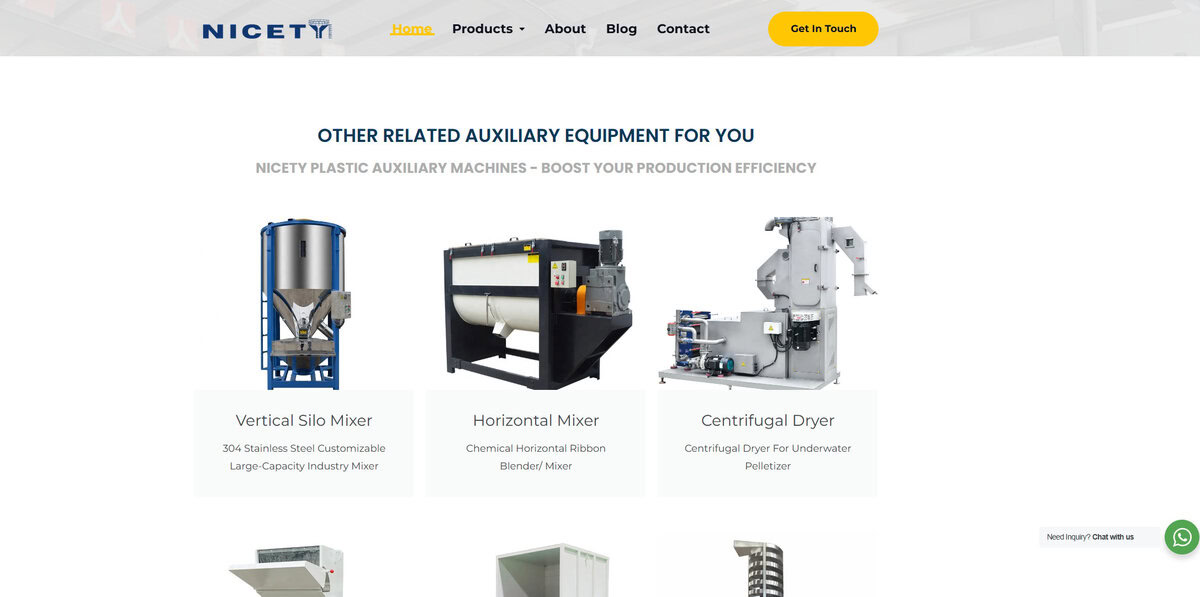
Bulk pellet blending for PCR-virgin mixes and multi-grade facilities: As PPWR recycled content mandates drive incorporation of PCR into compound formulations, the ability to blend PCR and virgin pellets at defined, certified ratios — with consistency across batches — becomes a compliance requirement as much as a process requirement. The Horizontal Mixer and Vertical Silo Mixer provide reliable bulk blending of pellets with variable density and morphology, maintaining the certified blend ratio across production volumes.
Drying and VOC control — essential for PCR compounding: The vacuum degassing capability highlighted by JWELL at PLAST addresses volatile removal inside the compounding extruder barrel — but the pre-extruder drying and VOC reduction stage is equally critical, particularly for hygroscopic engineering resins (PA, PC, PBT) and PCR feedstocks with elevated volatile loading from end-use history. The VOC Deodorizing Drying System handles both moisture removal and volatile organic compound reduction before the resin enters the extruder, protecting compound quality and ensuring the odor performance required for food-contact PCR compound applications.
Segregation-free material conveying: Smart compounding extruders with gravimetric feeding systems require consistent, well-blended material arriving at the feed throat. The Screw Conveyor and Vibrating Spiral Elevator transfer pre-blended materials from mixing equipment to the extruder hopper while maintaining blend homogeneity — preventing the density-driven segregation between PCR and virgin pellets or between resin and powder additives that undermines gravimetric feeder accuracy.
Complete pelletizing line for compounded output: The Extrusion Pelletizing Line converts compound melt into market-ready pellets. The Strand Line Centrifugal Dryer removes surface moisture immediately after water-bath cooling — critical for hygroscopic engineering compounds and PCR-containing grades where residual surface moisture leads to pellet clumping and moisture reabsorption during storage and transport.
Post-pelletizing size classification: The Linear Vibrating Screener is the final quality gate — removing fines and oversized pellets before packaging to ensure dimensional consistency for downstream injection moulding and extrusion customers. For the smart compounding lines presented at PLAST 2026, the screener’s output data — reject rate by size fraction — is itself a process quality indicator that feeds back into extruder parameter optimization.
Height transition conveying in compact plant layouts: For facilities incorporating new smart compounding lines into existing plant layouts where floor space is constrained, the Z Elevator provides reliable inclined conveying of pellets or granulated material between process stages without the segregation risks associated with pneumatic conveying — particularly important for abrasive glass-filled engineering compounds and density-variable PCR pellet blends.
Sources
- JWELL Machinery: JWELL Unveils Next-Generation Sustainable Extrusion Technology at PLAST 2026 in Milan — June 10, 2026
- Plastonline.org (Official PLAST 2026 News Portal): Show Overview, Exhibitor Announcements, and Conference Program — June 2026
- Plastonline.org: The Innovation Alliance — A System Project Worth 26 Billion Euros — May 19, 2026
- Plastonline.org: PLAST 2026 Conference Programme — May 12, 2026
- Plastonline.org: PLAST 2026 — 200 New Exhibitors and Strong International Presence — May 2026
- SpecialChem: PLAST 2026 Event Overview
- Interplas Insights: Wells Performance Materials Presents PFAS-Free Processing Aids at Interplas 2026 — April 2026
- Machines Italia: PLAST 2026 International Exhibition Overview — AMAPLAST
- Plastech: PLAST 2026 — Fiera Milano, Following 2023’s 50,000m² and 38,000 Visitors
- PlasticsEurope: The Circular Economy for Plastics — A European Analysis (Biennial Report 2026)
- Trading Economics: Synthetic Rubber Price — June 13, 2026 Live Data

_画板-1-副本-3-pxeey2xejyohpkvf07tglhvew6ks2ts3pjvhagm60c.png "NICETY MACHINERY Co., LTD")