_画板-1-1.png)
1) Why Blade Type Matters More Than “Sharpness”
In plastic size-reduction, the blade is not just a consumable—it defines:
- Particle size distribution (flakes vs chips vs powder-like fines)
- Energy consumption (kWh/ton) and motor load stability
- Heat generation (risk of melting, smearing, re-fusing)
- Dust/fines rate (yield loss, filtration burden)
- Noise, vibration, and bearing life
- Downtime frequency (regrinding intervals, knife change time)
Choosing the wrong blade type often shows up as “mysterious problems”: inconsistent output, frequent jams, melted edges, high amperage spikes, or excessive dust—when the real cause is mismatch between plastic behavior and cutting geometry.
2) Know Your Crusher/Granulator Cutting System
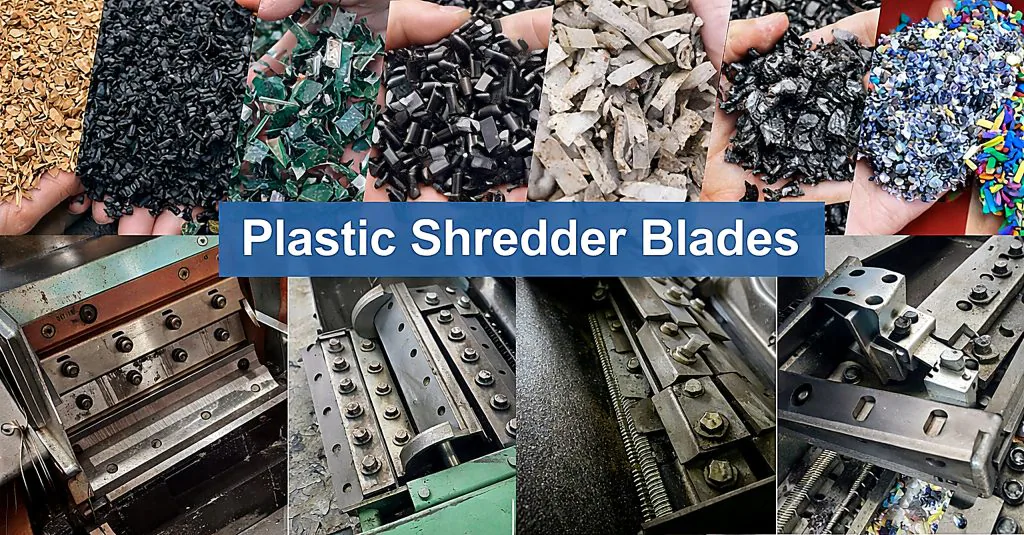
Before selecting blade types, confirm the machine category because blade “type” is inseparable from the cutter layout:
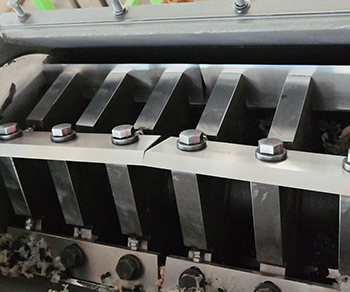
- Granulator (shear cutting): rotor knives + bed knives; typically produces uniform regrind (flakes).
- Crusher (impact + shear hybrid): thicker sections, sometimes handles bulky parts; output may be coarser.
- Shredder (tear + shear): low-speed, high-torque; often upstream of a granulator.
Most “plastic crusher blades” in industry discussions refer to granulator-style knives (rotor + bed) used for plastic recycling lines.
3) The Three Blade Families You’ll Encounter
Blade “type” usually means a combination of edge geometry + mounting arrangement. Common families:
A) Flat (Straight) Knives
What they do best
- Stable shear cut with bed knives
- Predictable particle size
- Good for rigid plastics and general regrind
Typical applications
- ABS, PS, PMMA, rigid PP/PE, runners/sprues, molded parts
Trade-offs
- Can struggle with very tough/elastic plastics unless clearances and angles are optimized

B) Claw (Hook / Fang) Knives
What they do best
- “Bites” and pulls in difficult, bulky, or thick-walled parts
- Improved feed engagement on awkward shapes
Typical applications
- Thick injection parts, bumpers, large housings, lumps, purgings
Trade-offs
- Can generate more fines if not tuned
- Tends to be noisier and can increase torque peaks

C) V-Cut / Chevron / Staggered Knives
What they do best
- Progressive cutting (slicing action), smoother load profile
- Better at reducing film, woven bags, soft PP/PE, and mixed lightweight feed
- Helps reduce “wrapping” and improves self-feeding
Typical applications
- LDPE/LLDPE film, raffia, woven sacks, sheet trimmings, mixed packaging
Trade-offs
- More complex knife setup and alignment
- Incorrect setup can create stringers rather than clean flakes
4) Match Blade Geometry to Plastic Behavior (Not Just Material Name)
Plastics fail differently under a blade:
- Brittle (PS, PMMA, some filled ABS): tends to crack—risk of excessive fines if impact is high.
- Ductile (PP, PE): tends to deform—needs true shear and proper clearance to avoid smearing.
- Elastic/tough (nylon/PA, TPU, TPE): wants to stretch—needs slicing/progressive cut and careful screen selection.
- Fiber-filled (GF-PA, GF-PP): highly abrasive—blade material and wear strategy become critical.
A practical rule:
- More ductile/elastic = more slicing/progressive action (V-cut/staggered)
- More rigid/bulky = more robust engagement (flat or claw depending on feed shape)
5) Blade Angle, Clearance, and “Cutting Feel” (The Real Performance Levers)
Even the “right type” underperforms if these are wrong.
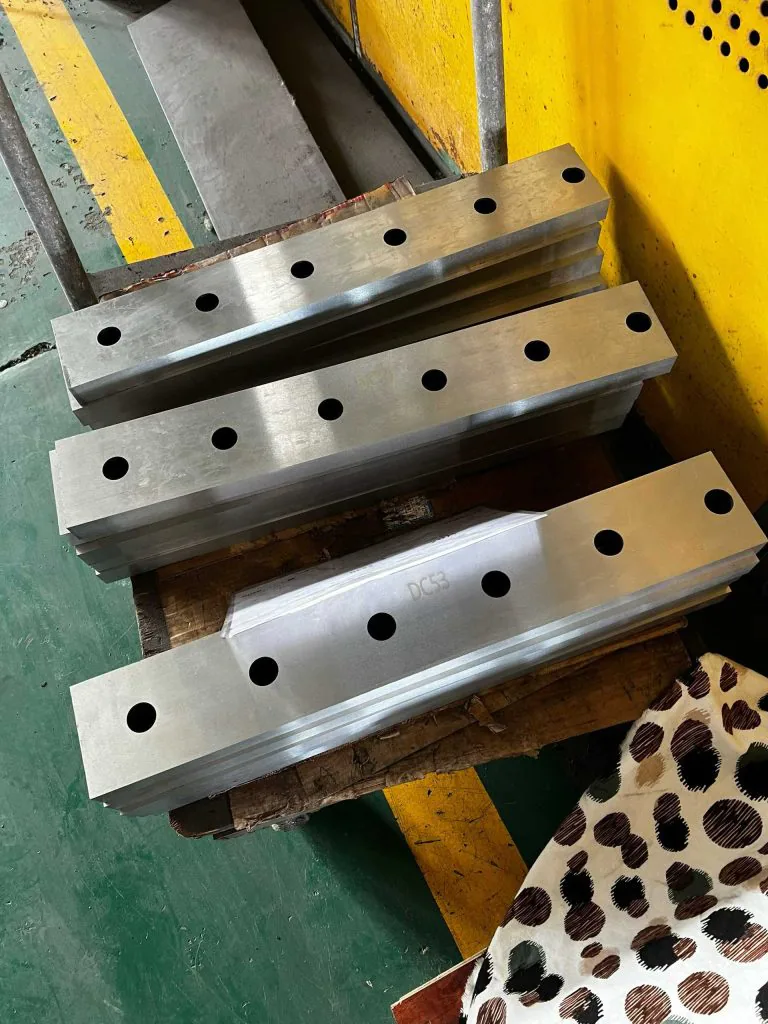
Cutting Angle (Edge/Bevel Geometry)
- Smaller edge angle (sharper): lower cutting force, less heat, but weaker edge (chips faster in abrasive feed).
- Larger edge angle (stronger): survives contaminants/fillers better, but increases force and heat.
User-impact: If you see melted edges or shiny smeared flakes, your edge angle/clearance may be too aggressive for ductile plastics or your knives are dull.
Rotor-to-Bed Clearance (Knife Gap)
- Too large → tearing, stringers, inconsistent size, high energy, noisy cutting
- Too small → knife contact risk, rapid wear, heat, potential seizure
User-impact: If amperage spikes when cutting starts, clearance and alignment should be checked before blaming the motor.
Knife Projection and Screen Interaction
Knife type also interacts with:
- screen hole size and open area
- rotor speed
- feed rate and hopper design
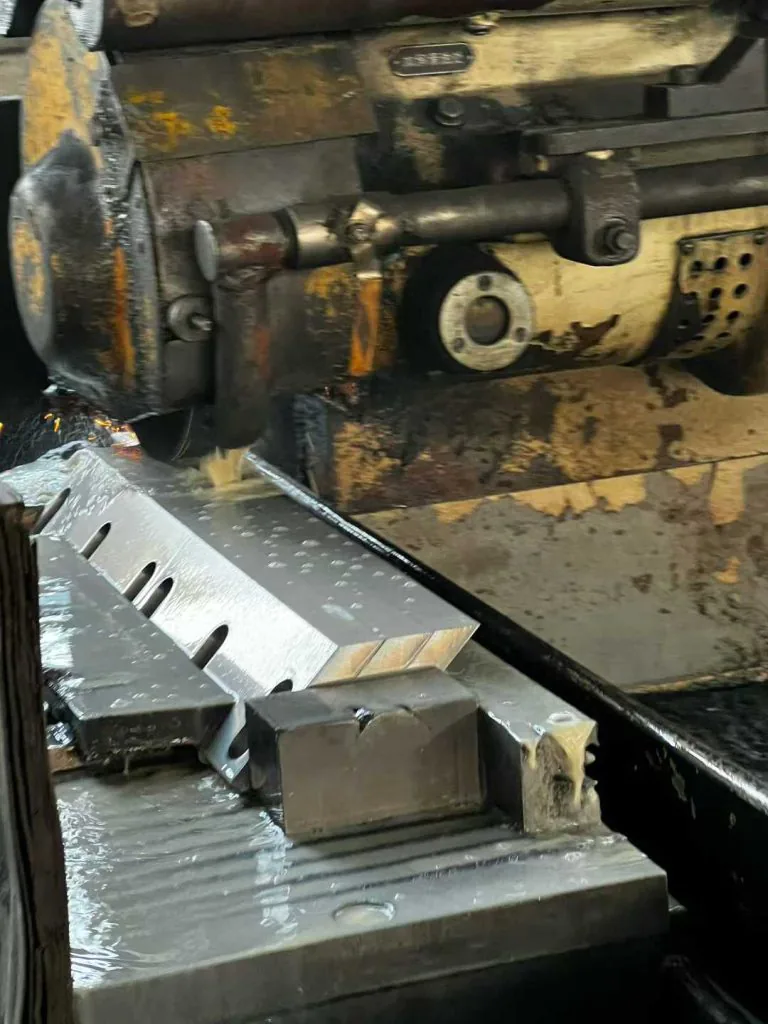
6) Blade Material Selection: Wear Life vs Chipping Risk
“Blade type” is also about steel and heat treatment because geometry must survive your feedstock.
Common Knife Steels
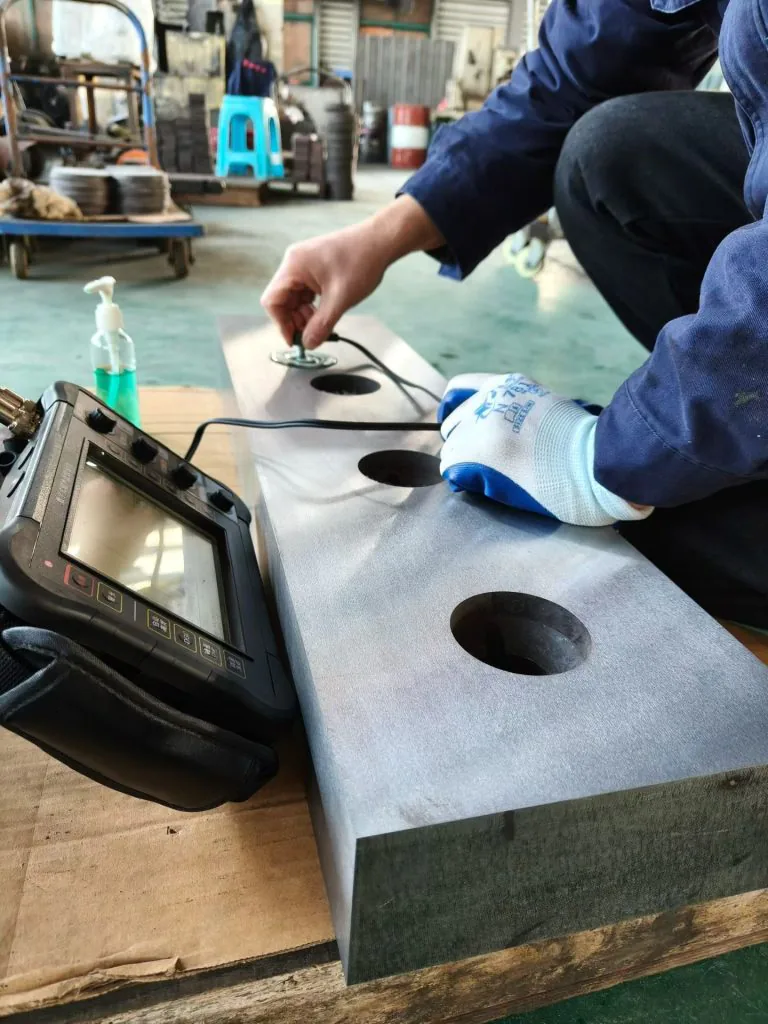
- D2 / SKD11 (high carbon, high chromium): great wear resistance; common for rigid plastics. Can chip if heavy contamination (metal, glass) is present.
- H13 / 1.2344 (hot-work tool steel): better toughness; tolerates shock and some contamination; often used for thick parts or uncertain feed.
- M2 / high-speed steel (HSS): strong hot hardness and wear; can be excellent but cost and heat-treatment quality matter.
- Powder metallurgy steels (PM grades): premium wear + toughness; justified for abrasive/fiber-filled plastics where downtime is expensive.
Coatings & Surface Treatments
- PVD coatings (e.g., TiN/TiAlN-like families) can reduce friction and wear, but coating success depends on substrate prep and operating temperature.
User-impact: If you process glass-filled or dirty post-consumer regrind, prioritize toughness + wear strategy (steel choice, edge angle, planned regrinds) over extreme sharpness.
7) Selection by Feed Form: What You Put In Matters as Much as What It’s Made Of
Think in terms of feed geometry:
- Film/sheet: tends to wrap; needs progressive slicing and anti-wrapping behavior
→ V-cut/staggered knives + appropriate rotor design + larger screen open area - Runners/sprues: consistent, rigid
→ flat knives usually best - Thick molded parts/lumps/purgings: hard to bite, heavy torque
→ claw knives or robust flat geometry + tougher steel - Bottles & hollow parts: can “bounce” and cause inconsistent cutting
→ stable shear geometry, sometimes claw helps feeding
8) Operational Targets: Decide What You’re Optimizing
Most users unknowingly optimize the wrong metric. Choose your priority:
- Maximum throughput: aggressive engagement (claw or optimized flat), higher rotor speed, larger screen holes
- Lowest dust/fines: stable shear (flat) + correct clearance + controlled feed + not-too-small screen
- Best melt control (ductile PP/PE): slicing action (V-cut), sharp but stable edge, correct clearance, possibly lower speed and better airflow
-
Lowest cost per ton: not “longest blade life,” but best balance of regrind interval + regrind allowance + uptime
FAQ (User Perspective): Common Questions That Decide the Blade Type
Q1: I’m crushing PP/PE and the flakes come out “stringy” and sometimes melt. Which blade type should I choose?
Professional answer: For ductile PP/PE, stringers usually indicate insufficient true shear (gap too large, dull knives) or too much friction/heat (wrong angle, too fine screen, excessive speed).
- Start with V-cut/staggered if you process film/sheet or soft feed.
- Use flat knives for rigid PP/PE parts if feeding is stable.
Then tune clearance, knife sharpness, and screen size—blade type alone won’t fix a mis-set gap.
Q2: We process mixed post-consumer plastics with occasional metal and sand. D2 knives chip fast—what should we do?
Professional answer: This is a toughness and contamination problem. Consider:
- Switching to H13 (tougher) or a balanced PM grade
- Increasing edge angle slightly (stronger edge)
- Installing better magnetic separation and washing upstream
- Accepting a shorter “sharpness window” but reducing catastrophic chipping
Blade type helps, but steel + upstream cleaning typically delivers the biggest improvement.
Q3: Film keeps wrapping around the rotor. Would claw knives solve it?
Professional answer: Often no. Wrapping is usually a feeding + slicing progression issue. Claw knives can increase grabbing but may worsen wrapping. Better approach:
- V-cut / chevron arrangement for progressive slicing
- Optimize rotor design, feed rate, and screen open area
- Use correct airflow/aspiration and ensure knives are sharp
If wrapping persists, review rotor speed and whether a shredder stage is needed.
Q4: Should I choose the hardest steel to get the longest life?
Professional answer: Hardness alone is not “life.” In abrasive or dirty feed, very hard steels can chip, causing downtime that outweighs wear gains. The best value usually comes from the best wear–toughness balance, matched to contamination level and your maintenance routine (planned regrinds).
Q5: We need consistent pelletizing. Which blade type gives the most uniform regrind?
Professional answer: Generally flat knives with correctly set bed knives deliver the most uniform flakes for stable feeding into an extruder—assuming feed is rigid and consistent. For film/soft feed, V-cut/staggered can still produce uniform regrind if the machine is configured correctly.
9) A Practical Decision Workflow (Use This Like a Checklist)
1) Identify feed form: film/sheet vs rigid parts vs lumps/purgings vs mixed post-consumer
2) Define target output: flake size, fines tolerance, downstream needs (extrusion/pelletizing)
3) Choose blade family:
- film/soft → V-cut/staggered
- rigid consistent → flat
- thick/bulky/awkward → claw or robust flat
4) Choose steel & heat treatment based on contamination and abrasiveness
5) Set geometry variables: edge angle, clearance, projection, rotor speed, screen open area
6) Validate with amperage + temperature + dust rate during trial runs
7) Plan maintenance: regrind schedule, spare knife sets, and alignment procedure
10) Maintenance and Setup: Where Most “Blade Problems” Actually Come From
Even perfect blade selection fails if:
- Bed knife alignment is off
- Clearance is inconsistent across the rotor width
- Knives are sharpened incorrectly (wrong bevel, poor surface finish)
- Screen is too fine, causing heat and recutting
- Feed is irregular (bridging, surging), causing torque spikes
Treat knife setup as a precision operation, not a “tighten and go.”
Conclusion
Choosing a plastic crusher blade type is a system decision: blade geometry, mounting arrangement, steel, and machine settings must match your plastic’s cutting behavior and your production goals. If you optimize for your real KPI—throughput, fines control, melt prevention, or uptime—you’ll often find the “best blade type” is the one that gives stable shear with controllable heat, not simply the sharpest or hardest option.

_画板-1-副本-3-pxeey2xejyohpkvf07tglhvew6ks2ts3pjvhagm60c.png "NICETY MACHINERY Co., LTD")