_画板-1-1.png.webp)
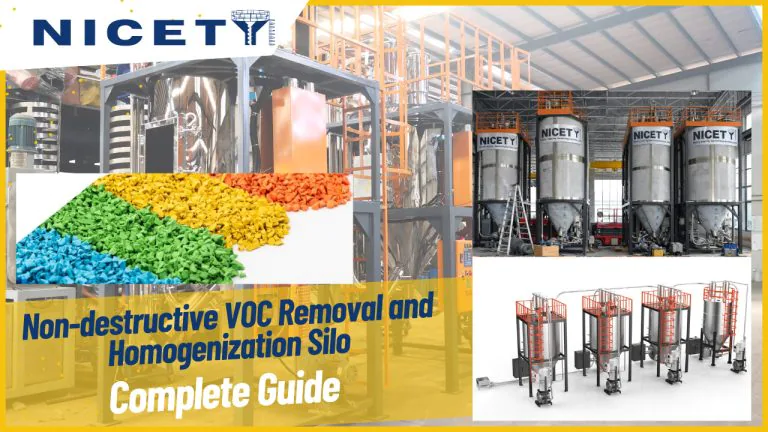
When recycled pellets carry a strong smell, I know it threatens product quality, customer trust, and even the price you can ask.
To remove odor from recycled plastic pellets, I control contamination at the source, optimize degassing during extrusion, and use a VOC Deodorizing Non-Destructive Homogenization Silo System to strip odor-causing molecules after pelletizing. This combined approach lowers VOC levels, stabilizes smell, and improves long-term storage quality.
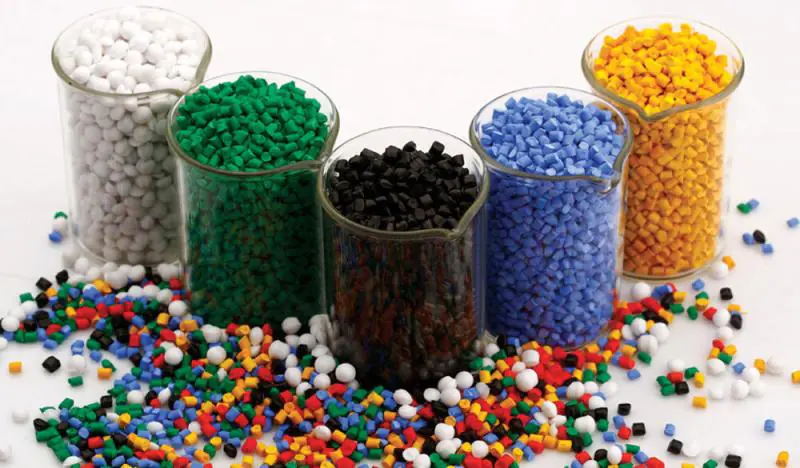
I want to walk you through every stage of odor control1 the same way I do when I help plant owners upgrade their recycling lines2. I will end by exploring the VOC deodorizing silo system, which has become one of the most powerful tools for high-value recycled pellets3.
What really causes odor in recycled plastic pellets?
Odor problems usually begin long before extrusion. Many operators think smell comes from the pelletizer, but in my experience, the main cause hides in the collection, washing, drying, and handling stages.
Bad smell comes from contamination4, degradation, and absorbed volatile molecules. Each type behaves differently, and I never rely on one single deodorizing step.
I want to break these causes into clear groups you can check in your plant.
Main sources of odor I see in recycled pellets
| Source type | Typical sign | Common materials | First countermeasure |
|---|---|---|---|
| Organic contamination | Food, oil, detergent smells | PET bottles, PE film, household PP | High-temp washing, surfactant, label removal |
| Residual monomers | Sweet or chemical smell | ABS, PS, TPU, some copolymers | Longer drying, stronger degassing5 |
| Thermal degradation | Burnt, smoky, acidic smell | PP, PE, PVC | Lower melt temp, shorter residence |
| Moisture problems | Musty smell | PET, PA, wet PE film | Proper drying and sealed storage |
| External chemicals | Fuel, pesticide, perfume | Agricultural film, chemical drums | Sorting, pre-venting, controlled rejection |
Years ago, I worked with a batch of mixed PP crates that smelled like old oil. We later learned the crates had been used to store lubricant. No extruder adjustment6 could fully remove the smell. That moment taught me that odor control must begin with feedstock knowledge, not just machine settings.
Which extrusion parameters7 have the greatest impact on odor?
When smell continues after washing, I look at the extrusion window. Good degassing5 depends on melt temperature, vacuum strength, and residence time. If even one is wrong, odor stays in the pellets.
Here is how I usually set up deodorizing conditions for PP and PE.
Typical deodorizing parameters I use in recycled PP/PE extrusion
| Parameter | Typical value | Effect on odor | Risk of incorrect setting |
|---|---|---|---|
| Melt temperature (main zone) | 190–220°C | Releases absorbed volatiles | Too high increases degradation |
| Melt temperature (vent zone) | 200–230°C | Improves vacuum stripping | Too low leaves VOCs trapped |
| Vacuum level | –0.8 to –0.95 bar | Removes VOCs and moisture | Weak vacuum almost useless |
| Screw speed | 150–400 rpm | Controls shear and residence time | Too fast traps vapor, too slow overheats |
| Throughput load | 70–85% of rated capacity | Maintains open melt surface | Overload reduces degassing efficiency |
I once reduced odor in a PE film line by only improving vacuum from –0.75 to –0.92 bar. The customer told me the smell changed from “garbage-like” to almost neutral. That experience reinforced how powerful proper degassing can be.
What auxiliary equipment helps remove odor most effectively?
Many owners want a simple solution. Some add deodorant masterbatch8. Some try a new filter pack. These help, but they do not solve deeper VOC problems.
Advanced deodorizing needs better vapor removal9, better melt cleaning, and post-pellet treatment. The last part often makes the biggest difference for odor-sensitive customers.
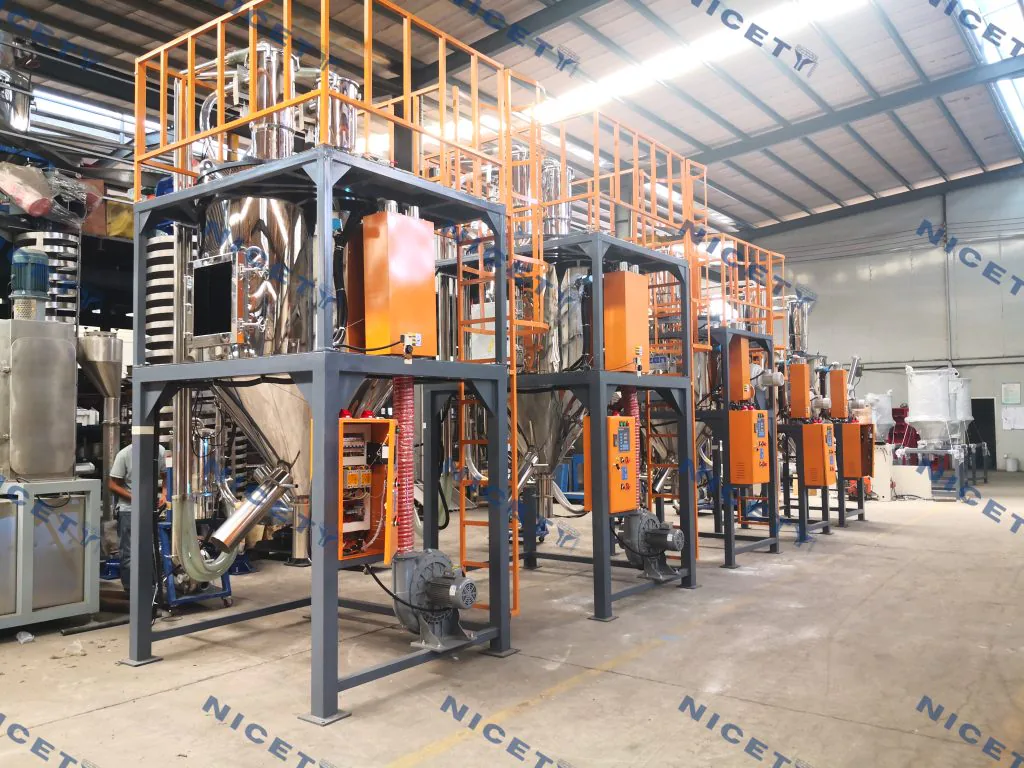
Below is how I compare auxiliary options.
Effective deodorizing auxiliaries and their application
| Equipment | Function | Strength | Best for |
|---|---|---|---|
| Strong vacuum system | Pulls VOCs out during melt processing | Big VOC reduction | PP/PE film, ABS, PS |
| Multiple vent zones | Extra degassing stages | Helps with very dirty feedstock | Mixed PCR materials |
| Melt filtration | Removes char and burnt particles | Reduces burnt smell | All materials |
| Hot-air/nitrogen deodorizing silo | Post-pellet VOC removal | Excellent stability and low odor | High-value recycled pellets |
| Deodorant masterbatch | Absorbs remaining VOCs | Fine-tuning only | Markets with tight smell tolerance |
Now I want to focus on the system that has become essential for high-grade recycled pellets.
Why is the VOC Deodorizing Non-Destructive Homogenization Silo System so important?
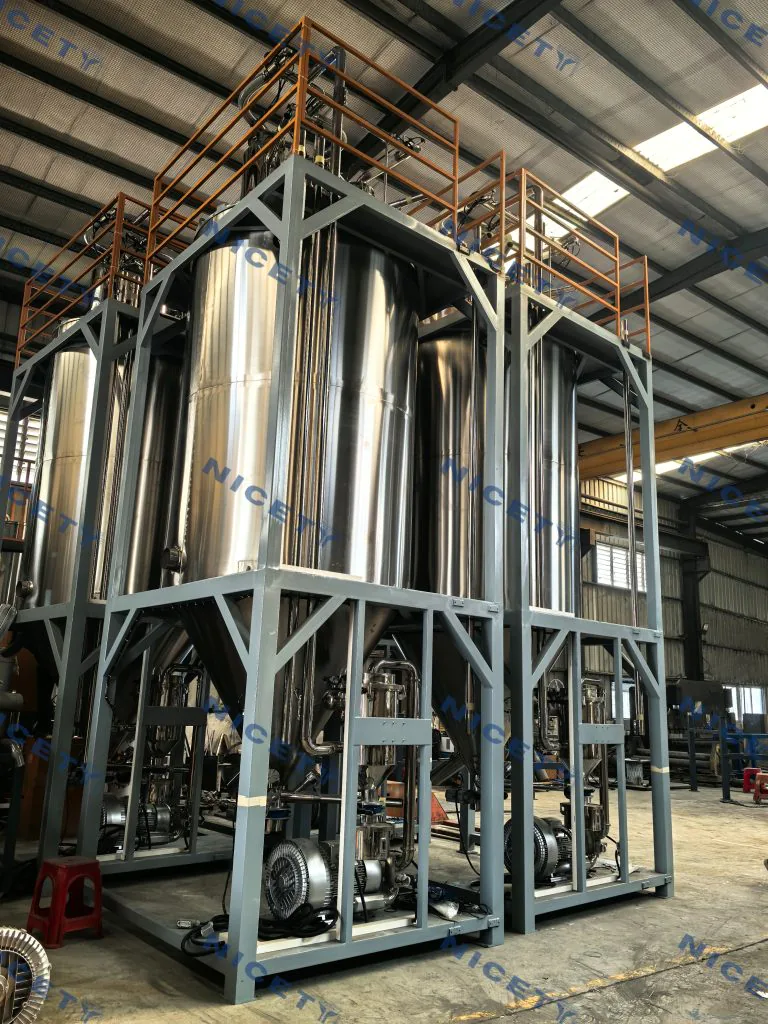
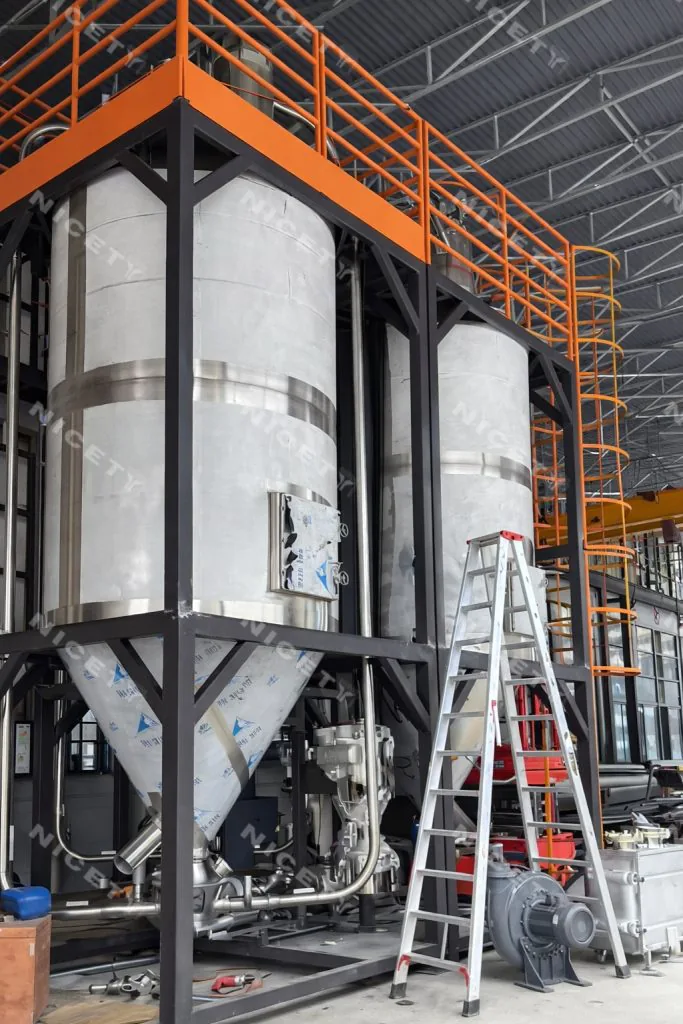
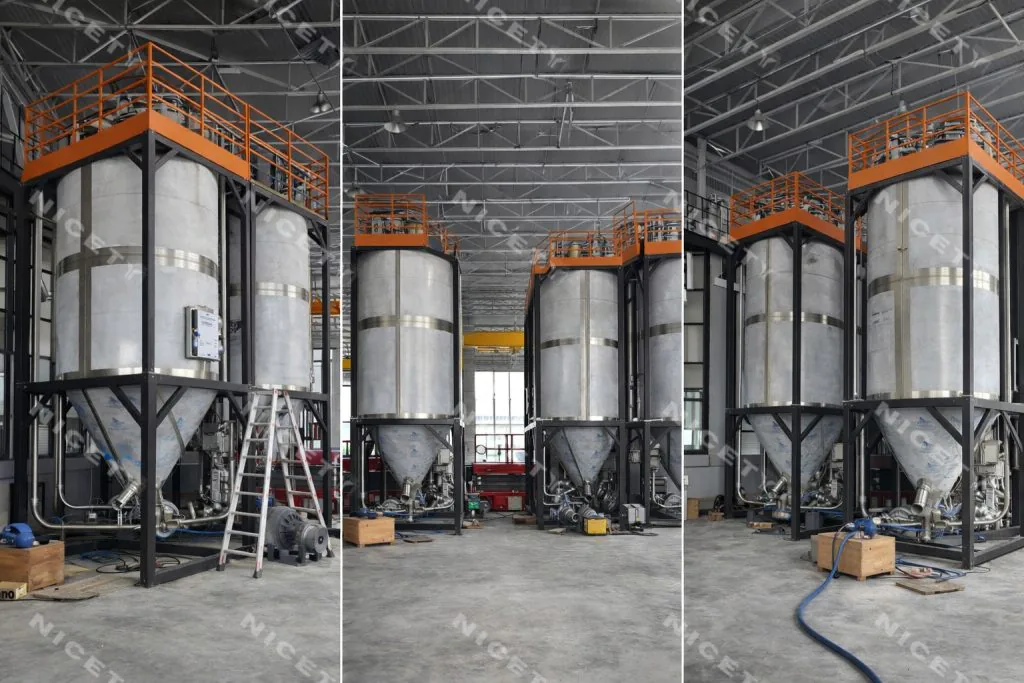
When extrusion degassing is still not enough, I add a VOC Deodorizing Non-Destructive Homogenization Silo System10. This system removes odor molecules without reheating or degrading the pellets, and it stabilizes the entire batch.
This silo system works by sending controlled hot air or nitrogen through a tall, slow-moving column of pellets. VOCs gradually diffuse out of the polymer. At the same time, homogenization11 ensures every kilogram of pellets has the same odor level.
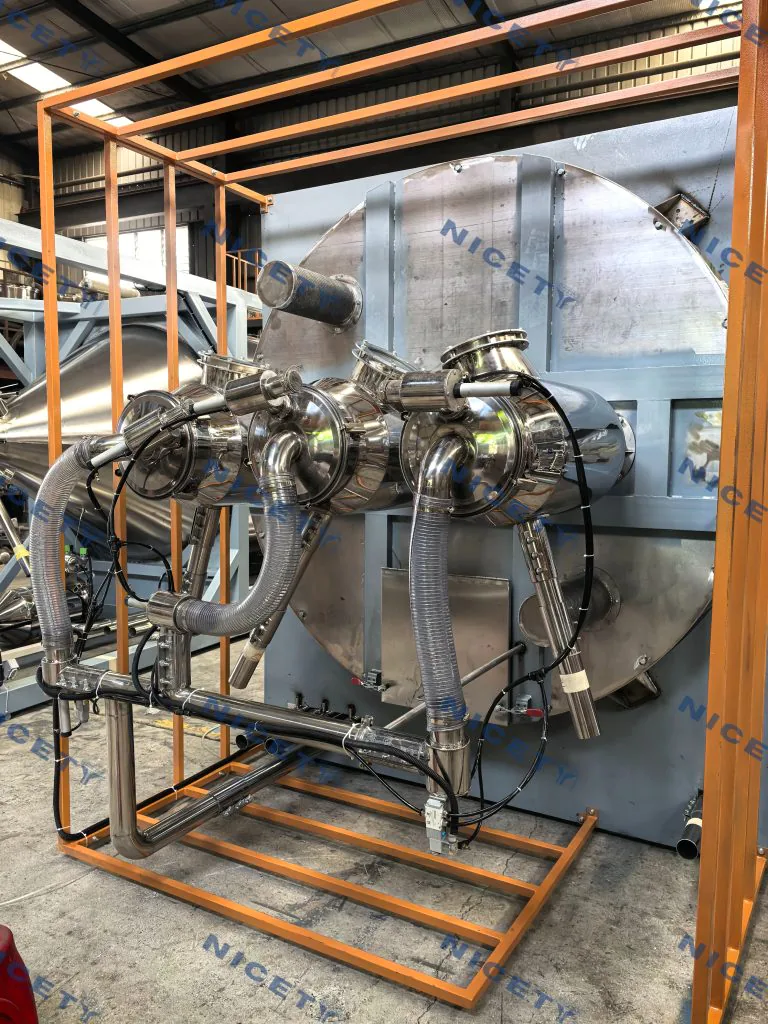
The system solves three problems at once: odor, VOC safety, and batch inconsistency.
How the VOC deodorizing silo works and why it matters
| Working Principle | Description | Benefit to pellet quality12 |
|---|---|---|
| Hot-air or nitrogen purging | Warm, dry air moves through pellets | Diffuses VOCs out without melting the polymer |
| Slow pellet descent | Pellets move downward by gravity | Ensures long contact time and stable treatment |
| Non-destructive process | No melting or mechanical stress | No loss of MFI, color, or strength |
| Homogenization mixing | Internal flow plates balance pellet distribution | Uniform odor across entire production lot |
| VOC collection and filtration | Exhaust passes through activated carbon filters | Captures VOCs and protects the environment |
In one plant I supported in Saudi Arabia, the recycled PP pellets were acceptable in strength but carried a chemical odor. The owner needed indoor-grade odor performance13. We installed a 12-hour VOC deodorizing silo and ran hot dry air at 85°C. The VOC reading dropped by more than 70%, and the odor score reduced from level 4 to level 1. The customer accepted the material immediately.
Why the VOC deodorizing silo is now a key system in high-quality recycling
| Advantage | Explanation |
|---|---|
| Strong odor reduction | Removes VOCs that extrusion alone cannot release |
| Protects mechanical properties | No melting, no chain breakage |
| Improves batch consistency | Homogenization removes odor variation between batches |
| Long-term odor stability | Pellets resist “return odor” during storage |
| Fits existing production lines | Easy to retrofit after pelletizer |
For me, this silo system is the missing link between basic recycling and high-end recycled resin production. It lets plants sell pellets into markets like household goods, automotive interior parts, and consumer packaging, where odor is not just a preference but a requirement.
How do I control and verify odor performance after deodorizing?
I run simple but effective tests to confirm deodorizing performance. These tests help you catch problems before customers do.
Here is what I normally set up.
Practical odor control methods
| Method | Purpose | Frequency |
|---|---|---|
| Smell panel test | Human perception baseline | Each batch |
| Sealed bag heat test | Simulates customer drying or molding process | Daily |
| VOC meter reading | Measures VOC drop after silo treatment | Daily |
| Customer simulation melt | Small melt test at actual processing temp | Weekly |
| Odor tracking sheet | Links smell to process settings | Continuous |
When odor control becomes a daily routine, complaint rates drop and customer confidence rises. I have seen this pattern in every plant that takes odor seriously.
Conclusion
When I control odor from raw material to extrusion and finish with a VOC deodorizing silo system, recycled pellets reach higher markets with stable quality, low VOCs, and almost no smell.
-
Explore various strategies for odor control to enhance product quality and customer satisfaction. ↩
-
Upgrading recycling lines can enhance efficiency and product quality; discover the best practices. ↩
-
Understanding the characteristics of high-value pellets can guide production strategies. ↩
-
Identifying contamination sources is crucial for effective odor management in recycled materials. ↩
-
Discover how proper degassing can significantly reduce odors in recycled plastic pellets. ↩ ↩
-
Learn how making the right adjustments can significantly reduce odors in recycled materials. ↩
-
Understanding these parameters can help optimize the production process for better quality. ↩
-
Explore how deodorant masterbatches can fine-tune odor control in recycled plastics. ↩
-
Effective vapor removal is key to reducing odors; learn about the best practices. ↩
-
Learn about this innovative system that improves the quality of recycled pellets without degrading them. ↩
-
Homogenization ensures consistent quality; understanding its role can enhance production. ↩
-
Understanding these factors can help improve the overall quality of recycled products. ↩
-
Verifying odor performance is essential for maintaining quality; explore effective methods. ↩

_画板-1-副本-3-pxeey2xejyohpkvf07tglhvew6ks2ts3pjvhagm60c.png.webp "NICETY MACHINERY Co., LTD")