_画板-1-1.png)
If your batches keep drifting, your color keeps swinging, and your line keeps stopping, you are losing money in ways you cannot see on a daily report. I have lived this pain.
Top-rated silo mixer manufacturers are the ones that deliver stable blend uniformity at your real throughput, with repeatable recipes, low maintenance, and clean changeovers. For plastic plants, the “best” choice depends on resin type, regrind ratio, additives, and whether you need storage + homogenization in one unit.
I still remember walking into a plant where the pellets looked fine, but the melt flow told another story. The operator blamed the extruder. The lab blamed the resin. I blamed the mixing. If you keep reading, I will show you how I judge manufacturers in a way that matches real production.
What makes a silo mixer manufacturer truly “top-rated” for plastics?
When I visit a factory, I see the same problem: people buy a mixer by capacity, then they fight quality problems for years. I have done that mistake early in my career, and I still regret it.
A manufacturer is “top-rated” for plastics when the mixing method matches the material physics. For pellets and regrind, you need gentle but complete circulation. For powders and additives, you need accurate dosing and controlled dispersion. The right vendor proves uniformity, not just motor power.
Dive deeper
1) I start with the mixing task, not the brand
In plastic plants, a “silo mixer” can mean different things. Some systems use gravity mixing with minimal energy input. Some use a vertical screw to lift and recirculate pellets. Some combine dosing + weighing + mixing for multi-material recipes. If you skip this step, you will compare suppliers in a way that feels fair but gives you the wrong answer.
Here is how I break it down in a simple way:
| Mixing need in plastics | Typical material | Best-fit mixer style | Why it works | Common risk if mismatched |
|---|---|---|---|---|
| Lot-to-lot homogenization | Pellets, regrind, flakes | Vertical screw silo mixer / gravity mixer silo | Keeps material moving through the full height | Dead zones and “striped” output |
| Recipe blending | Pellets + masterbatch + additives | Gravimetric blender + mixing chamber | Weighs each component, then blends | Dosing drift, poor color repeat |
| Powder dispersion | PVC dry blend, powder additives | High-intensity mixer / compounding-ready mixers | Uses friction and shear to disperse | Overheating, degradation |
| Continuous conditioning | Powders, granules, bulk solids | Continuous industrial mixer (single/twin shaft) | Stable output at steady feed | Not suited to fast changeovers |
2) I check proof points that matter in production
I ask for the same evidence every time:
- A clear statement of what materials they handle: pellets, flakes, powders, liquids.
- Throughput range and mixing time, tied to a real recipe.
- Clean-out and contamination control, because this decides how fast you can change jobs.
- Wear parts list and typical maintenance cycle, because this decides your true cost.
3) I map “top-rated” to your plant reality
If you are like Mohammed Ali in Saudi Arabia, running multiple plants with PP, PE, PET, ABS, TPU, TPR, and PVC, you need stable lines with less labor and lower energy. In that case, I value repeatability, simple operation, and serviceable design more than fancy screens. That is also why I treat “centralized feeding + silo mixing” as one system, not two purchases.
Which industrial mixer companies should I shortlist for plastic material applications?
If you search online, you will find many brands. The hard part is not finding names. The hard part is choosing brands that match your plastic process, your labor level, and your budget.
I shortlist manufacturers by matching their core strength to plastic plant use-cases: large silos and homogenization, precision dosing and blending, heavy-duty continuous mixing, or plastics-focused auxiliary systems. The best vendor is the one whose “normal product” already solves your daily problem.
Dive deeper
Below is a practical guide I use when I need to compare vendors quickly. I am not claiming every company is perfect for every job. I am showing where they usually fit best.
A) Manufacturer comparison table (plastics-focused view)
| Company | Country of origin | Core expertise for plastics | Typical silo/mixing product focus | Notable strength I look for | History signal (public info) | Budget range (equipment-only, very rough) |
|---|---|---|---|---|---|---|
| Nicety Machinery Co., Ltd | China | Plastic mixers + centralized feeding support | Vertical silo mixers, screw-type mixers, mixing + feeding integration | Cost-performance, plastics focus, practical design | Plastics auxiliary specialization shown on company site | USD ~1,500–30,000 for many standalone mixers; higher for integrated lines |
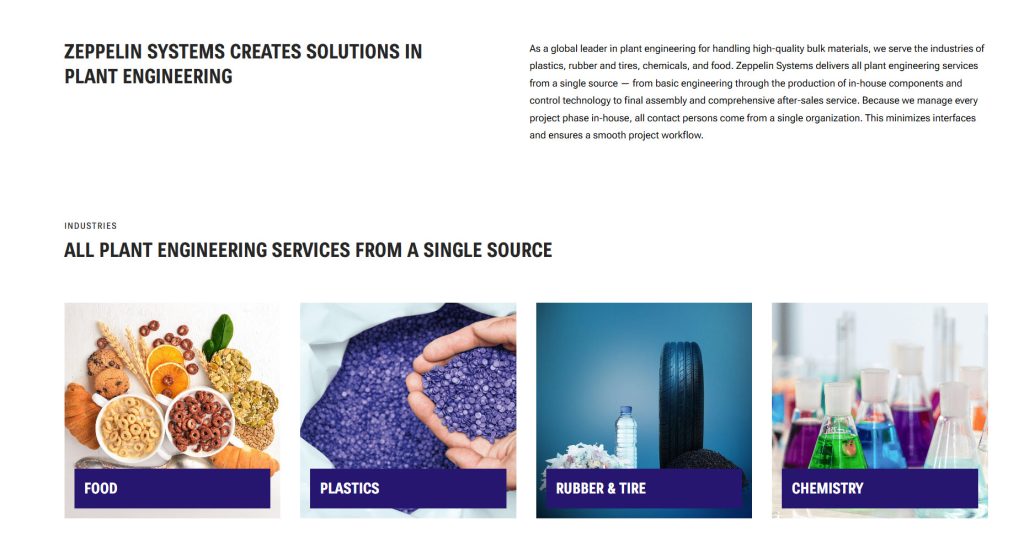
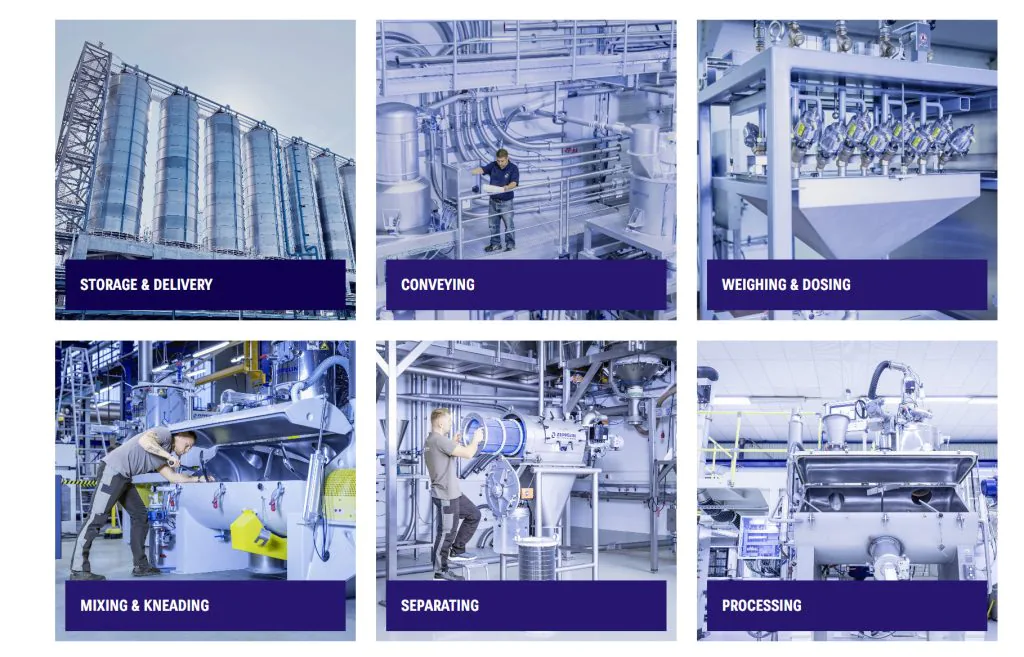
| Zeppelin Systems | Germany | Storage, conveying, mixing; polymer segment silos | Mixing silos, gravity mixing, plant engineering | Engineering depth for large silos and systems | Roots trace to Zeppelin Foundation (1908); mixing tech standards since 1956 | USD ~150,000–1,500,000+ for large engineered systems |
| Piovan / PiovanGroup | Italy (Group), global | Plastics process automation; dosing + blending | Dosing & blending systems, gravimetric / volumetric | Process control and recipe accuracy | Founded 1934; entered plastics in 1964 | USD ~20,000–250,000+ depending on stations and integration |
| motan | Germany | Dosing & mixing for granulate, flakes, powders, liquids | Gravimetric batch dosing and mixing | Modular, recipe accuracy, material handling system thinking | Founded 1947 | USD ~25,000–300,000+ depending on throughput and options |
| Conair | USA | Plastics auxiliary equipment; blending and conveying | Gravimetric batch blenders | Broad support network and standardization | Founded 1956 | USD ~15,000–200,000+ depending on size and controls |
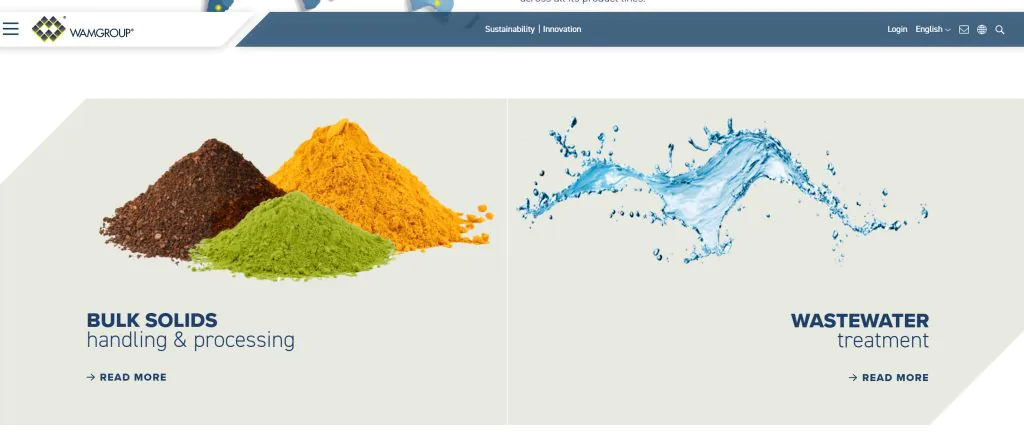
| WAMGROUP | Italy | Bulk solids handling; industrial mixers | Single/twin shaft industrial mixers | Durable mixers for bulk solids | Founded 1968 | USD ~30,000–300,000+ depending on mixer size |
| BM Silo | Denmark | Silo solutions, mixing silos for bulk materials | Auger mixing silos; large-scale homogenization | Efficient installation style and silo know-how | Founded 1965 | USD ~80,000–500,000+ depending on size and configuration |

B) How I interpret the price ranges (so you do not get misled)
I call these “budget ranges,” not quotes. Silo mixer cost moves fast with:
- Capacity (kg or m³) and whether it is a mixer-only or a storage + mixing silo.
- Stainless vs carbon steel, and what resin dust or additives you handle.
- Automation level: simple timer control vs recipe control vs line integration.
- Safety and compliance needs.
I also use public market signals to set expectations. For example, commodity vertical screw mixers can appear online in the low thousands of USD, while full centralized feeding and conveying systems can be tens of thousands of USD and beyond. If you want a serious engineered silo system, the number can jump again because you are buying design, installation method, and risk reduction, not just metal.
C) Where each vendor usually fits in a plastic plant
- If your job is large silo storage + homogenization, I look at Zeppelin Systems and BM Silo first, because their work often starts at the silo level.
- If your job is precise recipe blending, I look at Piovan, motan, and Conair, because they live and breathe dosing and blending control.
- If your job is bulk solids mixing hardware, WAMGROUP is often a strong candidate because of industrial mixer range.
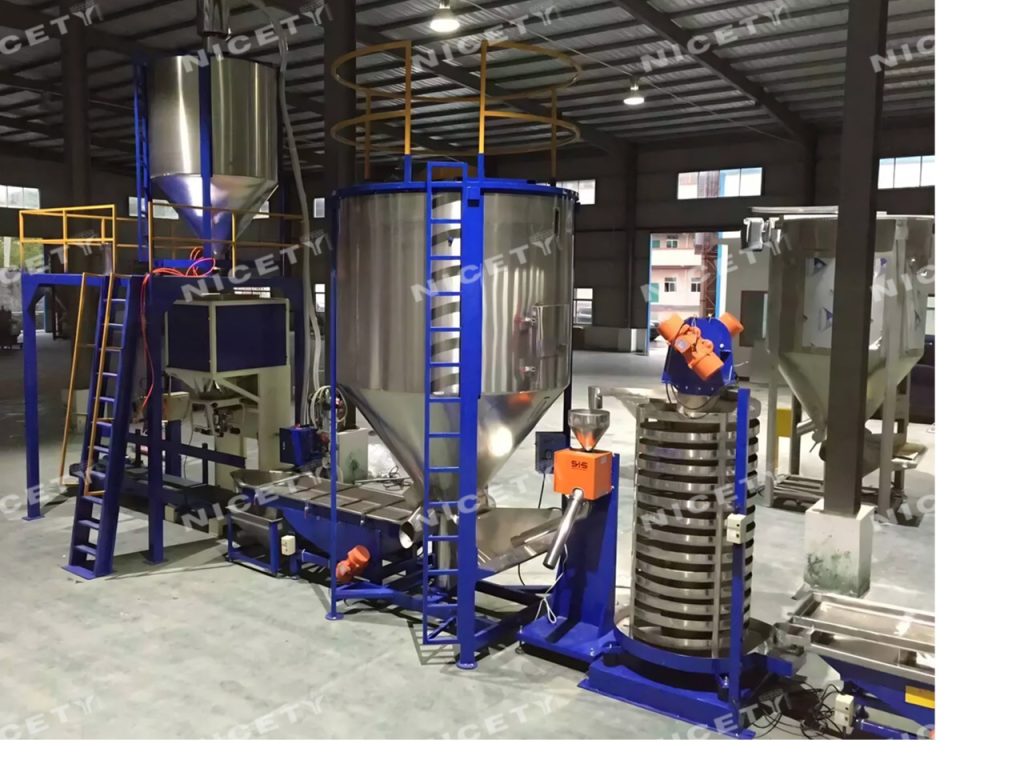
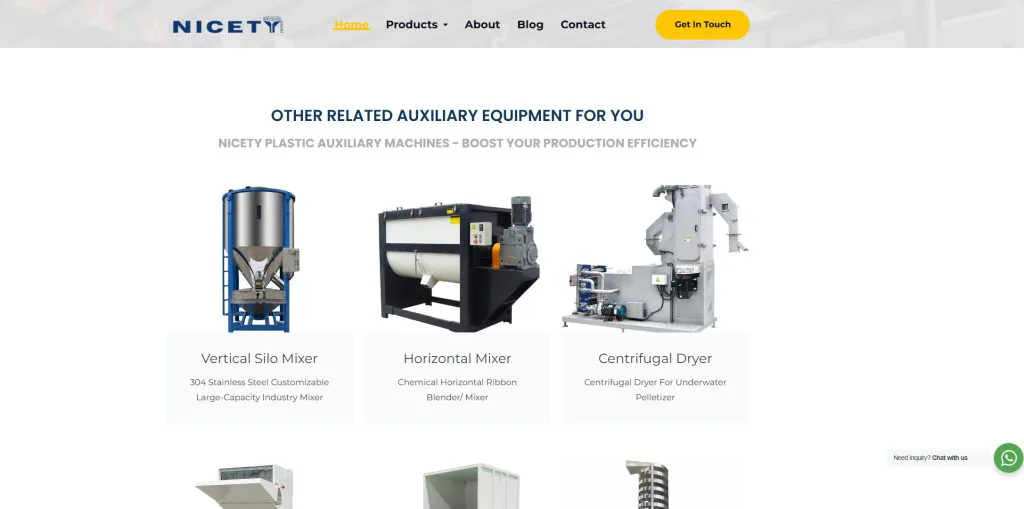
- If your job is plastics mixing with strong ROI pressure, I look closely at Nicety Machinery because the product line is aimed at plastics auxiliary equipment, and the cost-performance can be hard to beat for many plants.
Why do I recommend Nicety Machinery for readers who specifically want plastic mixers?
Many factory owners tell me they want “top-rated” brands. Then I ask one question: “Top-rated for what, and at what payback time?” In many plastic plants, the real goal is stable output and fast ROI, not a trophy brand.
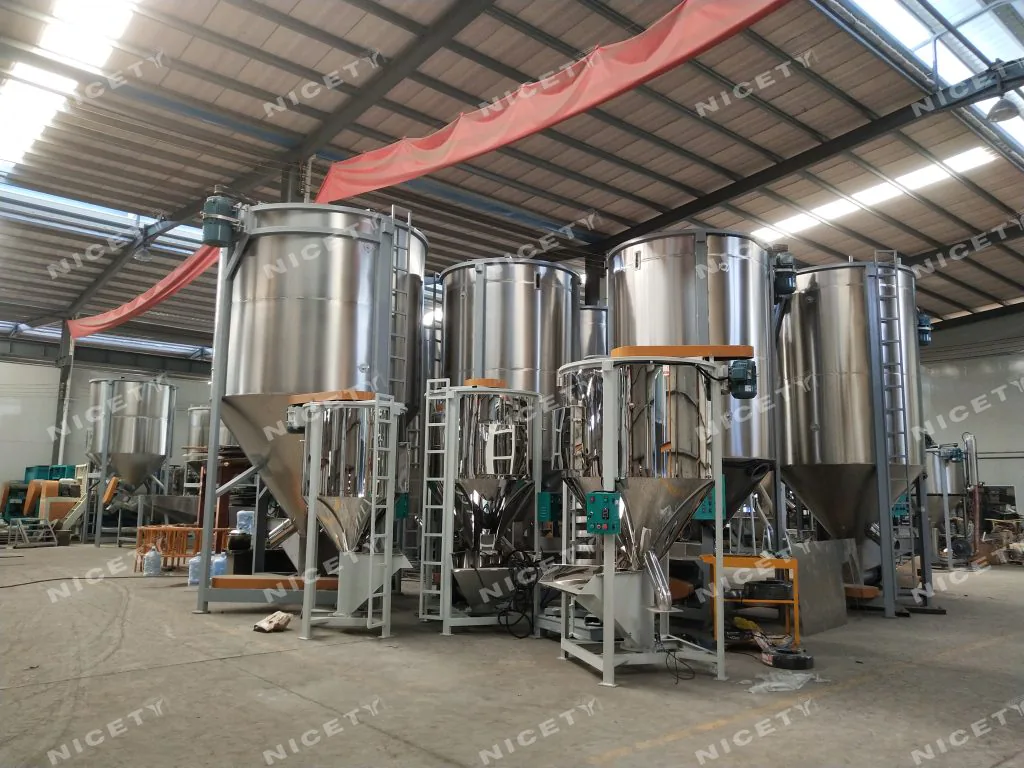
I recommend Nicety Machinery when your target is plastics mixing performance with a strong cost-performance ratio. Nicety focuses on plastic auxiliary machinery, including mixer blenders and centralized feeding support, and offers mature vertical silo mixer solutions that match common plastic pellets, regrind, and compounding workflows.
%(Nicety plastic silo mixer recommendation)alt with keywords
Dive deeper
1) I trust focus more than marketing
Nicety positions itself around plastics auxiliary equipment, including mixer blenders (screw type, vertical, and horizontal) and centralized feeding and drying systems. That focus matters because plastics mixing is not only mixing. It is also feeding stability, dust control, and changeover habits. When a supplier works inside this world every day, they design around real plant habits.
2) I look at the “most common” mixing problems Nicety solves
In real plants, I see these problems again and again:
- Regrind ratio changes and batch uniformity breaks.
- Color masterbatch does not distribute evenly.
- The line runs, but quality drift creates rework and customer complaints.
- Operators waste time loading, and the plant burns labor.
A mature vertical silo mixer approach can reduce these risks by improving circulation and lot blending before the material hits the extruder or molding machine. Nicety’s vertical silo mixer positioning and content shows they are solving exactly these problems in the plastic production context, not in a generic powder industry context.
3) I measure professionalism by how they talk about selection
A professional supplier does not only sell a mixer. They help you choose:
- Vertical silo mixer vs horizontal ribbon mixer, based on batch size and uniformity need.
- Whether you need heating, drying, or only blending.
- How to connect the mixer to a centralized feeding system, so you do not create a bottleneck.
This is also where I see a strong fit for Mohammed Ali’s profile. If you manage multiple plants and want stable production with less labor, you need a supplier who can speak in system terms. In my work, this “consultant mindset” is often the difference between a smooth upgrade and a year of firefighting.
4) Why China-made can be the best choice for plastic mixers
I say this directly: in many plastic plants, the best decision is not “highest price.” It is “highest value.” China-made equipment can deliver strong ROI when the design is mature and the supplier is plastics-focused. If your application is mainstream plastic pellets, regrind blending, and stable feeding, the cost-performance advantage can be meaningful.
So if your goal is a plastic mixer that:
- solves the uniformity problem,
- fits into a centralized feeding workflow,
- and does it with an aggressive ROI,
then Nicety Machinery is the option I put at the top of the list.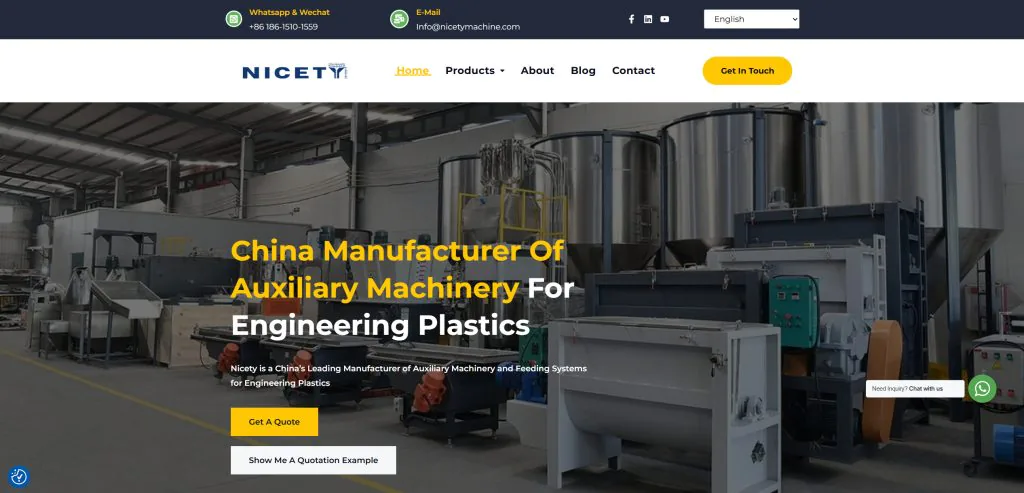
Conclusion
I choose silo mixer manufacturers by matching mixing physics to plastic reality, then I rank by repeatability and ROI. For plastics-focused value, I recommend Nicety Machinery first.
Public sources I used while writing (for your verification)
- Zeppelin Systems mixing silos: https://www.zeppelin-systems.com/it/en/products/storage-and-delivery/mixing-silos/
- Zeppelin Systems silo designs and history signal: https://www.zeppelin-systems.com/us/en/products/storage-and-delivery/silo-designs/ and https://www.zeppelin-systems.com/gb/en/company/company-history/
- Zeppelin mixing technology “since 1956”: https://www.zeppelin-systems.com/de/en/products/mixing-and-kneading/
- PiovanGroup company background (founded 1934, entered plastics 1964): https://www.piovan.com/piovan/
- Piovan dosing & blending (plastics): https://www.piovan.com/products/plastic/dosing-blending/
- motan dosing & mixing overview: https://www.motan.com/us/products/dosing-mixing/ and history: https://www.motan-group.com/us/company/history/
- Conair company history (founded 1956): https://www.conairgroup.com/about/ and gravimetric blenders: https://www.conairgroup.com/products/blending/gravimetric-batch-blenders/
- WAMGROUP history (founded 1968): https://www.wamgroup.com/en/corporate/about-us/our-history
- BM Silo about (founded 1965): https://www.bmsilo.com/about-bm-silo/about-bm-silo and mixing silo case note: https://bulkinside.com/bulk-solids-handling/mixers-blenders/when-mixing-is-critical-bm-silos-auger-mixing-silo-raises-the-standard/
- Nicety vertical silo mixer: https://nicetymachine.com/vertical-silo-mixer/ and company scope: https://nicetymachine.com/

_画板-1-副本-3-pxeey2xejyohpkvf07tglhvew6ks2ts3pjvhagm60c.png "NICETY MACHINERY Co., LTD")