_画板-1-1.png)
By Nicety Machine | April 7, 2026

Photo: Unsplash
What Changed
President Trump’s April 2 proclamation revised Section 232 tariffs covering steel, aluminum, copper, and derivative products, introducing significant structural changes for industrial importers. The most consequential shift is a move to full-value tariff treatment for derivative products — meaning tariffs are now calculated on a product’s total value rather than only its metal content. Two new rate tiers apply immediately: a 15% tariff on specific metal-intensive industrial and electrical grid equipment, and a 10% levy on imported goods made entirely of steel, aluminum, or copper of U.S. origin. Products containing 15% or less of these metals are now exempt from Section 232.
Direct Impact on Plastics Machinery
Plastics machinery falls squarely within the scope of these revisions. Equipment classified under Harmonized Tariff Schedule (HTS) lines 8477 (machinery for working rubber or plastics) and 8480 (molds for injection or compression molding) are directly affected. The shift to full-value treatment dramatically increases effective duty costs on imported auxiliary and processing equipment — a significant burden for U.S. processors who source machines from Germany, Austria, Italy, Japan, and Canada, the five countries with which the U.S. carries its largest plastics machinery trade deficits.
The broader tariff environment was already causing damage. A KPMG survey released in late March found that 68% of U.S. manufacturers are delaying capital investment — including equipment, facilities, and technology upgrades — due to tariff-related uncertainty. Among plastics processors specifically, 22% said they planned to spend less on equipment in 2026 because of U.S. trade policy.
The Annex III Partial Relief
The April 2 proclamation includes one notable concession for the plastics sector: Annex III provides temporary relief for certain plastics machinery, parts, and molds, covering specified HTS 8477 and 8480 lines. The Plastics Industry Association (PLASTICS) confirmed this in a statement, urging members to review their imported product classifications to confirm Annex III inclusion. For items outside Annex III, companies must assess whether the 25% or 50% full-value tariff categories apply.
The relief is meaningful but narrow. Not all machinery sub-categories are covered, and PLASTICS noted it is continuing to review the annexes and awaiting further Customs implementation guidance.
Equipment Purchasing Freezes
The tariff revision compounds an already-paralyzed equipment market. Industry consultant Laurie Harbour of Wipfli Advisory LLC summed up the prevailing sentiment: the uncertainty around what tariff rates will be in coming months is causing companies to delay purchases of equipment and machinery outright. One machinery OEM executive put it bluntly — buyers are asking what happens if they purchase a molding machine from Germany today and the tariff changes again in three months.
Flexible acquisition models are filling part of the gap. Ben Gudeman of Mitsubishi HC Capital America noted that leasing, Equipment-as-a-Service, and pay-as-you-go options are gaining traction as manufacturers try to preserve capital while still maintaining production capacity.
Despite the headwinds, LSMtron’s U.S. and Canada President Paul Caprio offered a grounded perspective: the injection molding machinery market absorbed previous tariff shocks and still shipped roughly $1 billion in equipment in 2025. He expects 2026 to stabilize, even with 15% tariffs baked into quotes.
What Manufacturers Should Do Now
The Plastics Industry Association has outlined four immediate action items for plastics processors and machinery buyers:
- Review HTS classifications for all imported machinery under 8477, 8480, and related categories to confirm Annex III inclusion.
- Assess tariff exposure for products outside Annex III under the 25% or 50% full-value tiers.
- Evaluate U.S.-origin metal content for eligibility under the 10% reduced-rate treatment.
- Monitor Customs implementation guidance, which remains pending as of early April 2026.
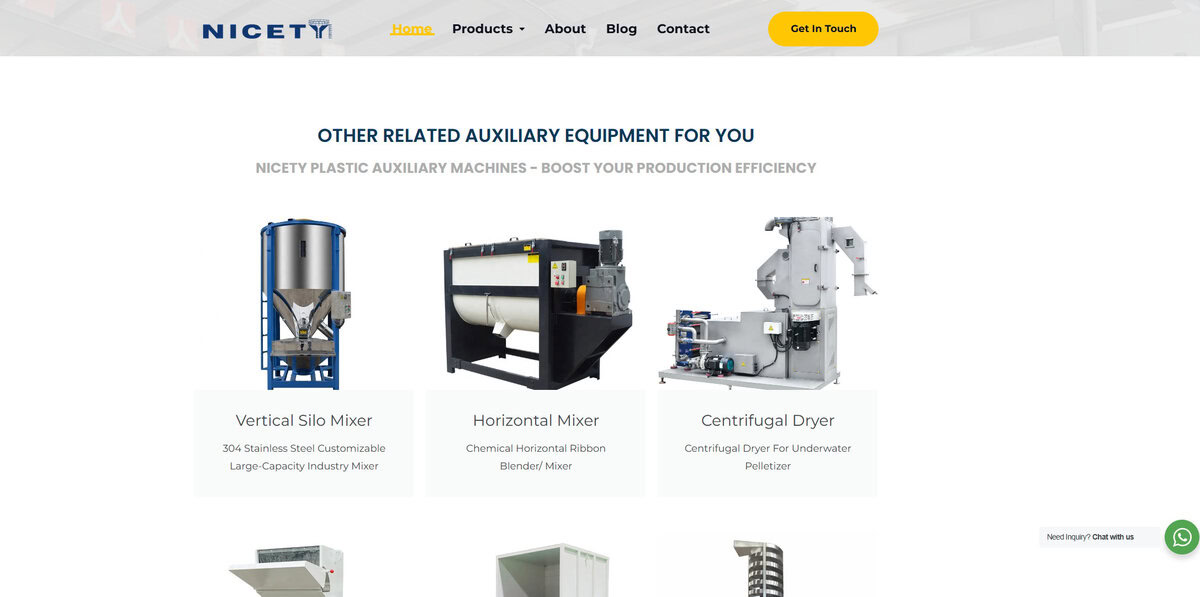
Auxiliary machinery buyers — conveyors, dryers, granulators, chillers, loaders, and blenders — should pay particular attention, as these categories can carry significant steel and aluminum content and may fall outside Annex III protection.
Sources
- Trump Revises Tariffs Impacting Plastics Industry Imports — PlasticsToday
- KPMG Survey: Tariffs Drive Worries for U.S. Businesses — Plastics Machinery Manufacturing
- Tariffs Reshape Manufacturing Equipment Finance — PlasticsToday
- Plastics Industry Faces Cost and Policy Pressures — PlasticsToday
- Plastics Firms Adapt to 15% Tariffs From Trump — PlasticsToday
- Reciprocal Tariffs 2025: Where U.S. Plastics Imports Stand — Plastics Industry Association

_画板-1-副本-3-pxeey2xejyohpkvf07tglhvew6ks2ts3pjvhagm60c.png "NICETY MACHINERY Co., LTD")