In today’s fast-evolving plastics industry, achieving optimal material blending is the key to ensuring product quality, operational efficiency, and competitive advantage. Welcome to "Unlocking Efficiency: The Ultimate Guide to Vertical Silo Mixers for Plastic Material Blending", a specialized resource focused on the transformative power of vertical silo mixer machines within the realms of plastic raw materials, plastic products, and engineering plastics.
These advanced storage and mixing systems are designed to streamline processes, enhance material homogeneity, and support continuous production demands. In this guide, you’ll explore essential practices, technologies, and solutions tailored specifically to the plastic industry, helping you achieve consistent, high-quality blends while improving your operational workflow.
Understanding Material Blending in the Plastics Industry
Blending in plastic manufacturing is critical for ensuring that compounds and additives are uniformly distributed to achieve desired mechanical, thermal, or aesthetic properties. Whether working with virgin resins, recycled plastic flakes, or specialized additives, consistent blending affects the final product’s strength, flexibility, color uniformity, and durability.
In engineering plastics1, where high performance and tight tolerances are required, any deviation in blend uniformity can lead to product failure or non-compliance. Effective blending ensures each batch meets stringent industry standards, reducing waste and ensuring regulatory consistency.
The Role of Vertical Silo Mixers in Plastic Material Processing
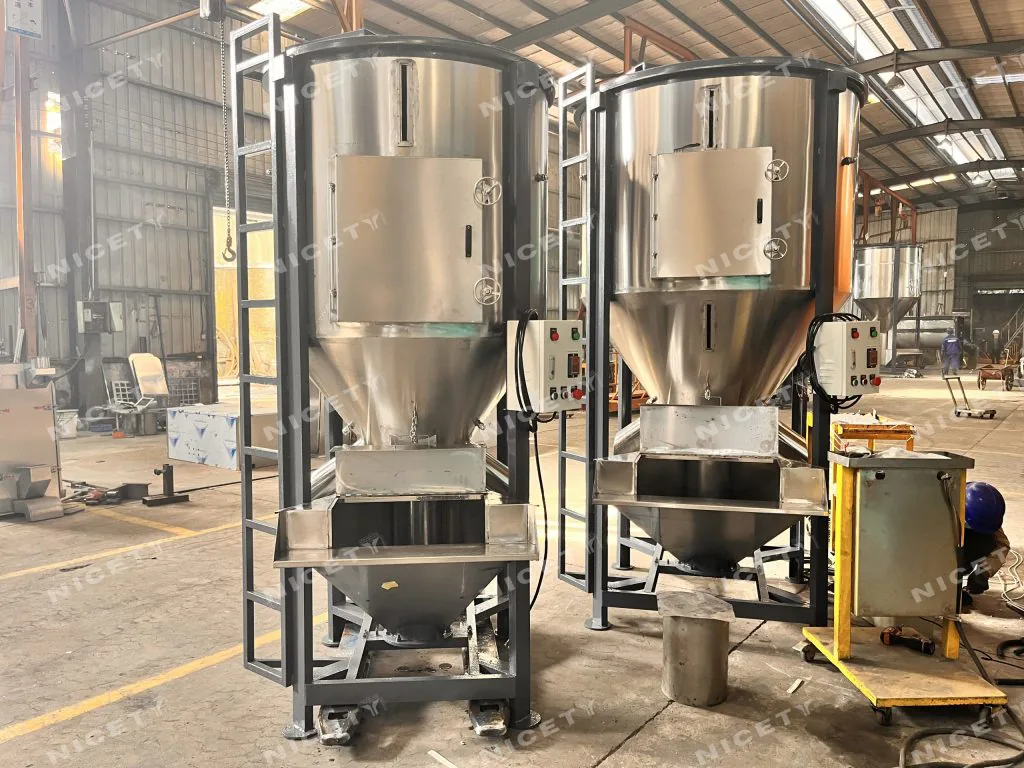
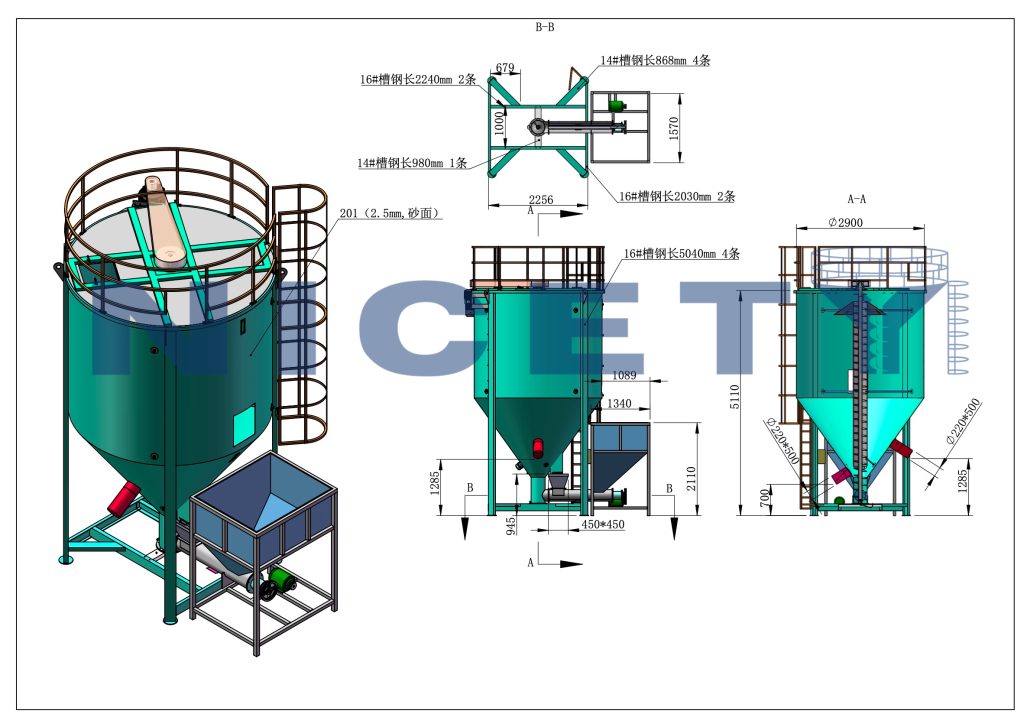
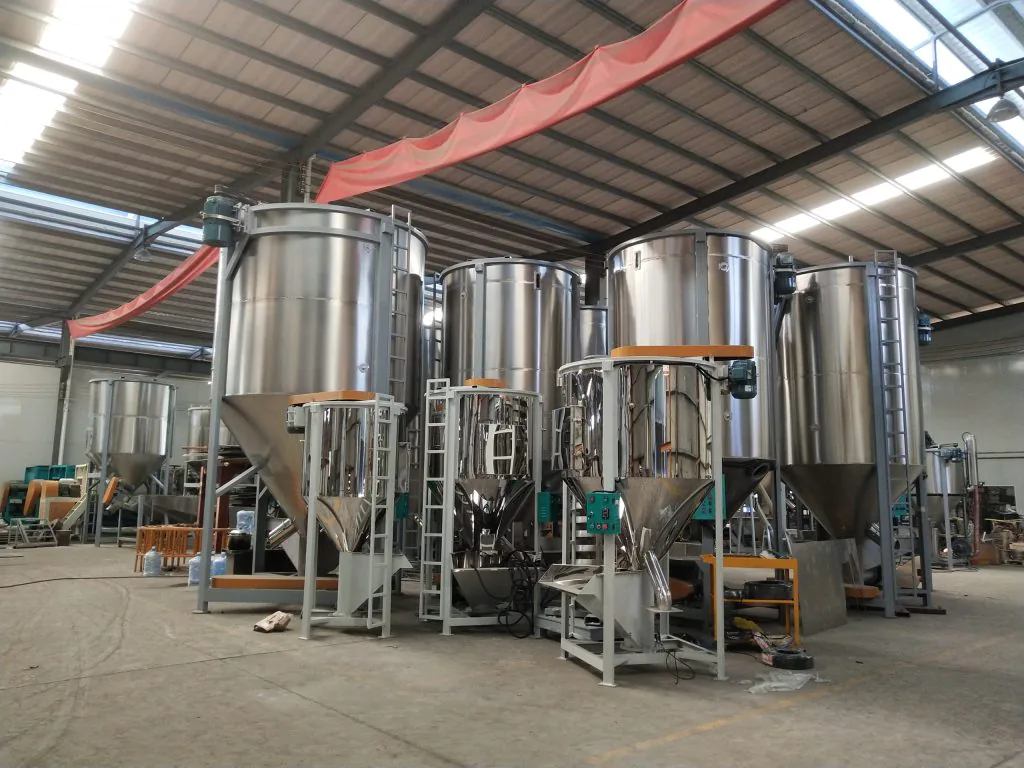
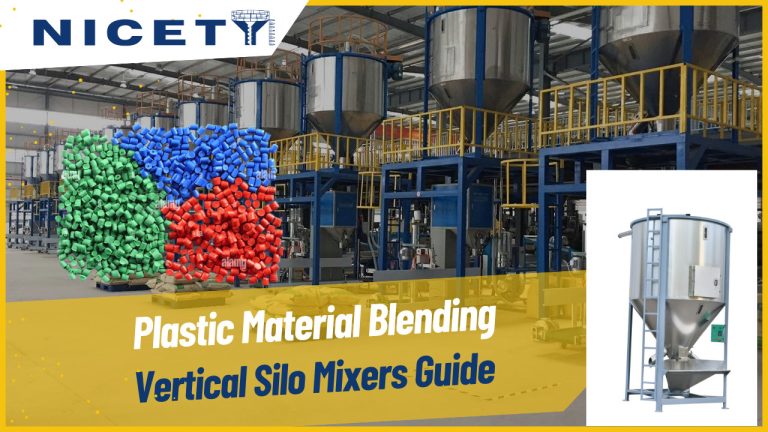
Vertical silo mixer machines2 are specifically designed for the plastic processing environment, where materials like HDPE, ABS, PC, PA, and reinforced polymers must be mixed uniformly. These silos combine storage and mixing functions, offering a compact, efficient, and continuous system for high-volume production lines.
Unlike traditional batch mixers, vertical silos offer vertical blending screws or paddles3 that continuously mix material as it’s discharged, ensuring consistent homogeneity. The vertical configuration also saves floor space and integrates easily with upstream feeders and downstream extrusion or injection molding machines.
These mixers help standardize material quality, especially when multiple resin types, colorants, or additives need to be blended before processing. Whether you’re producing automotive components or everyday packaging, these silos ensure that material quality is never compromised.
Key Factors for Efficient Mixing in Plastic Applications
To achieve optimal mixing in vertical silos, consider the following:
Moisture control7: Dry material is critical; use dehumidifiers or dryers as needed.
Material compatibility: Prevent segregation by matching material properties as closely as possible.
Mixer design: The vertical screw or paddle design must suit your specific material blend.
Proper alignment between material properties and silo design ensures minimized waste, better color consistency, and improved melt behavior during downstream processing.
Addressing these issues leads to consistent melt flow index (MFI), smoother extrusion, and fewer defects in final products.
Case Studies: Success in the Plastic Industry
Case 1: Masterbatch Production
A manufacturer improved blend consistency by installing vertical silo mixers with real-time monitoring. Result: ±2% color dispersion variance, compared to ±8% with conventional methods.
Case 2: Engineering Plastic Compounds
A company blending glass-fiber-reinforced polyamide13 used a vertical silo mixer to homogenize the resin and chopped glass fibers. This led to a 20% increase in impact strength consistency across parts.
Future Trends in Vertical Silo Mixing for Plastics
AI-assisted blending: Predictive systems adjusting blend parameters based on downstream performance.
Sustainable design: Silos built from energy-efficient materials with minimal power consumption.
Customization: Modular silo systems tailored for new bio-based plastics or recyclable blends.
As regulations tighten and consumer demand shifts, vertical silo mixers will evolve to meet the challenges of circular economy and smart manufacturing.
For companies in the plastics and engineering plastics sectors, vertical silo mixers offer a powerful tool for improving consistency, reducing costs, and scaling production.
By:
Choosing the right silo design,
Maintaining clean and efficient operations,
Embracing automation and real-time control,
…you can ensure your blending process supports your strategic goals. Vertical silo mixers are not just equipment — they are enablers of quality, efficiency, and innovation in plastic manufacturing.
Explore this link to understand the unique properties and applications of engineering plastics in various industries. ↩
Explore this link to understand how vertical silo mixers enhance efficiency and consistency in plastic material processing. ↩
Discover the advantages of vertical blending technology and its impact on material homogeneity in production. ↩
Explore this link to understand how effective blending can enhance product quality and consistency in plastics. ↩
Discover insights on the preparation processes that improve the performance of engineering plastics in various applications. ↩
Understanding particle size and density is crucial for achieving optimal mixing and flow in plastic applications. ↩
Moisture control is vital for maintaining material quality and consistency, making it essential for effective mixing. ↩
Explore this link to understand how Vertical Silo Mixing enhances efficiency and quality in plastic processing. ↩
Discover how PLC-controlled systems can optimize your mixing processes for better accuracy and consistency. ↩
Explore how IoT-enabled sensors enhance precision and efficiency in plastic blending processes. ↩
Explore effective strategies to enhance your plastic blending process and ensure uniformity in your products. ↩
Discover solutions to optimize feeding rates, leading to better quality and efficiency in your plastic manufacturing. ↩
Explore this link to understand how glass-fiber-reinforced polyamide enhances product durability and performance in various applications. ↩
Hi, I'm the author of this post, and I have been in this field for more than 7 years. If you want to build a plastic recycling line or plastic related machines, feel free to ask me any questions.
Hengjiang Industrial Zone, Dongguan City, Guangdong Province China
Whether you have questions about plastics mixing, blending, centralized feeding systems, or other plastics processing auxiliary equipment such as material handling and cooling, feel free to ask us. Our team is ready to provide you with the guidance and insight you need.
Send us a message
One of our sales consultants will contact you within 24 hours.
Service from NICETY engineers
Awareness of Your Needs
Recommend machines for your reference and comparison
_画板-1-1.png)




_画板-1-副本-3-pxeey2xejyohpkvf07tglhvew6ks2ts3pjvhagm60c.png "NICETY MACHINERY Co., LTD")