_画板-1-1.png)
Mixing EVA hot melt adhesive with the wrong machine? You’re inviting clogs, waste, and bad bonding right from the start.
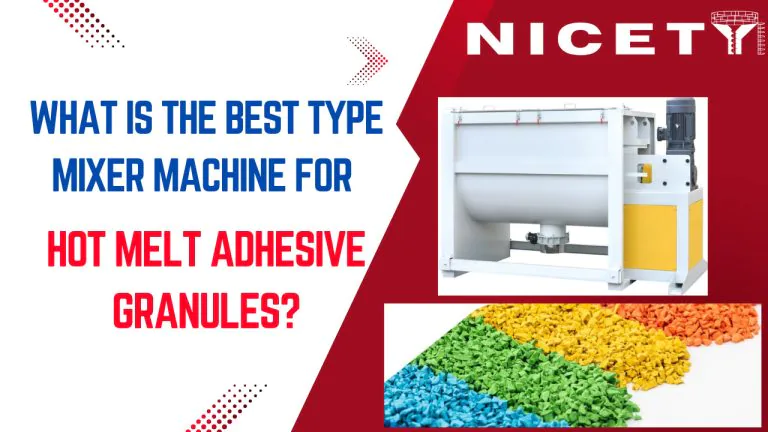
Hot melt adhesive materials—especially soft EVA—require uniform, gentle mixing. Horizontal ribbon mixers outperform vertical mixers by preventing overheating, sticking, and blending inconsistencies.
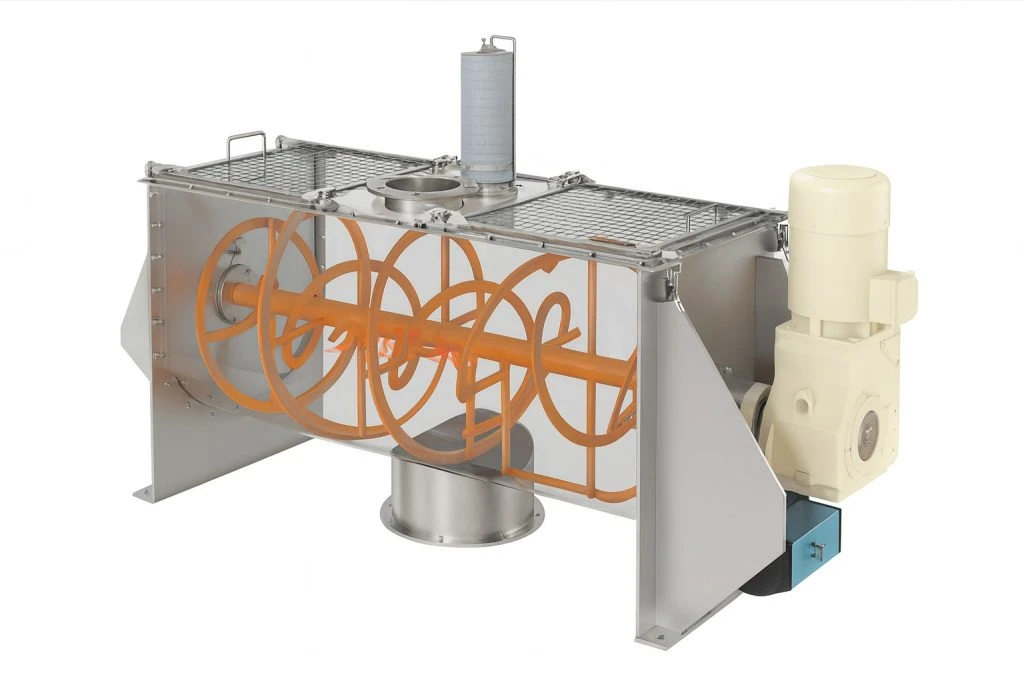
There are two common types of plastic mixers used in the industry: the vertical silo mixer and the horizontal ribbon mixer. The vertical silo mixer has a faster central shaft, usually running between 90–110 rpm. This higher speed generates more friction and heat during mixing. That heat is a problem for soft EVA adhesives. It makes them sticky and causes them to gum up around the shaft. Cleaning becomes difficult. Mixing becomes uneven.
The horizontal ribbon mixer, on the other hand, has a gentler mixing speed and better material flow. It’s more suited to the sensitive nature of EVA and other hot melt adhesive raw materials. That’s why, after testing both, I made the switch—and never looked back.
What are hot melt adhesive raw materials?
When your raw materials aren’t properly understood, every process downstream—melting, bonding, extrusion—will suffer.
Hot melt adhesives often use EVA as the base, with other raw materials like APAO, polyolefins, TPU, waxes, and tackifiers added for strength, elasticity, or adhesion.
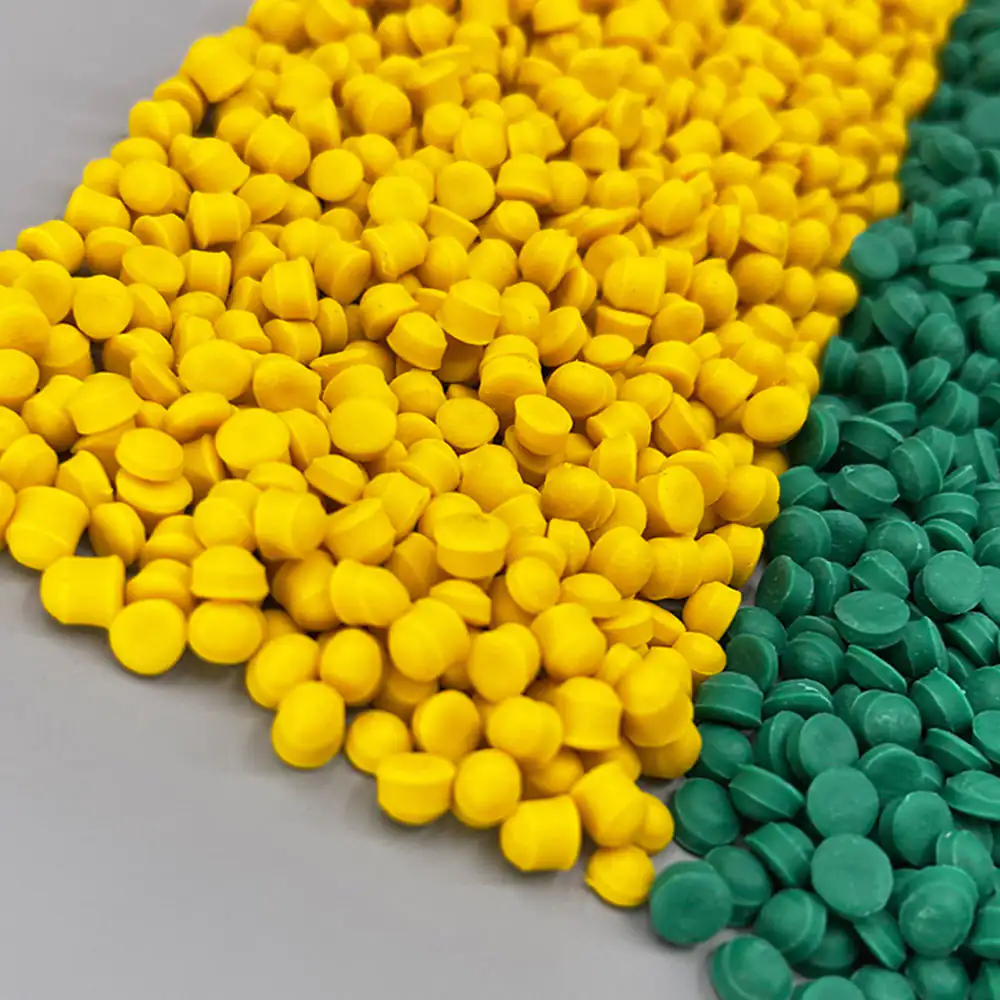
Soft EVA (Ethylene Vinyl Acetate) is the most common raw material in hot melt adhesive. I’ve seen EVA with vinyl acetate content between 18–28% used in different product lines. The softness helps with flexibility but requires controlled heat during mixing to avoid early melting or stickiness.
In addition to EVA1, you’ll often find APAO2 used to lower viscosity and improve flow. TPU boosts strength and resilience. Polyolefins improve adhesion to plastic substrates. Rosin-based tackifiers increase bonding, while waxes help adjust open time and cooling speed. Each of these behaves differently in heat and motion, making the choice of mixer even more important.
| Material | Role in Adhesive | Special Note |
|---|---|---|
| Soft EVA | Main base polymer | Heat-sensitive, soft, sticky when overheated |
| APAO | Flow modifier | Reduces melt viscosity |
| TPU | Strengthener | Adds toughness and elasticity |
| Polyolefin | Surface adhesion | Good for plastic bonding |
| Tackifiers | Bonding strength | Rosin esters or hydrocarbon resins |
| Waxes | Open time controller | Paraffin or microcrystalline types |
| Fillers | Cost control | CaCO₃, talc, and others |
In vertical mixers, I’ve seen tackifiers form lumps due to uncontrolled heat. A horizontal ribbon mixer avoids this by gently folding materials over a wide surface area, minimizing friction and improving blend uniformity.
What other raw materials are hot melt adhesives3 typically mixed with?
Unmixed tackifiers4 or wax clumps in your final adhesive? That’s a sign your mixer isn’t doing its job right.
Hot melt adhesives are typically combined with tackifiers, waxes, oils, pigments, and stabilizers to fine-tune bonding performance and processing behavior.

These secondary raw materials are just as important as EVA. If your wax doesn’t blend evenly, your adhesive might set too quickly or flow unevenly. If tackifiers aren’t fully integrated, the final product won’t bond well. Paraffin oils adjust softness and help the adhesive spread, while fillers like calcium carbonate reduce cost but must be evenly distributed to avoid brittleness.
Using a vertical silo mixer for these materials often results in uneven layering due to centrifugal force and the high shaft speed. I once helped a client who found their adhesive had hard spots. Turned out, they were using a vertical mixer for a formula with too much wax and filler. The wax melted and smeared around the shaft, while the filler stayed clumpy at the bottom.
Horizontal ribbon mixers prevent this. The mixing ribbon rotates at low speed, gently turning the batch from top to bottom. The wide contact area ensures all materials are evenly integrated without hotspots or sticking.
Where is the hot melt adhesive used after mixing with other raw materials?
You may mix perfectly, but if your adhesive underperforms in the final product, it means your upstream process failed.
Hot melt adhesives, once mixed, are used in packaging, hygiene products, footwear, automotive interiors, woodworking, and textiles.

After mixing, the adhesive mixture is either pelletized or sent straight to extrusion or molding. In diaper manufacturing, poor mixing can cause weak seams. In bookbinding, it leads to poor page adhesion. In footwear, improper distribution of TPU causes the glue to crack under pressure.
In my work with several plants, we’ve found that horizontal mixers provide better batch consistency, which leads to fewer defects in high-speed lines. One packaging5 client saw a drop in bonding failures just by changing the mixer—not even the formula.
That’s why the mixing stage is not optional—it’s central to final performance. Good input + proper mixing = reliable product.
Why are horizontal mixer6s used for mixing hot melt adhesives often equipped with a weighing machine?
Getting the right ratio of ingredients every time? That’s the foundation of process stability. Eyeballing quantities is a shortcut to scrap.
A weighing system7 allows accurate dosing of all materials—EVA, waxes, tackifiers, and fillers—for every batch, ensuring repeatable product quality.

In hot melt adhesive production, even a 1% error in tackifier or wax content can affect bonding time, melt flow, or curing speed. A built-in weighing machine solves this. I’ve worked with systems where every ingredient is automatically pulled from a silo or hopper, weighed, and fed into the mixer under PLC control.
Here’s how it works:
| Step | Process | Benefit |
|---|---|---|
| 1 | Material auto-load via vacuum | No manual handling, no spills |
| 2 | Precise weighing of ingredients | Batch-to-batch consistency |
| 3 | Automatic recipe call | No guesswork or human error |
| 4 | Timed mixing cycles | Optimized for adhesive type |
| 5 | Direct discharge | To pelletizer or extrusion system |
The weighing system also supports recipe management. I once set up a client with 12 adhesive formulas saved in their system. The operator just selected the recipe number. The system auto-loaded and mixed the exact formula. No more handwritten notes, no more over-adding wax or forgetting filler.
Conclusion
Horizontal ribbon mixers avoid heat damage, ensure even mixing, and—when combined with weighing systems—deliver repeatable quality for hot melt adhesives.
Explore this link to understand EVA’s role in hot melt adhesives and its impact on flexibility and performance. ↩
Learn about APAO’s function in hot melt adhesives and how it enhances flow and viscosity. ↩
Explore this link to understand the versatility and applications of hot melt adhesives in various industries. ↩
Learn about tackifiers and their crucial role in enhancing adhesive performance by visiting this informative resource. ↩
Discover how hot melt adhesives enhance packaging efficiency and reliability in various products. ↩
Learn about the advantages of horizontal mixers in adhesive production, including efficiency and precision in mixing. ↩
Explore how a weighing system enhances accuracy and consistency in adhesive production, ensuring high-quality results. ↩

_画板-1-副本-3-pxeey2xejyohpkvf07tglhvew6ks2ts3pjvhagm60c.png "NICETY MACHINERY Co., LTD")