_画板-1-1.png)
By Nicety Machinery | August 2, 2026

What the New EU Regulation Requires
The European Union has formally adopted Regulation (EU) 2026/1738, turning recycled-plastic content in new vehicles from a voluntary target into a legal requirement.
Plastic used in newly type-approved vehicles must contain at least:
- 15% post-consumer recycled plastic from September 1, 2032
- 25% post-consumer recycled plastic from September 1, 2036
At least 20% of each target must come from end-of-life vehicles or parts removed during vehicle use. This creates minimum vehicle-to-vehicle recycled-plastic shares of 3% in 2032 and 5% in 2036.
The regulation also establishes a 30% recycling target for plastics recovered from end-of-life vehicles.
Why This Matters to Plastic Compounders
Automotive plastics cannot be replaced with low-grade recyclate without careful reformulation. Materials used in interiors, electrical components and structural applications must still satisfy strict requirements for impact strength, appearance, odor, emissions, flame resistance and long-term stability.
Compounders will need to combine recycled polymers with virgin resin, stabilizers, compatibilizers, fillers and reinforcing materials while maintaining consistent processing behavior.
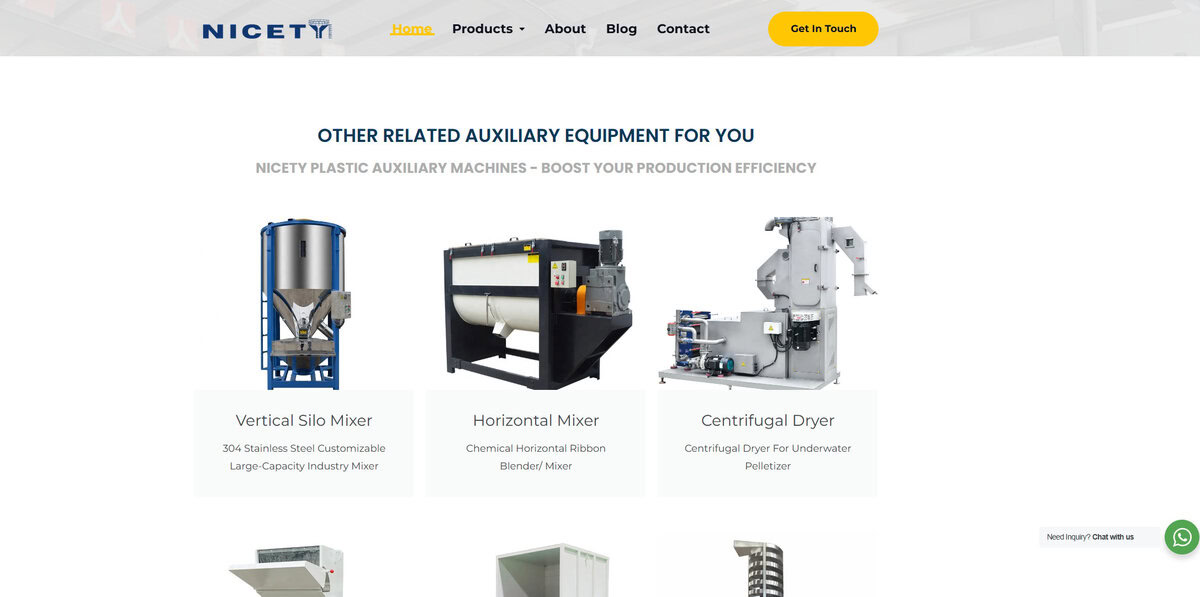
This increases the importance of accurate dosing, homogeneous mixing, contamination control and stable extrusion. Equipment such as horizontal ribbon mixers, automated central feeding systems and properly configured pelletizing lines will become increasingly important when producing repeatable recycled automotive compounds.
PC/ABS Recycling Shows the Technical Challenge
A Fraunhofer IVV project with Audi demonstrates how engineering plastics may be recovered from automotive shredder residue.
Mechanical separation and laser sorting first enrich valuable thermoplastics such as PC/ABS to approximately 80–90%. A solvent-based purification process then removes oils, fillers, glass fibers and other contaminants.
The recovered polymer can be compounded with virgin material and additives to produce PC/ABS containing high levels of post-consumer recyclate. Fraunhofer reports that the resulting compound can meet demanding requirements for automotive interior applications.
The project highlights an important point: recovering the polymer is only the first step. Consistent compounding and pellet production are still required before recycled material can return to high-value automotive applications.
What Processors Must Prepare For
Automotive compounders and recycling plants should begin evaluating:
- Reliable sources of traceable post-consumer feedstock
- Separation systems for PP, PC/ABS, PA and reinforced compounds
- Formulations that compensate for polymer degradation
- Odor, VOC and contamination-control requirements
- Batch-to-batch consistency in mixing and pelletizing
- Documentation needed to verify recycled content
The European Commission must establish detailed calculation and verification methods by August 31, 2028. Recycled material produced outside the EU may qualify from August 14, 2030, but overseas facilities will need to meet EU requirements and undergo independent audits.
Impact Beyond Europe
Although the regulation applies to the European market, its effects will extend into Asia and the Americas.
Global resin suppliers, compounders and component manufacturers serving European vehicle programs will need compliant materials and verifiable supply chains. The regulation is therefore likely to accelerate investment in automotive-plastic sorting, purification, compounding and quality-control capacity worldwide.
For processors, the commercial opportunity will be concentrated in producing stable, application-ready compounds—not simply recycled flakes or unmodified pellets.

_画板-1-副本-3-pxeey2xejyohpkvf07tglhvew6ks2ts3pjvhagm60c.png "NICETY MACHINERY Co., LTD")