_画板-1-1.png)
Unstable batches, color swings, and slow changeovers make any plastic compounding line feel stuck, and I saw this pattern in many plants I visit.
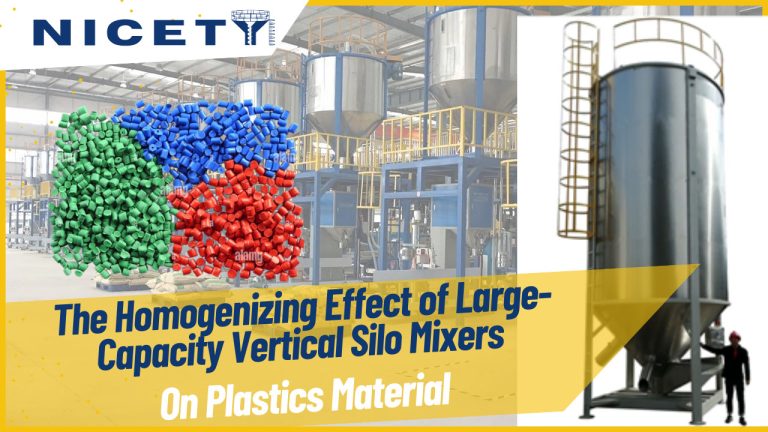
Large-capacity vertical silo mixers cut mixing time, stabilize bulk density, and keep every pellet in a batch inside a narrow property window. In my projects, they reduce changeover losses, improve color consistency, and free up floor space at the same time.
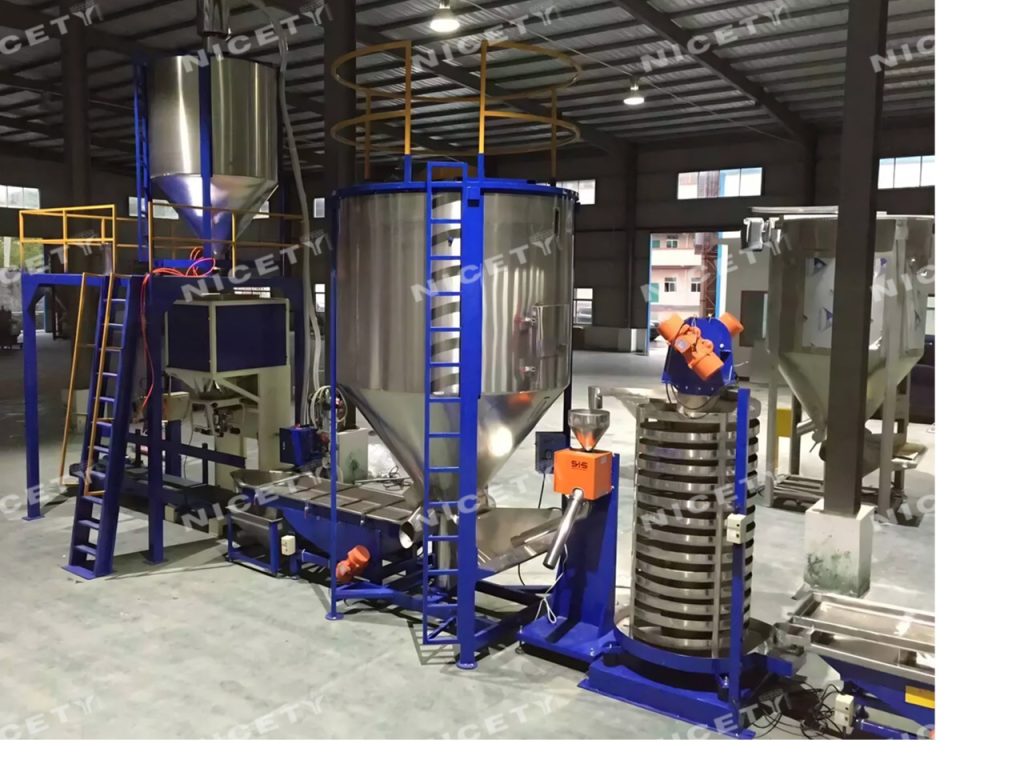
When I walk into a noisy compounding hall, I always look first at the mixers and silos. If the material flow before extrusion is smooth and stable, I know the rest of the line can run faster and with less drama. Vertical silo mixers are one of the few upgrades that touch both output and quality at the same time, so I treat them as a strategic investment, not just a storage bin with a motor.
Why do vertical silo mixers[^1] boost output on existing lines?
Many plants try to increase capacity only by adding extruders or running existing machines faster, and they still hit bottlenecks. I learned that poor upstream mixing often wastes more time than the extruders themselves.
Vertical silo mixers boost output because they handle larger batches[^2], cut manual handling, and give the extruder a constant, well-mixed feed[^3]. This reduces start–stop events, changeover losses, and cleaning time on every shift.

How larger batches and stable feeding increase real throughput
When I plan a project with a customer like Mohammed Ali, I never look only at the extruder nameplate. I look at the full cycle: receive material, mix, feed, extrude, cool, and package. In many recycling and compounding lines, operators spend too much time loading many small mixers, waiting for each batch, and moving material with forklifts. The extruder then runs full for a short time, stops for a change, or starves because the next batch is late. A large-capacity vertical silo mixer changes that pattern. It can mix several tons in one continuous cycle and then act as a buffer silo for the extruder. This reduces forklift moves, reduces operator walking, and cuts non-productive time. I also see less rework because there are fewer half-mixed “transition” batches between color or formula changes. That is why, even when the main machine stays the same, the real hourly output often jumps after a silo mixer upgrade.
| Mixer type | Batch volume (kg) | Mixing time per batch (min) | Effective throughput (kg/h) | Typical use case |
|---|---|---|---|---|
| Small drum / tumbler mixer | 300 | 20 | ~900 | Lab, small orders |
| Conventional horizontal mixer | 1,000 | 20 | ~3,000 | Medium plants, many recipes |
| Vertical silo mixer (medium size) | 3,000 | 20 | ~9,000 | Main compounding line pre-mixing |
| Vertical silo mixer (large size) | 5,000 | 25 | ~12,000 | Centralized mixing for multiple extruders |
These values are typical examples from real projects. Your exact numbers will depend on material, mixer design, and working discipline on the shop floor.
How do vertical silo mixers protect material quality and consistency?
I often see lines where the extrusion team fights quality issues that were born in the mixing stage, not in the screw. Inconsistent mixing creates hidden variation inside every bag.
Vertical silo mixers improve quality because they mix in three dimensions, equalize temperature and bulk density, and reduce segregation during discharge. This leads to narrower property variation and fewer customer complaints.

Why three-dimensional mixing[^4] and residence time matter
When I visit plants that make recycled PP, PE, or PET compounds, I always ask to see test data over time, not only a single sample. Many times the average value looks fine, but the range between minimum and maximum is wide. This often comes from bad mixing of base resin, recyclate, additives, and color. A vertical silo mixer uses a central screw or a specially designed internal flow path to move material from bottom to top and back down again. Material flows in three dimensions instead of just tumbling on one plane. With a tall, slim geometry, pellets stay inside long enough to “average out” differences in moisture, temperature, and color concentration. This reduces streaks and local hot spots that can cause gels or low strength. I also pay attention to discharge design. Good silo mixers keep a uniform flow pattern when material leaves, so the first bags and last bags from a batch stay similar.
| Quality issue | Typical effect on product | How a vertical silo mixer helps |
|---|---|---|
| Color streaks and swirls | Visible defects, customer rejections | More complete blending of masterbatch and base resin |
| Density variation between bags | Weight variation, unstable extrusion pressure | Homogenization of bulk density through full-column mixing |
| Moisture differences in recyclate | Bubbles, voids, loss of mechanical properties | Equalization of moisture before drying or extrusion |
| Additive distribution variation | Uneven UV, impact, or flame performance | Longer residence and better dispersion of low-dosage additives |
When I retrofit a vertical silo mixer on a line, I usually see a nice side effect. Lab workloads become easier, because fewer batches are out of spec. This frees engineers to work on new formulas instead of chasing basic stability problems every day.
What design choices matter most when I size a vertical silo mixer?
I often receive questions like, “What capacity should I choose?” or “Is stainless steel necessary?” A wrong choice can kill the return on investment, even if the basic idea is correct.
The most important design choices are capacity versus daily demand[^5], internal geometry[^6], material of construction[^7], and how well the mixer integrates with feeding, weighing, and conveying. I always size and design around the real production pattern, not only the catalog.
How I match mixer design to real-world production
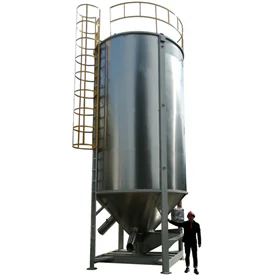
When I help a customer like Mohammed Ali choose a vertical silo mixer, I start from his actual schedule, not only from yearly tonnage. I ask simple questions. How many formulas do you run per day? How many extruders share the same mixer? Do you prefer long campaigns of one grade, or frequent small orders? For example, if a plant produces 80 tons of PP compound per day on one line, I often aim for a silo mixer of 8–10 tons effective volume. This size can support one long campaign with only one or two full mixing cycles, which reduces changeovers and cleaning. For a plant with three smaller lines fed from one central mixer, I may choose a larger silo and add separate dosing systems under the cone. I also think about material: high-heat PET flakes need different contact surfaces and insulation compared with cool-running PVC powders. So I choose carbon steel or stainless steel, surface finish, and optional liners based on abrasion, contamination risk, and cleaning needs.
| Daily demand (single line) | Typical campaign style | Suggested silo mixer size (effective kg) | Notes on selection |
|---|---|---|---|
| 20–30 tons/day | Many small orders | 3,000–4,000 | Focus on fast cleaning, easy access, flexible dosing |
| 40–60 tons/day | Medium campaigns | 5,000–7,000 | Balance capacity and changeover time |
| 70–100 tons/day | Long campaigns, few formulas | 8,000–10,000 | Prioritize stable buffer, integration with central feeding |
| 100+ tons/day or 2–3 lines | Centralized mixing for many lines | 12,000+ | Design for redundant conveying and strong structural base |
These values are general guidelines. I always fine-tune them with layout drawings, local labor cost, energy price, and the customer’s growth plan. When these pieces are clear, the mixer becomes a long-term asset, not just a big stainless box.
Conclusion
Large-capacity vertical silo mixers improve compounding lines by stabilizing mixing, feeding, and quality, so I treat them as a central tool for both higher output and fewer problems.
---

[^1]: Explore how vertical silo mixers can enhance production efficiency and reduce bottlenecks in manufacturing processes.
[^2]: Learn about the advantages of larger batch sizes in production and how they can streamline operations.
[^3]: Discover the significance of a consistent feed for extruders and its impact on overall production quality.
[^4]: Learn about the significance of three-dimensional mixing in achieving uniform material properties and reducing defects.
[^5]: Understanding this balance is crucial for optimizing production efficiency and ROI.
[^6]: The design of the mixer’s interior can significantly influence mixing efficiency and consistency.
[^7]: The right material affects durability, maintenance, and product quality, making it essential to explore.
_画板-1-副本-3-pxeey2xejyohpkvf07tglhvew6ks2ts3pjvhagm60c.png "NICETY MACHINERY Co., LTD")