_画板-1-1.png)
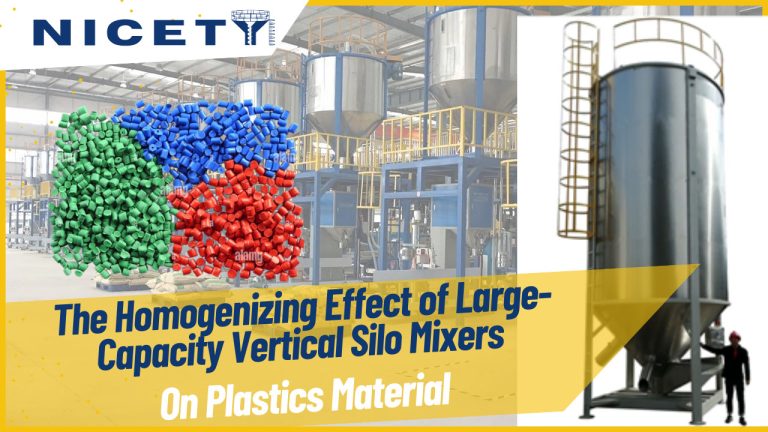
The plastics compounding process often fails because the first mixing step is unstable, and this problem keeps factory owners awake at night.
Large-capacity vertical mixers are important because they pre-mix resins and additives in big batches, which keeps the formula consistent before melting and granulation. This stability protects the final pellet quality and reduces waste.

Factories rely on this stable first step because every later step depends on it. When this link breaks, production stops, workers wait, and losses grow. I learned this early in my career, and I never forgot the feeling.
Why do factories use 10-ton, 20-ton, or even larger vertical mixers to mix materials?
Many factories struggle with unstable production when the raw material mix changes from batch to batch. I remember a week when one wrong blend ruined several tons of pellets.
Factories use 10–20 ton or larger mixers because big batches keep the entire shift consistent so the product does not change every few hours. Stable input means stable extrusion and granulation1.
%(alt with keywords)(https://placehold.co/600×400 "title")
When I first worked in plant production, I learned that small batches create repeated start-stop adjustments. Each time a batch ends, workers pour in a new mixture with slightly different ratios. These small differences become big problems in plastics compounding because every pellet needs the same formula. A large mixer solves this by creating one giant batch that covers hours of production. The output stays stable, the melt index stays predictable, and customers stop complaining about color or physical changes.
How a larger batch solves real production problems
| Issue in Production | Effect on Plastic Pellets | How a Large Mixer Helps |
|---|---|---|
| Small batch variation | Color drift, property changes | One big batch stays uniform |
| Frequent feeding | Worker fatigue, human error | Automated feeding reduces mistakes |
| Material layering in silos | Uneven melting | Vertical mixing breaks layering |
| Additive ratio drift | Inconsistent pellets | Thorough mixing keeps formula stable |
This is why factories that run PP, PE, ABS, and PET compounding lines often treat large-capacity vertical mixers2 as their “first gatekeeper.”
Why not use smaller ones?
I once tried running production with several 1-ton mixers. The first shift loved the idea. By the second shift, the chaos started.
Small mixers create too many batches, too many differences, and too many chances for error. They slow down production and raise the risk of quality problems.
%(alt with keywords)(https://placehold.co/600×400 "title")
Small mixers look flexible, but they break the stability that compounding lines need. When you melt plastics, the extruder expects steady material. When the raw material changes every hour, the melt pressure rises or falls, the color wobbles, and the operator begins making manual adjustments.
Why smaller mixers cause more trouble than they solve
| Problem | What Actually Happens | Why It Hurts Production |
|---|---|---|
| Too many batches | New mix every 30–60 minutes | Machine settings lose stability |
| Higher labor input | Workers load many times per shift | More human errors appear |
| Additive separation | Powders settle in small batches | Leads to streaks and spots |
| Frequent cleaning | More recipe changeovers | Machine downtime increases |
When I explain this to factory owners, they usually pause, think about their own shift problems, and then nod. Small mixers save money only on the day you buy them. After that, the hidden cost never stops.
Why is 10–20 tons the most common capacity for large-capacity vertical silos?
This question comes up often when customers plan new equipment purchases. I faced it myself when I first imported my own mixer years ago.
The 10–20 ton size3 is most common because it matches global container shipping limits4, keeps transport costs low, and fits factory space while still offering stable large-batch mixing.
%(alt with keywords)(https://placehold.co/600×400 "title")
The plastics industry grew around standard container logistics. A 10-ton mixer fits inside a 40HQ container. A 20-ton mixer fits inside an open-top container. Anything larger becomes “special freight,” which raises costs, risks, and paperwork. This is why manufacturers, including :contentReference[oaicite:0]{index=0}, design their largest standard machines around these container limits.
Why 10–20 tons became the global standard
| Capacity | Shipping Method | Cost Level | Why It Works |
|---|---|---|---|
| 10 tons | 40HQ container | Low | Fits standard height, no modification |
| 15 tons | 40HQ or open-top | Medium | Balanced cost and volume |
| 20 tons | Open-top container | Medium | Maximum size before special transport |
| 30+ tons | Special transport | High | Not cost-effective for most factories |
This is the balance point where engineering, logistics, and factory needs meet. A mixer in this range can supply enough stable material to keep several production lines running. It holds the batch long enough to avoid constant changeovers. And it ships without breaking the budget. After seeing many factories in the Middle East and Asia, I can say that this size range simply works.
Conclusion
Large-capacity vertical mixers keep formulas stable, production steady, and logistics simple, which makes them essential in modern plastics compounding.
Nicety Machinery Co., Ltd., as a leading manufacturer of auxiliary machinery for plastic modification, has extensive experience in the field of plastic mixers. Why not contact us? Perhaps a solution we provided to a past client will inadvertently solve your plastic compounding problems.

-
Learn about the critical role of stable extrusion and granulation in ensuring product quality and consistency. ↩
-
Explore how large-capacity vertical mixers enhance production efficiency and maintain quality in compounding lines. ↩
-
Explore this link to understand the significance of the 10–20 ton size in industrial equipment and its impact on logistics. ↩
-
Discover how global container shipping limits influence equipment design and logistics in the industry. ↩

_画板-1-副本-3-pxeey2xejyohpkvf07tglhvew6ks2ts3pjvhagm60c.png "NICETY MACHINERY Co., LTD")